
The Conflict Between Faith and Suffering
ReunionThe Bauer family house fire destroys Hans’s confidence in a benevolent God and tests whether religious explanation can preserve his intellectual bond with Konradin.
increasing Bearing strength in each event
 decreasing
Bearing strength in each eventdecreasingA Former Certainty
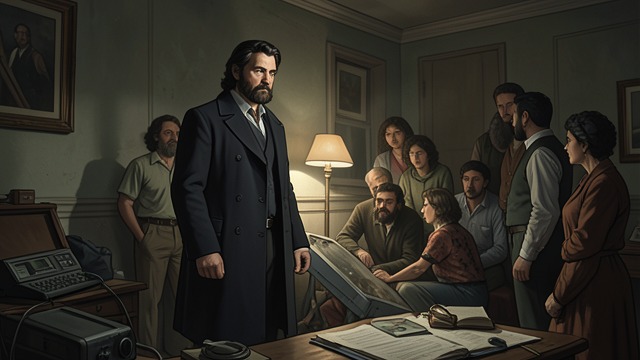
A Former Certainty
A loose belief
Hans accepts the possibility of a benevolent creator without strong religious commitment.
Family influences
His parents leave him free to form his own views, making his later rejection a personal response rather than an inherited dispute.
The Neighbors’ Children
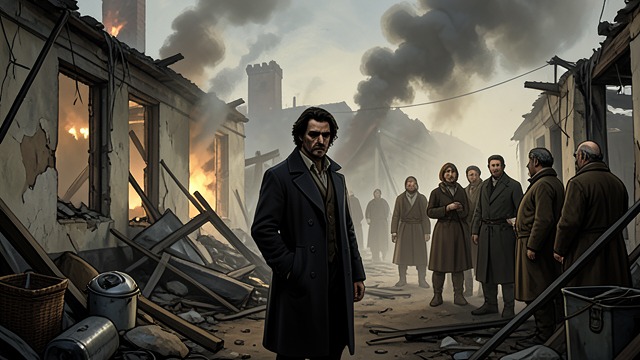
The Neighbors’ Children
Sudden catastrophe
A fire kills the Bauer family’s three children while the parents are away.
A familiar loss
Hans knows the children and cannot treat their deaths as distant statistics. The intimate tragedy makes the problem of suffering immediate.
Faith Rejected
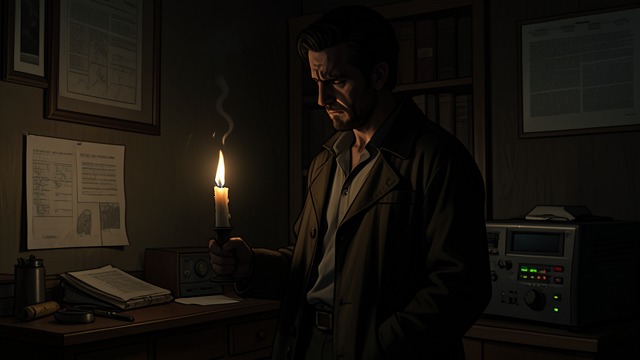
Faith Rejected
A moral protest
Hans concludes that either God does not exist or a powerful God permits intolerable cruelty.
A lasting change
The fire ends his belief in a benevolent mastermind and redirects his questions toward how a person should live without certainty.
Konradin’s Answer
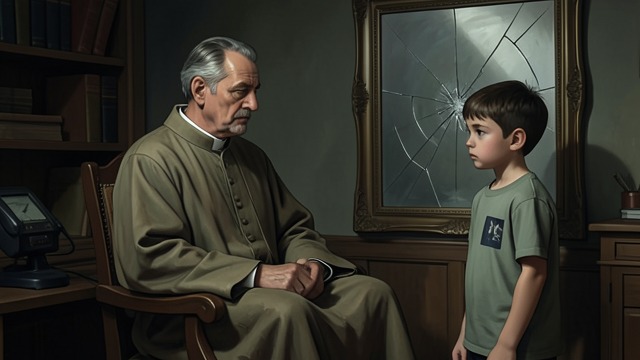
Konradin’s Answer
Religious counsel
Konradin consults his pastor and returns with an explanation involving evil and the possibility of recognizing good.
Persuasion fails
Hans rejects the response as inadequate to the children’s suffering. The friends remain respectful but reach no agreement.
A Question Without Closure
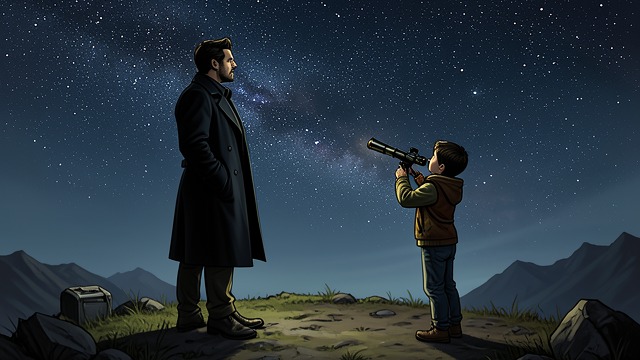
A Question Without Closure
Life’s value reconsidered
Astronomy deepens Hans’s awareness of human smallness, while the tragedy makes individual life uniquely precious.
Friendship across disagreement
The boys continue to discuss how life should be used. Their disagreement becomes part of their bond rather than a final rupture.
Before the Bauer family house fire
Spring 1932, after the fire is discovered
The day after Hans sees the burned house
Several days after Hans challenges Konradin
After the boys’ debate, during their later walks
