
The Collections That Bring the Boys Together
ReunionCoins and antiquities give Hans and Konradin a safe first language for approaching one another and symbolize the unequal worlds they temporarily share.
increasing Bearing strength in each event
 decreasing
Bearing strength in each eventdecreasingHans’s Private Museum
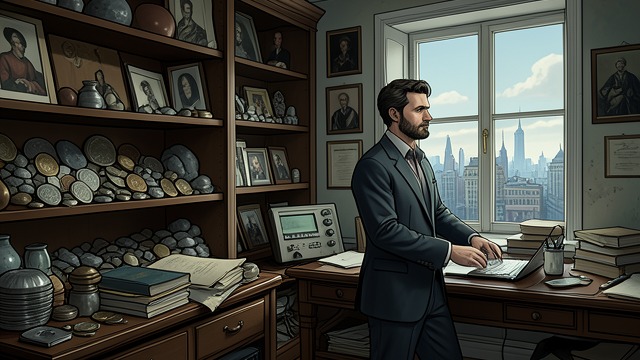
Hans’s Private Museum
Objects of wonder
Hans keeps coins, stones, fragments, and antiquities alongside books and art reproductions.
A world made personal
His collection gives shape to curiosity and ambition. It also offers a possible invitation into the inward life he rarely shares.
Coins as an Opening
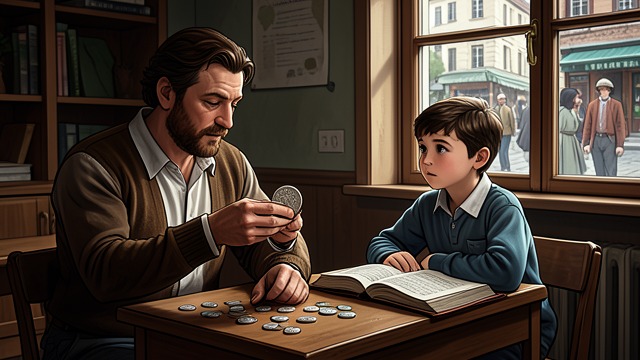
Coins as an Opening
A deliberate display
Hans brings Greek coins to class and studies them where Konradin can notice.
Shared expertise
Konradin recognizes the objects and handles them like a fellow collector. Their first substantial exchange begins through mutual interest rather than social introductions.
The Home Invitation
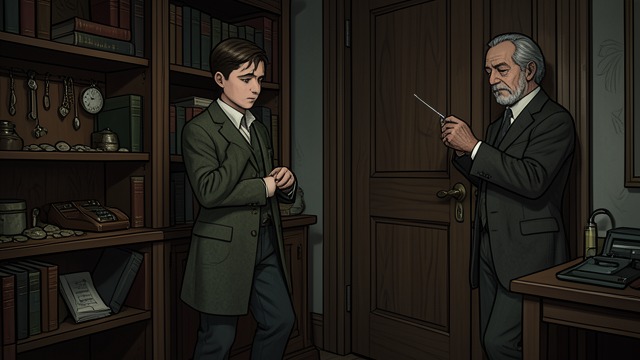
The Home Invitation
Treasures revealed
Hans shows Konradin his books, coins, and collected objects after welcoming him home.
Anxiety beneath pride
Hans wants to impress his friend but feels ashamed when his father performs deference to aristocratic status. The visit exposes class insecurity beneath the display.
Konradin’s Room
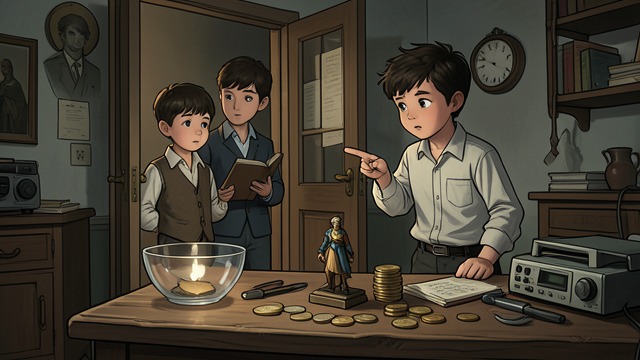
Konradin’s Room
A reciprocal display
Konradin proudly lays out Greek coins, a glass bowl, a figurine, and other treasures.
Intimacy within limits
The boys share wonder and collector’s knowledge. Yet the welcoming room does not open the whole household to Hans.
Memory’s Lost Objects
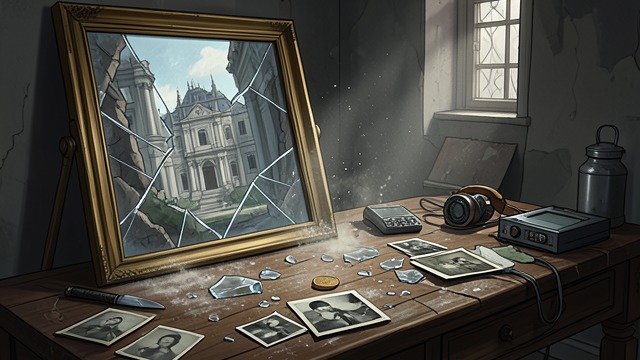
Memory’s Lost Objects
Material traces
Hans’s adult account returns to the rooms and objects that once made each boy’s world visible.
A vanished setting
The destruction of Stuttgart and Palais Hohenfels turns those collections into memories of a lost place. The objects cannot restore the friendship they once supported.
Before Konradin’s arrival, in Hans’s bedroom
Early March 1932, at school
Spring 1932, on Konradin’s first visit to Hans’s house
Later spring 1932, during Hans’s first visit to Palais Hohenfels
Decades later, while Hans considers the memorial appeal
