A hole into the future
Roadside PicnicA hole into the future is Redrick Schuhart’s transforming description of Harmont: what an outsider dismisses as a provincial hole becomes, in Redrick’s reply, a passage through which knowledge and change may enter the world. The phrase turns a local insult into a sweeping promise of fairness and abundance, while the scene’s abrupt self-consciousness keeps that promise from sounding like Redrick’s uncomplicated conviction.
From Insult to Reversal
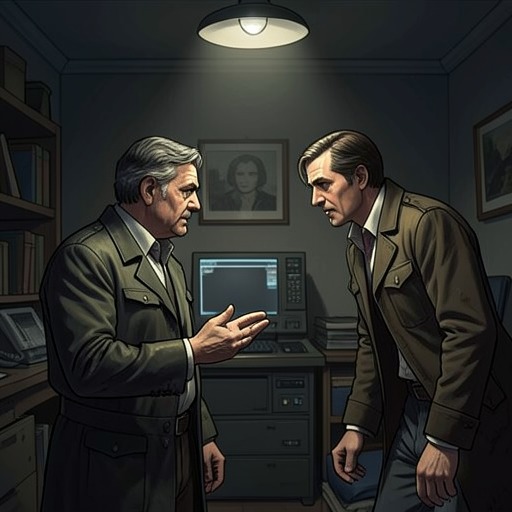
The expression arises in an exchange with Ernest. After the town is dismissed as “a hick town, a hole,” Redrick answers by conceding the insult before reversing its meaning. Harmont has always been a hole, he says, and remains one; the difference is that it is now “a hole into the future.” The image does not deny the town’s isolation or low status. Instead, it makes that very opening the basis for imagining its significance.
The reversal gives the phrase its force. A hole can suggest a dead end, a place cut off from movement and possibility. Redrick recasts it as an aperture: something can pass through it and reach a world beyond. His reply therefore shifts the value of Harmont from contemptible provincial backwater to prospective conduit, without pretending that the town itself has ceased to be a hole.
What the Hole Promises
Redrick imagines an immense flow of knowledge and possibility passing through the opening and changing the world outside it. The promised changes are social as well as material: life will become fair, and everyone will have what they need. He then extends the vision from shared well-being to wealth, knowledge, and the ability to fly to the stars or go wherever people wish. The speech moves outward in scale, from a neglected town to a transformed world and finally to unrestricted movement through space.
The phrase “Knowledge comes through this hole” gives the metaphor a more specific center. The hole is not merely a route for goods or an escape from provincial life; it is a passage for knowledge, which Redrick presents as the means by which people could become rich and travel freely. His envisioned chain is direct: knowledge arrives, people use it to alter their conditions, and the range of human possibility expands. The speech associates the town’s future importance not with its present stature but with what may pass through it.
Borrowed Words and Uneasy Hope
The speech’s confidence is checked at its ending. Redrick breaks off when he notices Ernest watching him in amazement, and he feels uncomfortable because he does not usually like using other people’s words. The scene thus gives the expression a double quality: it is a forceful declaration of what Harmont might mean, but Redrick recognizes that the language is borrowed rather than simply his own.
That recognition complicates the promises without cancelling them. The scale of the vision—fairness for everyone, enough for everyone, and travel to the stars—contrasts with Redrick’s uneasy awareness of his own speech. The phrase sounds like an expansive account of progress, yet the scene does not let it settle into a final, unquestioned belief. Its significance lies in holding both possibilities together: Harmont can be imagined as a channel to a radically different future, while Redrick remains conscious that the words carrying that hope belong to someone else.