Borscht
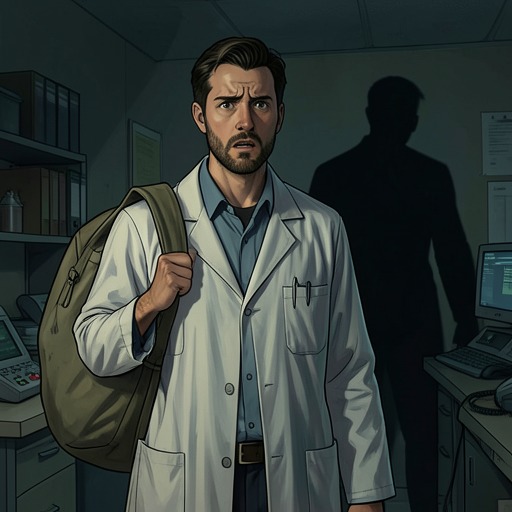
Roadside PicnicBorscht is the bar that gives Redrick Schuhart a familiar destination on the far side of the Zone: a place to drink, wait, gamble, and hear news that he may be too intoxicated to absorb. Its changing atmosphere tracks the damage and attrition in Harmont’s social world. Once associated with dancing and fun, it later appears as a good, old-fashioned pub, while Ernest remains behind the bar and the people who once gave the place its liveliness fall away.
Setting and Routine
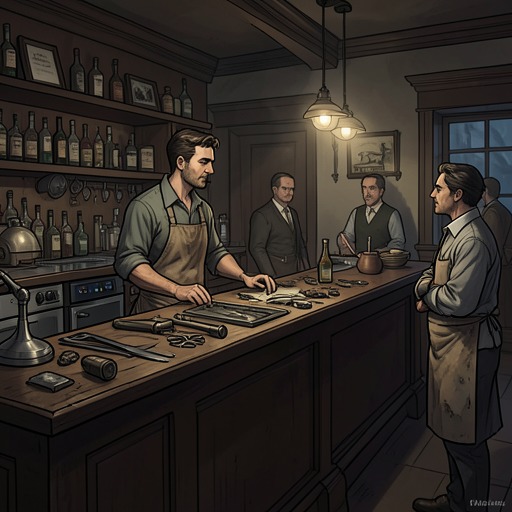
Borscht is woven into the ordinary geography of Harmont, but its hours and thresholds matter. At one point it is empty at that time of day, with Ernest behind the tiled bar, wiping glasses and lifting them to the light. Later, on a hot morning when businesses have not yet opened and the bar is supposed to be closed, Ernest is already at his post. The repeated image of the bartender polishing glasses gives the establishment a dependable routine even as the people who enter it bring disorder, danger, or grief.
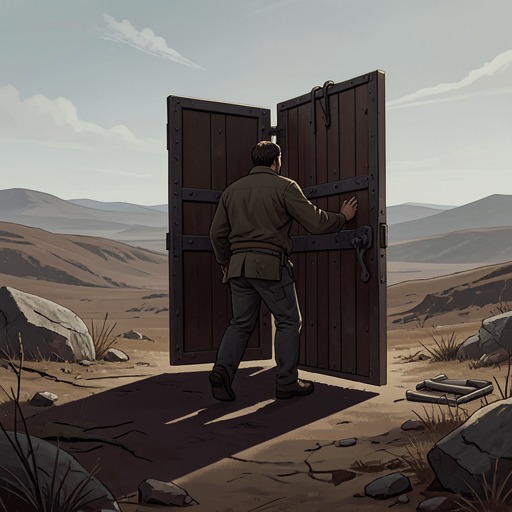
That routine stands in sharp contrast to the Zone. Beyond thick, leaded windows, the Zone lies close enough to seem almost touchable; nearby, an industrial town appears without either living or dead inhabitants, its garage open and its trucks parked outside. The bar belongs to the inhabited side of this boundary, yet the Zone’s effects follow its customers back into ordinary streets and drinking places. Borscht is not an escape from the Zone so much as one of the places where its consequences become part of daily life.
Redrick’s Refuge and Return
Redrick heads for Borscht after leaving someone who had wanted him to stay. The bar is a destination he knows how to reach swiftly, and its familiar emptiness at that hour offers a temporary pause rather than a lasting retreat. After a trip to the Zone, he feeds change into the jukebox and chooses the song “Don't Come Back If You're Not Sure.” The machine howls and rocks while he takes his glass to a corner and plays the one-armed bandit, trying to even old scores. The music and gambling occupy him as time passes; they do not undo what the trip has left behind.
The bar’s rituals also mark Redrick’s drinking as a recurring response to strain. On one visit, Ernest proposes a drink and gulps his own before pouring another. Redrick is so drunk that the announcement of a death does not immediately register as news with personal weight: he initially takes it as merely someone’s death, then joins in drinking to the departed. In another exchange, Ernest asks whether he has had too much; Redrick insists he is fine and ready for the showers. Borscht is where the mismatch between Redrick’s self-presentation and his condition can be seen in public, through the glass in his hand and the blunt exchanges with the bartender.
Ernest and the Bar’s Social World
Ernest is Borscht’s constant human presence. He works behind the bar even when the room is empty or the establishment is technically closed, and Redrick’s familiarity with him appears in the casual address “Ernie.” Their conversations range from drink and teasing remarks about Redrick’s condition to consequential news. Ernest tells him that Kirill Panov has died; the bar becomes the setting in which Redrick receives the news, although drink initially blunts its meaning. The everyday act of pouring another glass is thus placed alongside a death that should arrest the routine.
The bar also touches the wider network of Harmont’s trades and relationships. On a later morning, Redrick returns to find Ernest at his post before the scheduled opening. The scene locates the bar in his habitual circuit, while the surrounding deserted street and unopened businesses make Ernest’s early presence conspicuous. The establishment is a meeting point whose importance lies less in formal events than in repeated access: customers can find Ernest, and news, drinking, and the residue of Zone expeditions gather around the counter.
A Changed Establishment
Later, Borscht is lit up and gives off the smell of food, but it is not the place it was. Dancing and fun have disappeared. Gutalin no longer goes there and has been turned off by it; Redrick, too, has apparently left his mark on the establishment. The account frames this change as a loss of its former social character, not simply a change of business. Borscht remains open and welcoming in material terms, yet the convivial life once associated with it has ebbed.
In a later description, the pub is cozy, the food good, the prices reasonable, and the beer bubbly: a “good old-fashioned pub.” Noonan sees Valentine Pilman in a booth, drinking coffee and reading a magazine folded in half, then approaches him. This quieter scene shows Borscht serving a different kind of encounter from Redrick’s solitary drinking and gaming. It remains a place where people from Harmont’s public world can meet, but the contrast with its lost dancing and fun makes its comfort feel like continuity after a social decline rather than a return to the old atmosphere.
The Bar as a Measure of Harmont
The novel’s repeated visits make Borscht a small-scale record of change. It can be empty, open before its stated hours, noisy with a jukebox, or reduced to a cozy pub where coffee and a folded magazine accompany a conversation. Ernest’s persistence behind the bar lends these changing scenes a stable point of reference; Redrick’s drinking, the news of Kirill’s death, Gutalin’s withdrawal, and Noonan’s approach to Pilman show how much the surrounding social life can alter around that fixed counter.
The contrast between the bar and the Zone is therefore not a simple opposition between danger and safety. The Zone is visibly near, and Redrick carries the strain of expeditions into Borscht, where he turns to liquor, music, and gambling. Meanwhile, the pub itself changes as the people who once animated it disappear or stop coming. It remains a familiar address in Harmont, but familiarity cannot preserve the old community: even here, the consequences of the Zone and the wear of the years show through the ordinary rituals of opening, pouring, wiping glasses, and returning for another drink.