Captain Quarterblad
Roadside PicnicCaptain Quarterblad is the security officer whose recurring pursuit of Redrick Schuhart turns the state’s effort to control stalking into a personal, durable conflict. He appears as an old acquaintance as well as an agent of enforcement: their history makes his authority intimate, but it does not soften the pressure he brings to bear on Redrick or the material necessity that keeps Redrick returning to the Zone.
Identity and Introduction
Quarterblad enters Redrick’s story through the machinery of official procedure. Redrick is ordered to appear before the chief of security, Captain Herzog, and responds with sardonic approval of the bluntness of the order. The exchange establishes the world Quarterblad belongs to: passes, security offices, and commands are ordinary parts of a stalker’s life, even as the people enforcing them are familiar enough to be mocked or recognized.
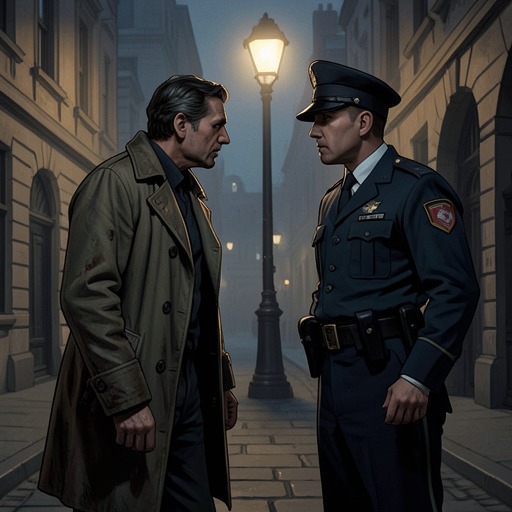
When Quarterblad directly confronts Redrick, the recognition is immediate. Redrick calls him an old friend, while describing his appearance as dried up and yellow. The greeting’s bantering reference to Quarterblad’s liver makes their encounter sound almost sociable, but Quarterblad is angry and refuses to let the conversation become a way out of the questioning. Familiarity sharpens the scene rather than dissolving the power imbalance: Redrick can joke, but Quarterblad can demand an answer.
Pursuit and Enforcement
Quarterblad’s conflict with Redrick concerns the latter’s continued stalking and the contraband associated with it. During a later confrontation, Quarterblad stands from a table as a large UN trooper appears and frisks Redrick. The search gives the enforcement encounter a physical, institutional shape: Quarterblad does not act alone, and Redrick is subject to the force and procedures of an organized security apparatus.
The demand that follows is pointedly controlled. Leaning his fist on the table and straining toward Redrick, Quarterblad tells him to pick up the money without raising his voice. The money is not incidental to the struggle; its presence makes the contest tangible, and the quiet command puts Redrick’s conduct under Quarterblad’s scrutiny. For a few seconds they stare at one another. The pause gives their face-off the quality of a test of will, with the officer insisting on compliance and the stalker resisting the terms imposed on him.
Escape and Consequences
Redrick’s escape from arrest shows the limits of Quarterblad’s immediate control, but not the disappearance of its threat. Redrick flees through a neighborhood he knows from childhood, moving past playing children and hanging laundry and through rotten fences, yards, cellars, abandoned laundries, and coal cellars. He knows the area well enough to have acquaintances and friends there; under different circumstances, he could have hidden for a week. But these are not ordinary circumstances: he is trying to get clear before Quarterblad can cordon off the neighborhood.
The escape is therefore both a practical success and a costly act of defiance. Redrick understands that getting away under Quarterblad’s nose adds twelve months to his sentence. The intimate geography of his old neighborhood offers temporary cover, but familiarity cannot erase the legal consequence of evading capture. Quarterblad’s pursuit reaches beyond the immediate chase in the penalty attached to Redrick’s successful flight.
The Long-Running Conflict
Much later, Redrick’s own account places Quarterblad within a wider chain of antagonisms. He describes his life as one long brawl: he has fought Quarterblad all his life, while Quarterblad fights Throaty, and Quarterblad’s demand of Redrick is that he give up stalking. The conflict is thus not presented as a single arrest or dispute over one transaction. It recurs as part of the durable social struggle surrounding the Zone and those who make their living from it.
Redrick’s answer to the demand is rooted in family responsibility. He asks how he can stop stalking when he has a family to feed, and considers the alternative of getting a job. That pressure clarifies what Quarterblad’s enforcement means to him: abandoning stalking is not simply a change of occupation but a threat to the means by which he supports his household. The officer’s demand and the stalker’s need remain opposed, with no easy reconciliation offered.
Narrative Role
Quarterblad functions as Redrick’s recurring human antagonist, but the relationship is more layered than a simple opposition between a lawman and a criminal. Redrick recognizes him as an old friend, jokes about his health, and nonetheless experiences him as the officer who pursues him, questions him, and seeks to end his stalking. Their familiarity places the conflict inside ordinary social life; security authority is embodied by someone Redrick knows rather than an impersonal abstraction.
The contrast between procedure and personal history also gives the conflict its persistence. Passes, searches, money, cordons, and sentences mark the official mechanisms at work, while Redrick’s remembered routes, local connections, and concern for his family mark what those mechanisms press against. Quarterblad is not shown resolving the underlying dispute. Instead, his repeated presence makes the struggle over stalking feel ongoing: for Redrick, the Zone remains tied to survival, while for Quarterblad, Redrick’s continued return is conduct to stop.