Happiness for everybody! Free!
Roadside Picnic“Happiness for everybody! Free!” is the cry Arthur Burbridge carries down into the quarry and the last imperative that Redrick can summon when confronted with the Golden Ball. The expression’s decisive significance lies in the gap between its boundless promise and Redrick’s inability to give that promise a meaning of his own: after Arthur falls silent, Redrick repeats the words as a test of whether he can want anything good at all.
Arthur’s cry in the quarry
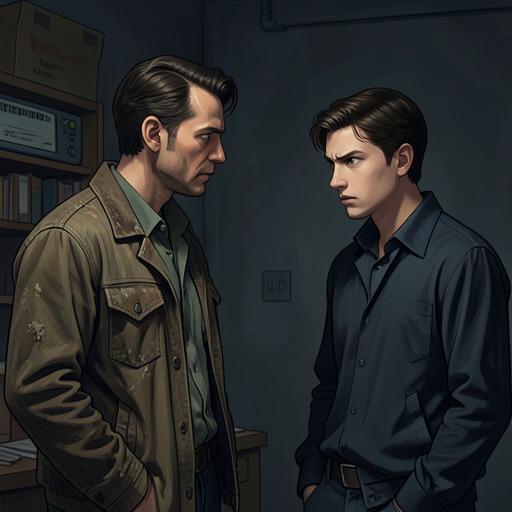
Redrick sees Arthur go down as though he were heading to a party. He beats time, his heels raise white dust, and he shouts clearly and joyously, in a manner Redrick takes for either a song or an incantation. The scene’s festive energy is sharply out of place in the quarry, making the cry sound less like a response to danger than a confident address to the world beyond it.
At first Redrick does not listen to what his talking key is yelling. When he does hear, Arthur’s words unfold as an invitation: happiness is for everybody, there is enough for everybody, and nobody will leave unsatisfied. The repeated promise of happiness and freedom gives the phrase the shape of a public blessing rather than a private request. Arthur addresses everyone, and insists that the good he invokes need not be rationed.
Then Arthur is suddenly silent, as though struck in the mouth by a huge fist. The abrupt break cuts across the exuberance of his call. The expression remains, but its speaker has stopped; Redrick sees the transparent emptiness lurking where Arthur had been. In this moment the words are separated from the cheerful voice that carried them, leaving a promise whose force Redrick will have to confront alone.
From public promise to private litany
Redrick’s later repetition is no longer a festive declaration. Shuddering, with sweet chalk dust gritting between his teeth, he has stopped trying to think and repeats a litany. He calls himself an animal and says he has not been taught the words or how to think. His speech makes the remembered phrase the only language available to him at the instant when he must face what he wants.
The change in speaker changes the expression’s function. Arthur’s cry projects abundance outward, toward everyone; Redrick’s repetition turns it inward, into a standard by which he judges his own capacity to wish. He cannot think of anything except Arthur’s words, and protests that he cannot want something bad. Yet that conviction does not produce a clearly formed personal desire: the universal formula is present precisely where his own words and thoughts fail him.
Meaning and narrative force
The expression holds together a simple, sweeping promise and a deeply uncertain human act. Arthur speaks as if happiness can be offered freely to all; Redrick inherits the words without inheriting Arthur’s apparent certainty. What sounds like an answer in the quarry becomes, in Redrick’s mouth, a desperate effort to believe that his wish can be good even when he cannot formulate it himself.
Its repetition gives the ending its unresolved force. The words promise that nobody will leave unsatisfied, but Redrick reaches them in a state of exhaustion and near-mental blankness, unable to think beyond them. The phrase therefore closes not with a demonstrated fulfillment of universal happiness, but with Redrick’s insistence on the only wish he can still imagine: happiness for everybody, free.