International Institute for Extraterrestrial Cultures
Roadside PicnicThe International Institute for Extraterrestrial Cultures is the principal scientific institution associated with the study and custody of the Zone’s alien materials. In Harmont, it employs researchers and sends equipped teams into the Zone; internationally, it is designated to receive the discoveries that the United Nations seeks to manage. But the Institute’s authority to collect and classify does not amount to mastery. Its reports circulate among specialists, its agents confront a landscape that resists explanation, and many objects acquire practical names before anyone can say what they fundamentally are.
Institutional Role and International Reach
The Institute appears in a conversation about whether anyone still researches the Visitation Zones. Valentine Pilman says that he reads the Institute’s Reports from time to time, linking its work to a continuing record of inquiry rather than to a single discovery. The reports matter as a way of following research, but they do not imply that the Institute has reached a comprehensive account of the Visitors or their artifacts.
Pilman’s separate role as Canadian consultant to the UN Commission on Problems of the Visitation clarifies the division between scientific study and international administration. He explains that he and his colleagues represent the international scientific community when the Commission considers how to implement decisions concerning the internationalization of the Zones. In broad terms, their task is to make sure that the extraterrestrial marvels found there come into the Institute’s hands. The arrangement gives the Institute a formal place in the movement of discoveries from the Zones into organized research, even as the source of those discoveries remains dangerous and difficult to govern.
That custody is not complete. Pilman identifies a steady leak of materials from the Visitation Zones into the hands of irresponsible individuals and organizations, and says that his colleagues deal with the consequences of those leaks. The Institute’s institutional world therefore extends beyond laboratories and official transfers: it is also shaped by the unauthorized circulation of the same materials through channels that responsible authorities cannot fully contain.
Harmont Research and the Zone Boundary
The Harmont branch places the Institute close to the phenomenon it studies. Redrick Schuhart is introduced as a twenty-three-year-old bachelor and laboratory assistant at that branch. His employment locates him inside the formal research establishment, but the narrative soon shows how closely its scientific operations are entangled with the Zone’s practical dangers and with the knowledge of those who enter it.
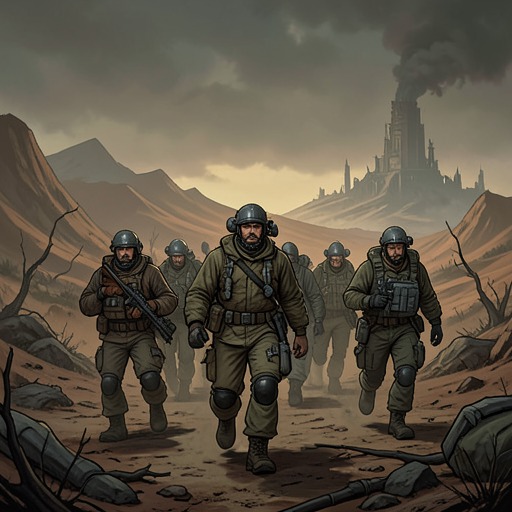
Access is made visible as procedure. Before an expedition, Redrick and Kirill Panov put on special suits; Redrick empties nuts and bolts from a bag into his hip pocket, and the pair cross the institute yard toward the Zone entrance. Redrick’s sardonic description of this routine casts the excursion as a public performance of scientific sacrifice, staged so that everyone can see the heroes of science laying down their lives for humanity, knowledge, and the holy ghost. Beneath the mock-ceremonial tone is a concrete institutional fact: research requires equipment, preparation, and passage across a guarded boundary into a space where ordinary assumptions may fail.
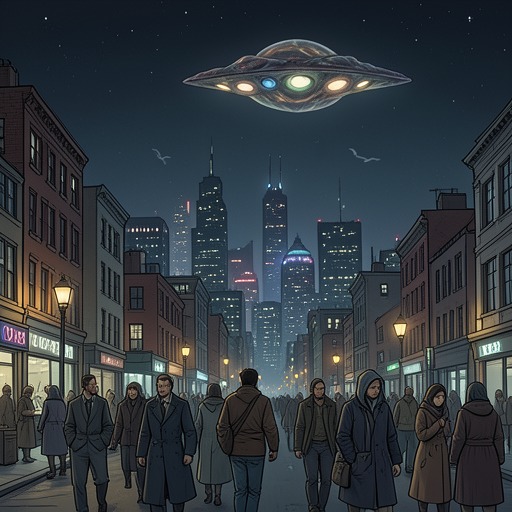
The boundary does not separate the Institute from an intelligible natural landscape. From behind thick, leaded window glass, observers can look directly toward the Zone; its proximity makes it seem almost touchable. Yet the view offers no corresponding clarity. One account describes an apparently deserted industrial town, with blast furnaces, rails, a locomotive, a garage, and trucks, but no living or dead people. In the same description, objects that appear freshly manufactured can stand beside things rusted through. The Institute’s site is thus a threshold between the recognizable infrastructure of human industry and an environment in which familiar measures of age, presence, and material condition become unreliable.
Naming, Use, and the Limits of Explanation
The Institute’s research encounters objects that can be easier to handle than to understand. In one expedition, Kirill asks whether Redrick is looking for graviconcentrates. Redrick refuses to explain his purpose in those terms, saying only that he is looking for what he should be looking for. He throws another nut and instructs Kirill to watch where it goes; the second one lands beside the first, and Kirill starts the Flying boot. Redrick judges that Kirill understands, while privately contrasting the scientist’s desire to find a name for things with the need to act before a settled name is available. The scene makes classification both necessary and potentially misleading: a label may orient inquiry, but the object and its behavior do not become transparent just because someone has named them.
The same gap between handling and comprehension appears in the Institute’s discussion of so-sos, or long-lasting batteries. Researchers have learned how to use them and have observed that, under certain circumstances, they multiply through a process resembling cell division. Yet they still have not found a way to make a new one. Reproducible use and an observed mode of multiplication have not supplied either control over production or a full explanation of the artifact.
Magnetic traps offer a sharper example of knowledge that is firm in one respect and incomplete in another. The researchers know that the objects are magnetic traps, and Panov has demonstrated this in an ingenious fashion. They do not, however, know the source of the powerful magnetic field or what causes it. The Institute’s categories can therefore be accurate as working descriptions while leaving the central mechanism unresolved; its science advances by distinguishing observed properties from explanations it cannot yet give.
Circulation, Security, and Significance
The route from Zone to laboratory is only one possible route for an artifact. A black-market list includes an item called a hoop, and Bones asks about it while inspecting the list beside Throaty. Redrick, holding an open briefcase on his lap, says nothing. The exchange gives the same material world a different vocabulary and setting: objects encountered in the Zone can pass into commercial inventories, where a name marks something for sale without establishing what it does or how it should be used. Read alongside the Institute’s stated concern about leaked materials, the scene shows that scientific custody competes with informal trade rather than simply succeeding it.
That conflict also reaches official security. Captain Quarterblad searches a briefcase and lays out the confiscated swag on a table: among the contents are two small empties, nine batteries, and black sprays of various sizes. The Institute is not described as personally conducting this search, but the seizure shows one consequence of the wider struggle to control Zone goods. Materials may move through research, smuggling, and enforcement, each setting imposing its own terms of access and classification.
The Institute’s importance lies in this uncertain position between discovery and control. It is the intended institutional destination for extraordinary materials under the international arrangements described by Pilman, and it has researchers capable of demonstrating properties or learning how to use particular objects. At the same time, the Zone exceeds the categories applied to it, practical understanding can stop short of explanation, and materials continue to leak beyond official custody. The Institute stands not as a final authority over the Visitation’s remnants, but as one participant in an ongoing contest to observe, name, use, and contain things whose meanings remain unfinished.