Kamikaze Incident
Roadside PicnicThe cemetery-returner episode gathers several unsettling reports of dead people appearing again after the Visitation, turning an ordinary human destination—the home—into a threshold that the living cannot confidently interpret. Redrick Schuhart sees a bent figure moving among the cemetery crosses and later encounters another such figure on the road to town. Elsewhere, a drunken driver recounts a dead man’s return to a house abandoned by his family. None of these observations establishes what the returned figures are or what they want; the episode’s force lies in the gap between the recognizable gestures of a person and the unrecognizable condition of the one performing them.
Reports of the Returned Dead
A driver reeking of liquor tells Redrick that a stiff from the cemetery appeared on a neighborhood block that morning. The returned man had died roughly thirty years earlier, before the Visitation. His widow, daughter, son-in-law, and grandchildren had long since moved away, and the old family house had remained locked for years. The man nevertheless came back to it, as if the address still held its place in his habits or in the world.
The neighbors gathered to stare but were afraid to approach. Someone eventually broke open the door to make an entrance for him. The returned man rose, went inside, and shut the door behind him. The driver had been late for work and did not know what happened afterward. The account therefore ends at the point of entry: the house admits its former occupant, but neither the neighbors nor the narrator can say what that return means or what followed inside.
Redrick’s Sight of the Figure
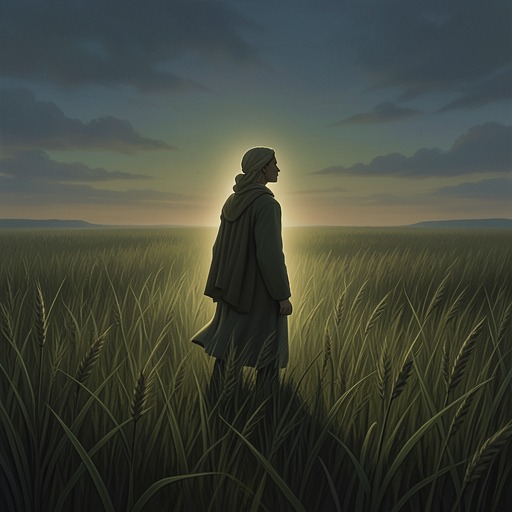
Redrick’s own observation places the returned dead among the cemetery crosses at night. A bent black figure wanders blindly through the spotlights, bumps into a huge cross, stumbles, collides with it again, then walks around it with its arms extended and fingers spread. Its movement is not merely aimless: it continues with a stubborn, mechanical persistence. It appears to fall underground, then surfaces again farther away, as though ordinary space offers no reliable account of its path.
The patrol lights suddenly go out; the transmission squeals, the engine roars, and the car races toward town. The abrupt retreat does not explain the figure, but it marks the encounter as something the patrol cannot—or will not—remain to face. Redrick, by contrast, later drives on without slowing when a bent figure strides rhythmically into the middle of the road. He expects it to appear, hunches over the wheel, and passes it. The detail that it is headed for town connects the road encounter to the earlier cemetery sight, while Redrick’s steady forward motion makes the impossible presence part of a route he has learned to travel.
Familiar Gestures, Unfamiliar Conditions
The reports rely on recognizable actions: a person walks, returns to an address, waits by a fence, enters a house, and shuts the door. Yet the circumstances strip those gestures of their ordinary reassurance. The dead man has been gone for three decades; his family and neighbors belong to a changed present, and the home is locked. At the cemetery, the figure’s repeated collisions and sudden reappearance make movement itself difficult to read. It looks human enough to follow a path, but its persistence and relation to space resist ordinary human explanation.
The driver’s account and Redrick’s direct sight also offer different kinds of uncertainty. The driver supplies a neighborhood’s collective reaction and a concrete history—the death before the Visitation, the absent family, the forced-open door—but admits that he does not know the outcome. Redrick sees the figure’s bodily motions without gaining an explanation of its identity. In both versions, observation accumulates while understanding remains out of reach. The episode does not resolve the returned dead into a clear category; it makes the attempt to classify them part of the unease.
Place in the Novel’s World
The Visitation is the temporal marker in the driver’s story: the man died before it, yet appears in the world afterward. That contrast places the return among the novel’s consequences of the transformed environment without specifying a mechanism. The figure’s movement from cemetery toward town further unsettles the division between a place of burial and inhabited civic space. It does not remain safely among the graves; it follows the road that leads back to human settlement.
The cemetery returners also echo the novel’s broader difficulty in naming unfamiliar phenomena. Redrick’s encounter with the figure does not become knowledge simply because he has seen it, just as a scientific label elsewhere can identify an object without explaining its origin or operation. Here, the everyday label of the dead person who has come home is equally inadequate: the gestures are legible, but the being behind them is not. The episode’s ending offers no explanation or confirmed destination. The figure continues toward town, and the driver’s story stops at a shut door, leaving the boundary between death and return open.