Marriage and partner relationship of Redrick Schuhart and Guta
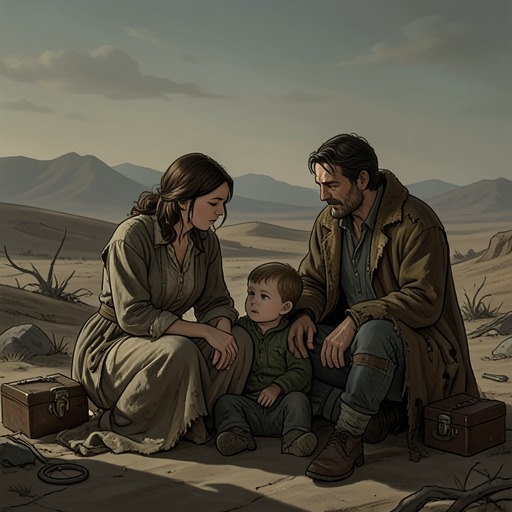
Roadside PicnicRedrick Schuhart and Guta’s marriage is an intimate bond under pressure: Guta chooses to have Redrick’s child despite her mother’s opposition, while Redrick’s dangerous, exhausting life repeatedly intrudes on their home. Their relationship joins tenderness to uncertainty, making domestic closeness both a refuge and something neither can take for granted.
Marriage and the Decision to Have a Child
Guta’s commitment becomes explicit when she tells Redrick that her mother wants her to have an abortion, but that she does not want one: she wants to have his child. Redrick does not understand her announcement immediately; he has walked several steps before its meaning reaches him. The pause gives the exchange its force: this is not an abstract declaration about their future but a decision that Redrick must first absorb, and one Guta states as her own despite the pressure from her family.
The pregnancy makes the marriage a relationship with consequences extending beyond the couple. Guta’s choice binds their shared future to a child while exposing a divide between what her mother wants and what she herself wants. The available passage records no resolution of that conflict with her mother, and no easy assurance about what will happen to Redrick and Guta. Its emphasis is instead on Guta’s clear refusal and the uncertainty that immediately follows for the couple.
Separation, Reunion, and Home
The narration first presents Redrick’s isolation: he feels an urge to howl, and people on the street avoid him. The change comes when he sees Guta approaching. Her arrival does not erase the strain around him, but it alters the scene; the sight of her gives him a point of human connection when he has been left alone with his distress.
A later homecoming makes that closeness physical. Redrick enters carrying a heavy basket, and Guta throws her arms around his neck, then remains frozen with her face against his chest. He can feel her heart beating through his jumpsuit and heavy shirt. Rather than rushing her, he stands patiently until she calms down, even as he becomes fully aware for the first time how tired and worn out he is. The embrace is mutual, but the moment also registers the cost of his life: her need to hold him and his exhaustion occupy the same stillness.
When Guta finally lets go, she speaks in a low, husky voice, turns on the entry light, and goes into the kitchen to prepare coffee. The ordinary task follows the intensity of the reunion without diminishing it. Their home is expressed through warmth, familiar smells, physical care, and a small routine—not as a guarantee that danger has passed, but as a place where Redrick can return and where Guta can begin tending to him.
Uncertainty and the Shape of Their Bond
Guta’s question about what will happen to them now gives their relationship an unresolved edge. Her tears make the uncertainty immediate, while her earlier decision to have Redrick’s child shows that uncertainty has not made her withdraw from a shared future. The passages do not supply a settled answer; they preserve the tension between a chosen commitment and circumstances that the couple cannot confidently control.
That tension also shapes how the marriage is shown. It appears in consequential choices and brief gestures rather than in a sustained account of married life: Guta’s refusal of the abortion her mother wants, the delay before Redrick understands her words, her tearful question, and the embrace at his return. Together, these moments make the relationship legible as an active attachment, repeatedly renewed in the face of danger and fatigue.
Narrative Significance
Redrick and Guta’s marriage brings the hazards of Redrick’s life into contact with ordinary domestic intimacy. On the street, people avoid him; at home, Guta holds him close, waits for him to settle, and puts coffee on. The contrast does not make home a simple escape. His exhaustion follows him through the door, and the couple’s question about their future remains unanswered.
Guta is not merely a figure waiting for Redrick’s return: at the crucial point in the evidence, she states what she wants about the pregnancy even when her mother wants something else for her. Her decision gives the relationship a future-oriented stake, while Redrick’s delayed comprehension and later weariness show how difficult it is for him to meet that future without the burdens of his life pressing in. The marriage thus holds together affection, agency, vulnerability, and uncertainty without resolving them into a promise of safety.