Stalkers
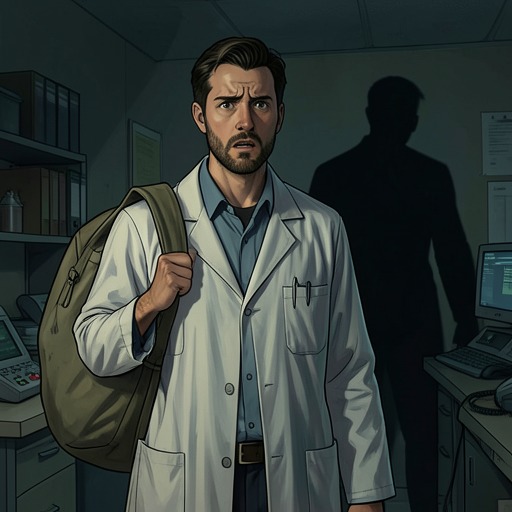
Roadside PicnicStalkers are the people of Harmont who enter the Zone to take the extraterrestrial artifacts left by the Visitation. Neither simply explorers nor authorized researchers, they are described as thieves risking their lives for whatever they can get their hands on. Their emergence as a profession exposes a central contradiction of the Zone: its contents are officially objects of scientific and international control, yet practical access depends in part on people prepared to cross its lethal boundary.
Identity and Work
The label is introduced as local Harmont terminology. Asked whether anyone else seeks the Zone’s treasures, Dr. Pilman identifies stalkers; his interviewer says he does not know what the word means, and Pilman explains that Harmont uses it for those who risk their lives in the Zone to seize whatever they can. He calls it a whole new profession, defining the group less by formal membership than by a dangerous occupation and its illicit purpose.
That description carries a tension between labor and criminality. Stalkers perform the risky work of retrieving artifacts, but the account frames them as thieves rather than as members of an officially recognized expedition. Their access can yield objects of interest to scientists, traders, and authorities, while exposing the person who retrieves them to the hazards of the Zone. The profession turns danger into a means of livelihood without making the danger reliably manageable.
Knowledge, Institutions, and Contraband
The institutional account of the Zone does not make stalkers redundant. Dr. Pilman is a Canadian consultant to the UN Commission on Problems of the Visitation, but distinguishes that role from studying extraterrestrial cultures: he and his colleagues represent the international scientific community in questions about implementing UN decisions on internationalizing the Zones. Their stated task is to ensure that extraterrestrial marvels found there reach the International Institute. The existence of stalkers marks a competing route by which materials leave the Zones.
Pilman describes a steady leak of materials from the Visitation Zones into the hands of irresponsible persons and organizations, adding that his colleagues deal with the results of those leaks. The wording makes containment an institutional concern, but also reveals its limits: the flow is ongoing, not a single breach that has been decisively closed. Stalkers belong to the human process through which Zone materials enter circulation beyond official channels, though the evidence does not reduce every leak to their actions alone.
The gap between retrieval and understanding is just as important. Pilman says researchers have been digging around in the Zone for twenty years without knowing even a thousandth of what it contains. In a separate discussion of the artifacts, he stresses that researchers have unearthed many miracles and learned to use some for their own needs, yet practical success does not amount to an explanation. The example of so-so batteries makes the distinction vivid: people have learned how to use them and the conditions under which they multiply in a process like cell division, but not how to produce one. Stalkers operate in that same landscape of partial knowledge, where a useful object can be recognized and carried away without its workings being understood.
Risks and Field Knowledge
The Zone’s hazards make the occupation more than ordinary smuggling. A search for an object identified as a nut proceeds by careful instruction: the person driving a Flying boot is told to move at the lowest speed and stop two feet away. When asked whether he is looking for graviconcentrates, Redrick refuses to name his objective, saying he is looking for what he should be looking for. The exchange shows how action in the Zone depends on controlled movement and attention to particular objects, while terminology and purpose may remain uncertain even among people operating there.
Official surveillance adds a human danger beyond the Zone itself. Redrick reasons that no stalker in his right mind would go near the Zone, even at gunpoint, if he knew he was being watched. In this calculation, surveillance can stop an entry before the hazards inside come into play; being observed changes what a stalker is willing to risk. The same person who must read the Zone’s conditions must also judge whether authorities are tracking him.
Social and Narrative Significance
Stalkers stand between the Zone and the institutions that seek to classify, study, and secure its contents. The international system aims to direct artifacts toward the International Institute, while the profession described in Harmont moves them through unauthorized hands. Neither institutional authority nor practical familiarity resolves the underlying uncertainty: researchers possess artifacts they can use without fully understanding, and Zone workers must act amid dangers that cannot be mastered by naming them.
The term therefore names both a livelihood and a conflict over access. Calling stalkers thieves foregrounds the law and the risks they impose; calling their activity a profession acknowledges that it has become a durable feature of life around the Zone. Their presence makes the Zone’s wonders not merely scientific discoveries but contested materials, carried by vulnerable individuals into a world trying to control their movement and still unable to explain them.