The Visitation
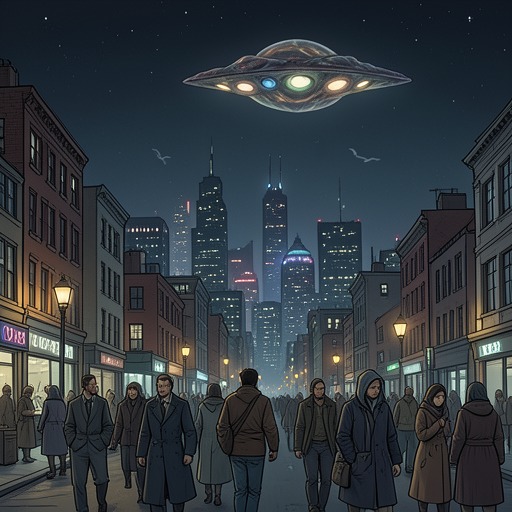
Roadside PicnicThe Visitation is a brief extraterrestrial encounter whose material traces transform parts of Earth into dangerous, contested zones without explaining who the visitors were or why they came. In Harmont, the event becomes at once a scientific discovery, an international political problem, a source of illicit trade, and an unresolved threat to human life and inheritance. Its decisive revelation is not a message from the visitors, but the certainty that humanity is not alone—and the uncertainty of what that knowledge means.
The Encounter and Its Pattern
The novel’s framing interview with physicist Valentine Pilman looks back on the Visitation after three decades. Asked about its most important discovery, Pilman names the event itself. The visitors’ identity, origin, purpose, short stay, and departure remain unanswered; what cannot be doubted is that humanity has learned it shares the universe with other intelligent life. For Pilman, that fact outweighs any particular artifact or theory about the visitors.
Pilman’s best-known scientific contribution, the Pilman Radiant, gives the encounter a striking geometric pattern. He asks listeners to imagine a globe struck by bullets: the holes would fall along a smooth curve. The six Visitation Zones lie on Earth as though six shots had been fired from somewhere along the Earth-Deneb line. The image offers a pattern, not an explanation: it locates the zones in a coherent arrangement but does not disclose the visitors’ route or intention.
The radio interview also fixes the scale of the event in public memory. Its broadcast takes place on the thirtieth anniversary of the Visitation, while Pilman recalls that he initially thought the report was a hoax. He had expected a place such as the Gobi or Newfoundland to be the site of an invasion from space, not his own small town of Harmont. The distance between an abstract possibility and a familiar hometown is part of the event’s shock.
The Zones and Their Unsettled Meaning
The encounter is represented not by a sustained meeting between civilizations but by what remains behind. Pilman’s roadside-picnic analogy imagines extraterrestrials briefly stopping on a cosmic road and leaving discarded objects in their wake, as careless people might leave litter after a roadside meal. The comparison lowers the apparent grandeur of the event: what may be a momentous passage for humanity could have been incidental to the visitors, with Earth no more than a place they passed through.
That analogy is explicitly only a picture, not a theory. Pilman notes that serious xenologists offer more flattering possibilities, including the idea that no Visitation has yet occurred in the fullest sense and that it is still to come. On this account, a highly rational culture could have deposited artifacts for humanity to study, expecting people to build a vast technological structure from them. These alternatives expose the limits of interpretation: the same material traces can be treated as rubbish, evidence of contact, or an intentional test, but none establishes what the visitors meant.
The comparison between alien artifacts and familiar tools also marks a boundary in human knowledge. People have learned to use the so-so batteries and even observed circumstances in which they multiply through a process resembling cell division, yet practical success does not explain how the devices work or what their relationship to their effects is. The Visitation thus leaves behind objects that can be handled and exploited before they can be understood. Human contact with the visitors is mediated by material fragments whose uses do not amount to knowledge of their makers.
Science, Governance, and the Black Market
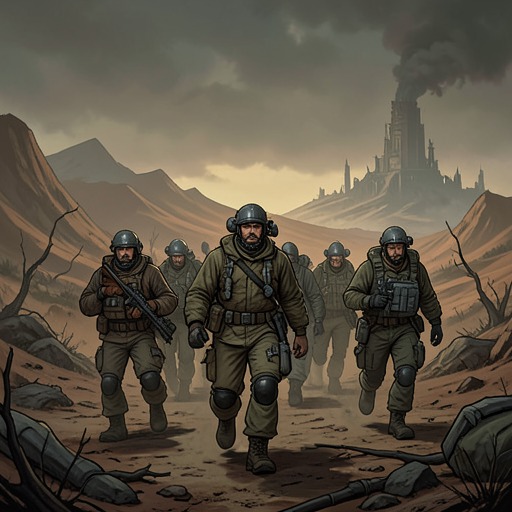
In Harmont, the legacy of the Visitation becomes an institutional problem as well as a scientific one. Pilman describes his work as a Canadian consultant to the UN Commission on Problems of the Visitation: he and his colleagues represent the international scientific community when decisions concerning internationalization of the Zones must be implemented. Their task includes ensuring that extraterrestrial marvels found there reach the International Institute for Extraterrestrial Cultures.
That formal chain of custody is incomplete. Pilman says that materials steadily leak out of the Zones into the hands of irresponsible people and organizations, and that the commission deals with the consequences. The Zone’s discoveries therefore move through competing systems of value: they are scientific specimens to be collected, objects subject to international oversight, and contraband that can circulate beyond those controls. The Visitation creates the conditions for this struggle, even though the visitors themselves are absent from it.
The contraband is not an abstraction. When Captain Quarterblad searches a briefcase, he lays out two small empties, nine batteries, and black sprays among the recovered goods. The scene makes visible the material traffic produced by the Zones and the policing directed against it. The objects’ presence in a briefcase, rather than under institutional custody, shows how easily the encounter’s remnants can become part of a private smuggling economy—and how enforcement confronts the artifacts after they have already entered that economy.
Consequences and Competing Fears
The Visitation does not produce a single, uniform aftermath across Earth. In conversation about the planet’s prospects, one character says that the event left no aftereffects in their part of the world, for the most part, while adding that this does not rule out other possibilities. The qualification matters: a comparatively limited local legacy cannot establish that the encounter was harmless everywhere, or that its consequences are fully known. The novel holds absence of obvious aftereffects apart from proof of safety.
The possibility that the encounter has altered human life becomes more intimate and disturbing in Redrick Schuhart’s thoughts. In a moment of fear, he rejects the roadside-picnic image and imagines the event instead as an invasion: unable to change adults, the visitors might enter children’s bodies and remake them in their own image. This is his horrified interpretation, not a confirmed explanation of the visitors’ purpose. Its force comes from the reversal it imposes on the earlier analogy: what looked like alien indifference might conceal a threat directed toward humanity’s future.
A broader fatalism shadows both explanations. One character argues that, without the Visitation, something else would have supplied the occasion for human destructiveness: people always find the mud. The claim does not absolve the encounter of its dangers; it places those dangers beside persistent human tendencies to exploit and harm. The Visitation furnishes unfamiliar materials and unsettled conditions, but people’s conduct in response remains part of the disaster’s story.
Significance
The Visitation is both an event and an enduring absence. It changes Earth by leaving Zones, artifacts, and consequences that science and international institutions struggle to manage, yet it offers no direct account of the civilization that caused them. Pilman’s radiant describes where the Zones fall; it cannot say why they were made. Research can handle the remnants, governments can attempt to control their movement, and smugglers can turn them into goods, but these practices do not close the gap between using the visitors’ objects and understanding the visitors.
That gap gives the event its lasting narrative tension. The roadside-picnic image makes humanity’s encounter seem accidental, even trivial from an extraterrestrial perspective; the invasion fear imagines that the same silence may conceal a design with consequences for children. Between those poles, the Visitation remains an undeniable contact whose meaning no character can settle. Its most secure result is the knowledge that other intelligent life exists; its most unsettling legacy is that this knowledge arrives without an explanation, a conversation, or assurance of what comes next.