Zone-emigrant catastrophe effect
Roadside PicnicThe Zone-emigrant catastrophe effect is Valentine Pilman’s account of a calamity that follows certain people out of the Zone: those who lived through the Visitation seem to carry an abnormal concentration of death and disaster into the places where they settle. The effect expands the Zone from a bounded, guarded territory into a force with consequences elsewhere, while Pilman’s distinctions make clear that mere residence in Harmont is not enough to trigger it.
The Zone and Its Visible Boundary
The Zone first appears as a place that can be seen from behind thick, leaded windows, so close that it seems reachable by hand. That view is deceptive. The landscape beyond the glass is not an ordinary extension of the town: an industrial district lies there with blast furnaces, rails, a locomotive, and a garage, yet there are no people, living or dead. The contrast between familiar industrial structures and an emptied human world gives the Zone an unsettling physical presence without making its workings any more understandable.
Its boundary is also a practical one. Researchers put on special suits and cross the institute yard to enter by the established routine, a public performance that presents them as heroes risking their lives for humanity and knowledge. The ritual makes the threshold visible and regulated; it does not make what lies beyond it safe. The Zone is at once an adjacent landscape, an area entered under procedure, and a source of consequences that may outlast a visit to it.
Pilman’s Example
Pilman introduces the effect through a hypothetical ordinary man: a barber, born to a barber and descended from a barber, who leaves the Zone area and opens a shop in Detroit. After his arrival, more than ninety percent of his clients die within a year. The deaths come through varied forms of violence and accident, including car crashes, falls from windows, and killings by gangsters or muggers. The example is deliberately domestic in its starting point—a tradesman opening a neighborhood business—and catastrophic in its result. The emigrant need not arrive as a conqueror or an obvious threat; the horror gathers around the ordinary routines of a new home.
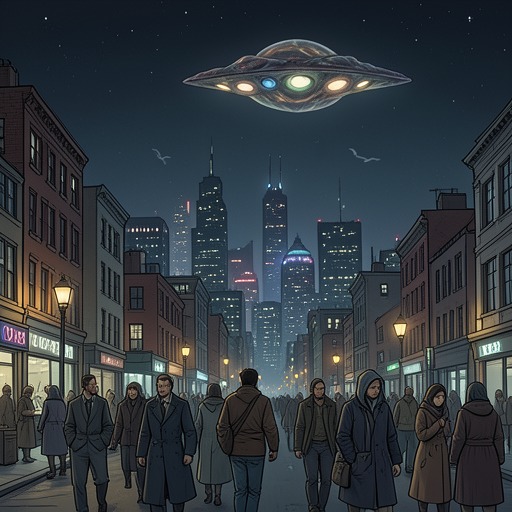
Pilman extends the example from the barber’s customers to the surrounding city. Detroit and its suburbs suffer further disasters, including typhoons and tornadoes of a kind not seen there since the nineteenth century. He describes the pattern as recurring wherever an emigrant from a Zone area settles, not as a single misfortune attached only to the barber or his shop. The city’s calamities turn individual relocation into a wider public danger.
Who Carries the Effect
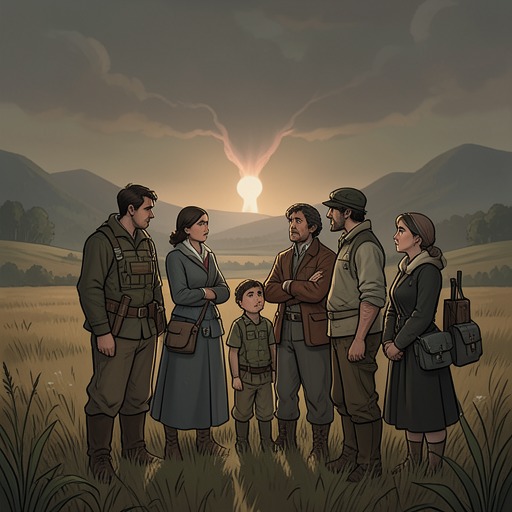
The decisive condition is survival through the Visitation. Pilman says the reaction is caused only by emigrants who actually lived through it. People born after the Visitation do not affect the statistics for accidents and disasters in the same way. The distinction separates direct experience of the extraordinary event from later life in the same place: the effect is not attributed indiscriminately to everyone with a connection to a Zone area.
That distinction also clarifies the difference between origin and exposure. It is not simply that someone moves from Harmont, nor that the Zone remains geographically nearby. In Pilman’s account, the relevant person is a survivor of the Visitation who subsequently relocates. The mechanism is unexplained, but the condition is sharply stated, leaving the survivors’ history as the crucial link between the Zone and distant catastrophe.
Scale, Proportion, and Uncertainty
Pilman presents the danger as measurable in its pattern, even though its cause remains mysterious: the number of disasters is directly proportional to the number of emigrants who have moved to a city. More survivors mean more calamities in the receiving area. The claim turns migration into a grim arithmetic, linking a population count to the scale of public misfortune without specifying an individual prediction for any particular person or city.
His explanation retains important limits. He speaks of what is observed in cities and areas where survivors settle and distinguishes those survivors from people born afterward; he does not provide a scientific account of how the disasters are produced or a method for predicting their precise form. The barber’s clients, the city’s wider disasters, and the proportional relation together make the pattern alarming, but do not resolve its underlying cause.
Consequences Beyond Harmont
The effect gives the Zone a reach that its visible perimeter cannot contain. From the institute windows, the Zone is a near, empty industrial landscape; in Pilman’s account, its consequences appear in faraway streets, shops, and suburbs. A survivor’s relocation makes the boundary mobile in effect, even when the Zone itself remains where it is. The apparent contradiction—an event rooted in one territory producing damage elsewhere—makes the Zone harder to treat as a quarantined site.
Pilman also draws a practical distinction between survivors and post-Visitation newcomers. He tells his listener that they have lived in Harmont for ten years but moved there after the Visitation, and says it would be safe to relocate them even to the place under discussion. That reassurance does not undo the broader warning; it shows that the effect is selective rather than a blanket danger attached to every person who has lived in Harmont. The catastrophe is tied, in Pilman’s account, to a particular history of exposure.
As a result, the phenomenon complicates any simple division between the Zone and ordinary civic life. The Zone’s material strangeness can be enclosed behind windows, watched, and approached through controlled entrances, but the survivors’ movement carries an indirect hazard into the world beyond. The effect turns emigration into more than escape or resettlement: for those who lived through the Visitation, the attempt to leave may bring disaster to the community that receives them.