Joseph G. Perotti
Robert B. Parker's WonderlandJoseph G. Perotti, the speaker of the Massachusetts House of Representatives, occupies a pivotal position in the political landscape surrounding the proposed Wonderland casino. As a legislator connected to the process for awarding casino licenses, he becomes a focus of Spenser’s investigation into the money moving among casino developers, political organizations, and Gino Fish’s companies. The evidence raises serious questions about payments and political alignment, but the records presented in the story do not by themselves settle whether Perotti committed a crime.
Political Position and Casino Stakes
The licensing process gives Perotti’s office significance beyond its legislative title. Wayne Cosgrove explains that casino licenses are awarded by a four-person board that includes the governor, the secretary of state, and the speaker of the house. At the time of that explanation, the board has not convened. Casino companies, Wayne says, spend millions lobbying for legislation that would make licenses possible, while securing land in Revere would give a prospective developer a major advantage.
That political framework places Perotti near the point where public authority and private investment meet. Rick Weinberg’s plans depend on Wonderland becoming a casino project, and a later exchange establishes that Rick had promised to push Wonderland through. The story does not provide a complete account of Perotti’s formal actions on the project; instead, it makes his importance legible through the licensing structure, the money trail, and the question of whether he remained aligned with Rick.
Political Donations and the Family Connection
Wayne’s examination of political contributions begins with the ordinary public record. He finds that Rick gave several thousand dollars here and there to senators, congressmen, and council members in Revere, describing the pattern as expected political giving. He then looks beyond those direct contributions to super-PAC donations. Wayne explains that candidates can receive unlimited money from such committees, while donors must be disclosed.
In the records Wayne finds, Rick appears to have given nearly half a million dollars to a super-PAC through Envolve Development, his front company. The committee was run by Perotti’s brother. That connection makes the donation relevant to the investigation, but it is not the same as evidence that money went directly to Perotti or that Perotti personally directed the contribution. Spenser and Zebulon Sixkill treat the discovery as a missing link in their inquiry; its significance lies in connecting Rick’s casino interests to an organization controlled by a close relative of a powerful legislator.
A later conversation adds another disputed strand. Spenser tells Lewis Blanchard that Perotti accepted twice the amount of Rick’s donation from Harvey Rose. Blanchard’s startled reaction indicates that he did not know this information. The exchange suggests competing political approaches to the same public figure, but it does not establish the exact circumstances or terms of either contribution. The novel keeps the distinction between suspicious political access and proven misconduct in view.
The State House Encounter
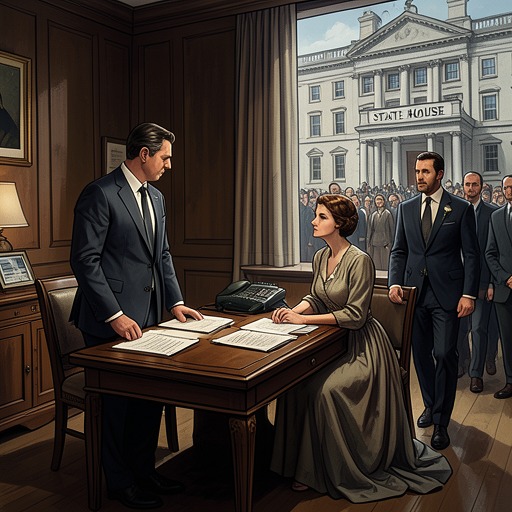
Spenser confronts Perotti at the Massachusetts State House after the House has broken for the day. The building’s official grandeur frames a brisk, practical encounter: Perotti emerges from his office about forty minutes later, walking down a marble hallway while discussing an important matter with a flustered young aide carrying files. Perotti carries nothing. When Spenser addresses him, Perotti smiles and offers his hand, a polished gesture that the narrator associates with politicians greeting strangers.
Spenser asks when Perotti told Rick Weinberg that he had switched teams. Perotti’s face reddens. He looks down the marble staircase toward the aide and nods quickly; she trots away. He then tries to continue moving, holding the rail as if to escape the conversation. The scene does not explain what the alleged switch involved or give Perotti’s account of it. Instead, his visible discomfort and attempt to leave make the question of political allegiance immediate without resolving it.
Alleged Payments and Evidentiary Limits
The investigation later turns from contribution records to a more troubling document: a detailed account of payments from Gino Fish’s various companies to Perotti. Wayne assesses the material as showing direct payoffs, some apparently legal and most apparently not, but immediately stresses the central difficulty: proving what the document says is another matter, and its accuracy remains uncertain. He also identifies two companies listed as making the payments as belonging to Gino Fish. This links Fish’s business interests to the alleged payment trail, but the information remains an account in a document rather than a completed legal finding.
Spenser carries a flash drive containing the payment account to Gino, with Vinnie Morris present and listening. He describes the file as an account of payments from Fish’s companies to Perotti. Gino responds by asking what of it; the scene supplies no confession or confirmation. Perotti himself is not shown answering the allegations. The resulting portrait is therefore built through records, intermediaries, and tense encounters rather than through an explanation from the speaker.
Narrative Role
Perotti’s importance comes from the convergence of his office and the competing interests surrounding casino development. Rick Weinberg’s political giving, the super-PAC connected to Perotti’s brother, the reported payments from Fish-linked companies, and the allegation that Perotti changed sides form a chain of leads, not a single conclusive proof. The novel’s investigative movement depends on following that chain while preserving the difference between a disclosed donation, an apparent payoff, and a charge that has actually been established. Perotti remains a powerful but only partially observed figure: the public office is clear, the financial questions are grave, and the final evidentiary judgment remains open.