Massachusetts passes casino gambling law
Robert B. Parker's WonderlandMassachusetts’s casino-gambling law transforms casino development from a long-running political ambition into a contest for a limited number of licenses. As Spenser learns from reporter Wayne Cosgrove, the law creates three openings, including a highly coveted license near the city. The prospect gives land acquisition and political access immediate value, while the licensing process—and the money moving around it—becomes central to the investigations that follow.
The law and the licensing contest
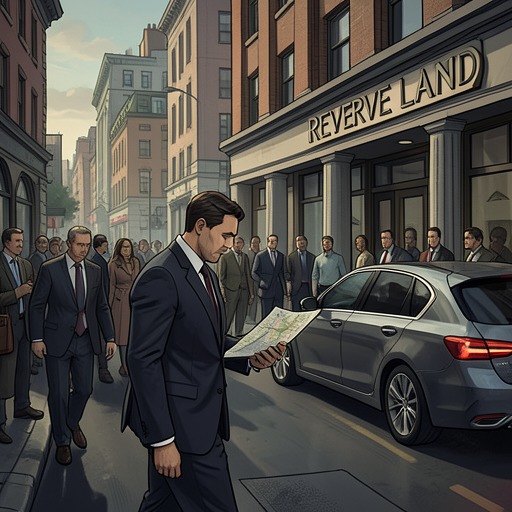
Wayne explains the new law while Spenser is trying to understand why Envolve Development has acquired property in Revere. In Wayne’s account, the state has three licenses available: one in western Massachusetts, one in the south that is considered likely to go to the Wampanoag tribe, and one near the city. That last license is the major prize, with numerous prominent bidders competing for it.
The law establishes the possibility of casino development, but it does not mean a license has already been awarded. Wayne describes a four-person board involving the governor, the secretary of state, and the speaker of the house. The board has not yet convened; when it does, it is to select its fourth member and begin the licensing process. The gap between legalization and selection leaves a valuable prize in prospect, with companies able to position themselves before the formal decision.
Land as an advantage
Wayne identifies Rick Weinberg’s organization as the front-runner in the competition and presents Envolve as a likely purchasing company rather than the gaming company itself. Using a separate buyer, he explains, can keep the actual bidder’s identity from pushing up the price demanded by property owners. Securing land in Revere would therefore give Weinberg’s interests a significant foothold before the license is awarded.
The law also gives a new context to Weinberg’s public case for the Wonderland project. He argues that it would bring jobs and infrastructure, revive the beach, and restore the original Wonderland. He says the planned customers are high rollers rather than local residents. These promises frame the development as a source of economic renewal, even as the casino bid makes the underlying land and the people who own it part of a high-stakes acquisition contest.
Political money and the limits of proof
The licensing competition prompts scrutiny of how Weinberg and his associates seek political influence. Wayne finds conventional contributions to politicians and local figures in Revere, then traces nearly half a million dollars given through Envolve to a super PAC run by the brother of Joseph G. Perotti. He explains that super-PAC contributions can be unlimited, while donors must be publicly disclosed. The payment raises questions about the connection between the casino initiative and Perotti, but the donation alone does not establish an illicit exchange.
Later, an anonymous envelope delivers a flash drive containing a fifty-eight-page spreadsheet of transfers through area banks. Wayne reads the records as showing direct payoffs to Perotti; he says some appear legal and most do not. He also identifies two companies in the spreadsheet as belonging to Gino Fish. Yet he cautions that the document’s claims still need to be proved and may be false; verifying them would require a court order. The law thus supplies the motive and political stakes for following the money, not proof that every suspected payment bought influence.
Significance in the investigation
The statute links several lines of the story: the race for a casino license, Weinberg’s effort to secure Revere property, Envolve’s role in that acquisition, and the search for political payments connected to Perotti and Fish. Its passage creates the opportunity that makes these activities intelligible as parts of a single competition. At the same time, the unfinished licensing process and the uncertain status of the financial records preserve an important distinction: a plausible pattern of influence is not yet a demonstrated crime.