Ocean View condo board
Robert B. Parker's WonderlandThe Ocean View condo board stands at the point where a private property dispute becomes a collective decision: according to Henry Cimoli, a majority vote can authorize the sale of the building, even over the objections of residents who do not want to leave. The board’s eventual unanimous acceptance of Rick Weinberg’s offer transforms the Ocean View holdouts’ struggle and brings the proposed casino development closer to securing valuable land.
Authority and representation
The board’s power is described through Henry Cimoli’s account of a call he received: the condominium’s original deed, as he understood it, allowed the board to sell with a majority vote. His tentative qualification that this was in the deed “or something” matters. The governing rule reaches him secondhand, but its practical implication is clear: individual residents’ refusal to sign does not necessarily prevent a sale if the board can assemble the required votes. The board therefore holds leverage over people whose homes are at stake, while its authority is framed as a collective decision rather than the consent of every owner.
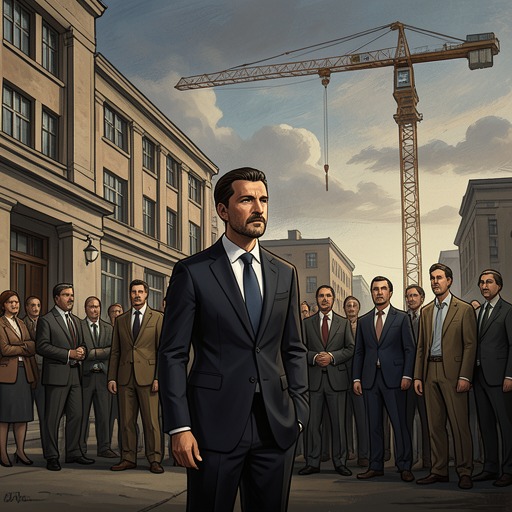
The board appears in person through its president, Lou Coffone, and fellow members, including Buddy, whom Spenser had first encountered under the teasing nickname Schnitzel Shooter. Coffone’s polo shirt, embroidered with the word President, makes his office unmistakable even before his introduction. The small details give the board a distinctly local, everyday face: it is neither a distant state agency nor a corporate executive team, but a condominium group whose decisions have serious consequences for its neighbors.
Holdouts and pressure
At the outset, Henry refuses to sign the sale papers. He says that several other residents feel the same way, including a Jewish couple on the eighth floor who want to stay. Their resistance is not simply a negotiating position: a man has directed an anti-Semitic remark at the woman while she carried groceries, in front of her husband. The account establishes harassment within the atmosphere of the dispute, though it does not identify the speaker as a board member or establish who ordered the abuse.
The pressure reaches beyond the residents who resist the sale. After Buddy’s Cadillac is vandalized—its tires slashed, roof cut, and paint keyed—the board members recognize that the intimidation has touched their own circle. Henry tells them that the board had wanted to settle with the holdouts, even with the possibility of more money on offer. Buddy says he would never trust the people behind the pressure. The board’s position is thus divided between a willingness to reach a settlement and growing distrust of the methods being used around the buyout.
Weinberg’s offer and the vote
Rick Weinberg’s presentation changes the atmosphere. The board members respond warmly: they do not merely accept him, but appear to love him and the deal he offers. The terms are described as exceptionally generous, though no specific price is given. Free buffet vouchers for the future Wonderland opening add a memorable, practical sweetener to the proposal. The meeting proceeds without the thugs or threats that had shadowed earlier stages of the dispute, and Rita Fiore, seated in front of Spenser and Zebulon Sixkill, privately dismisses Weinberg’s performance as insincere.
After the meeting, Coffone and Buddy confirm the result to Spenser at the cheese table: the decision is unanimous. Buddy calls it a sweetheart of a deal. The contrast is sharp: residents who had resisted leaving, including Henry and the couple targeted with anti-Semitic abuse, had faced a majority-rule structure; the board’s final decision, by contrast, is presented as unanimous. The evidence does not specify how each member’s view changed or whether every holdout personally signed, so the board’s vote should not be confused with universal resident consent.
The board within the casino campaign
The property decision carries stakes beyond the condominium. Wayne Cosgrove explains that casino companies spend millions lobbying for legislation and hope to secure a license if the law passes; land in Revere would be a major step toward that goal. In this wider contest, the board’s authority over a valuable site gives its vote significance for developers pursuing a casino project. The board itself is not shown directing the lobbying or controlling the licensing process. Its role is more local and concrete: deciding whether the residents’ property can be sold.
Later disclosures sharpen the political context without proving that the board knew of, or participated in, the payments being investigated. Wayne reports that Rick Weinberg made ordinary political contributions to officeholders and local figures, then says Weinberg appears to have routed nearly half a million dollars through Envolve Development to a super-PAC run by the brother of Joseph G. Perrotti. Subsequent material appears to show direct payoffs to Perrotti, with two companies involved belonging to Gino Fish; Wayne cautions that the records still need to be proved. These revelations frame the casino campaign as a contest involving political influence as well as real estate, but they do not establish a connection between the board’s vote and the alleged payments. The board’s narrative importance lies in the decision it can make at the local level: a unanimous approval helps convert a contested buyout into a strategic land acquisition.