Ocean View condos
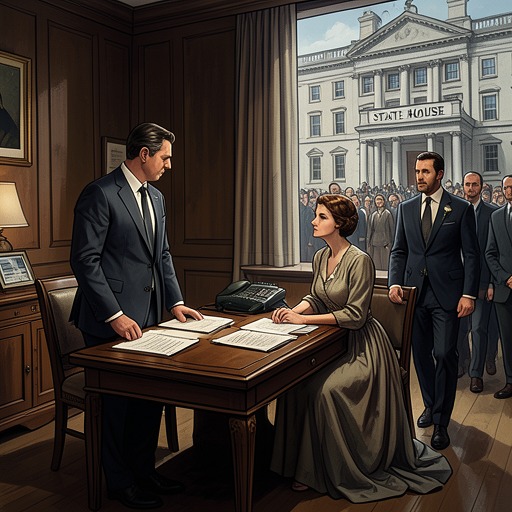
Robert B. Parker's WonderlandOcean View condos is a contested property in Revere whose sale becomes a point of leverage in the struggle over a casino development. Its importance lies not only in the offers made for the land, but in the pressure surrounding an agreement already signed: commercial ambition, political influence, and intimidation converge around the question of who will control the site.
A Revere property with strategic value
Wayne Cosgrove describes casino companies as lobbying for legislation and spending millions in the hope of securing a license if the law passes. In that competition, he says, securing land in Revere would be a major step. The land’s significance is therefore tied to a larger sequence: legislation might make casino development possible, a license would determine who could proceed, and control of a suitable property could strengthen a company’s position. When Spenser asks how a license is secured, Wayne begins to describe a four-person board; Spenser notes that it has not yet convened. The licensing process remains prospective, but the land already matters to the contest.
The book gives the property a more physical presence in a conversation between Spenser and Henry Cimoli. Henry leans against a piling as they discuss a possible new offer. The air smells of salt and dead fish, and the wind is strong and cool. Henry remarks that no amount of posh condos and restaurants could eradicate the smell. The exchange places the development’s polished promise beside the persistent conditions of the site: investment may change what is built, but it does not erase the place’s existing character.
Offers and a vulnerable agreement
Spenser has heard there may be another offer on Ocean View. Henry confirms that he has heard the same and says it is five hundred thousand dollars more than the original. The amount makes the competing bid concrete, but the conversation does not establish who made it or whether it will be accepted. What it does establish is that the property remains subject to renewed pressure even after an earlier deal has been made.
Henry says that someone wants to hire another lawyer to deep-six what they signed. The threatened legal challenge turns the agreement into a fragile point of conflict: a signed document has not ended the struggle over the property. The prospect of additional legal maneuvering also gives the higher offer a broader context. The contest is not simply about price; the parties are still trying to determine whether the existing arrangement will hold.
The next day, Henry and Spenser meet Rachel Weinberg and Lewis Blanchard in Revere. Lou Coffone and his older associates have chosen the 3 Yolks, a modest one-story restaurant off Route 1A, as the meeting place. The setting is a marked contrast to the Four Seasons that Rachel says she would prefer. Although the discussion takes place away from the condos, the meeting carries the property dispute into a face-to-face negotiation involving people connected to its sale. The worn Formica table and orange-vinyl booth make the scene an unglamorous counterpoint to the valuable land under discussion.
Intimidation at the condos
The conflict over Ocean View includes violence as well as legal and financial pressure. When Spenser asks Lewis whether Jemma Fraser ordered the men who broke legs to go to the condo, Lewis answers yes and says Rick Weinberg did not know. The disclosure assigns responsibility for the attack to Jemma while distinguishing her actions from Rick’s knowledge. It also shows that the dispute around the property has crossed from contested paperwork and offers into bodily harm at the condominium site.
That distinction matters to the property’s history. The violence is not presented as an abstract threat: the hired men were sent to the condo, and the question of who authorized them becomes part of Spenser’s inquiry. The location is thus both an object of negotiation and a place where force has been used. The signed agreement, the attempt to undo it, and the attack form different kinds of pressure, but each bears on the same struggle over the site.
The casino and political context
The property’s strategic value sits within a larger contest for casino licenses. Wayne reports that Rick Weinberg made expected political contributions to senators, congressmen, and Revere council members. He also finds that Weinberg, through Envolve Development, appears to have given nearly half a million dollars to a super-PAC run by the brother of Joseph G. Perotti. Wayne notes that super-PAC contributions are legal and that donors must be disclosed; the reported contribution is a lead, not proof that a particular official was bought or that the money secured a license.
Later, Wayne examines papers that appear to show direct payoffs to Perotti, while warning that proving the claims is another matter and that the material’s authenticity is uncertain. He identifies two companies making the payments as belonging to Gino Fish. These details widen the political frame around the casino project, but they do not establish that any particular payment caused the Ocean View sale or determined the licensing outcome. The distinction between disclosed political giving, suspected improper payments, and proven wrongdoing remains essential to the investigation.
Ocean View’s narrative significance comes from the way these struggles meet at one property. Land acquisition is presented as a practical advantage in the race for a casino license; the sale is unsettled by a larger offer and a threatened challenge to signed papers; and the condo becomes the target of an attack ordered without Rick’s knowledge. The site therefore concentrates the book’s linked concerns with development, political access, contractual control, and coercion without making those connections equivalent: the evidence raises a network of interests, while leaving some alleged financial links unproven.