Beauty surpasses strength
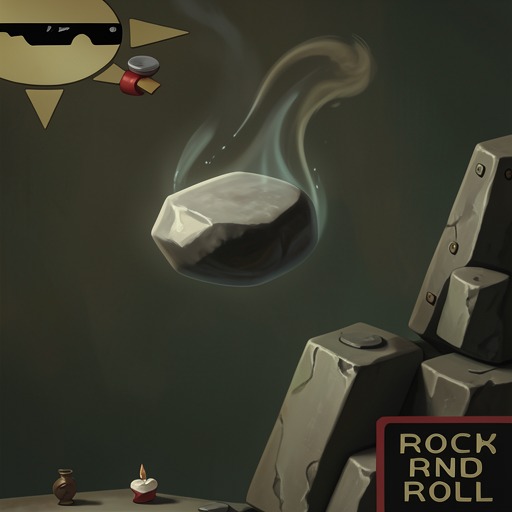
Rock Falls, Everyone DiesBeauty Over Strength names the decisive change in the rock’s values after its long pursuit of growth, size, and power. Having reached the peak of measurable strength and found no lasting satisfaction there, the rock recognizes that destruction has left it with nothing beautiful to hear or see. Its new ambition is not to become stronger, but to become the most beautiful planet of all, making creation the measure of its final development.
From Measurement to Meaning
The rock’s earlier goal was simple to quantify: become the greatest rock of all. Size appeared to offer an endless ladder of progress, a number that could continue rising as the rock rolled onward and crushed everything in its path. Its journey through the solar system confirms that it has become extraordinarily large, while also revealing that many apparent planetary relatives are only gas giants masquerading as rock. Yet this achievement brings no corresponding fulfillment. The rock reaches the summit of its numerical ambition and discovers that magnitude alone has not supplied purpose.
The contrast between size and beauty becomes explicit when the rock looks across the shattered planet it has helped create. The surface contains no life and no music, and the rock realizes that it has produced no beauty of its own. Its actions have been directed toward completing the quest and gaining levels, but it has never considered what it would do afterward. Strength has functioned as an end without a destination: each increase enlarges the means of destruction while leaving the question of meaning unanswered.
Sound as the First Experience of Beauty
The rock’s new judgment is prepared by its changing relationship with sound. Earlier, its existence was defined by silence or by the earth’s rumbles and vibrations; it had no ears and could not hear in the human sense. After entering space, however, it develops and gains mastery over a new domain of perception. When it hears a song, sound is not merely information entering an otherwise unchanged consciousness. It becomes the first medium through which the rock can encounter something beyond force, motion, and numerical increase.
That encounter is connected to the Bard and the Jade Statue. Facing approaching destruction, the Bard asks the statue whether it wants to hear a song and begins to play. The music reaches the rock, which does not perceive the Bard as a human figure because it does not understand humans; instead, it sees the Jade Statue, the symbol of its dreams, and hears the song coming from it. The statue seems to sing for the rock and welcome it. In that instant, the rock understands beauty and wants to hear more. The experience changes its scale of value: beauty is no longer an abstraction opposed to power, but a felt reality capable of reaching across the distance between a stone and a living world.
The loss of the song makes this discovery tragic. When the music stops, the rock understands loss for the first time. It listens, but the song does not return; only destruction and then silence remain. The interruption gives beauty an emotional weight that numbers never possessed. Growth can be recorded and repeated, whereas the vanished melody becomes singular, unforgettable, and irreplaceable. The rock’s later rejection of strength therefore arises not only from intellectual reflection but also from bereavement.
The Reversal of the Rock’s Quest
The rock watches the final error while the newly forged planet shakes, and its inability to accept the result exposes how deeply its expectations have been overturned. It eventually finds it easier to accept that the quest remains unresolved, since waiting is easier when hope has disappeared. Nevertheless, the unresolved quest is only one of the two things it has lost; the other is the song. The failure of the original objective and the disappearance of the music together leave the rock with levels and statistics but without the satisfaction those measures once promised.
When the rock examines the number at its peak, the old pleasure does not return. The figures blur into one another, and any satisfaction they provide is fleeting. The rock closes the screen that had been its faithful companion and turns instead toward the memory of the Jade Statue’s song. This gesture marks a rejection of the system of value that governed its existence. The screen had accompanied the rock through every stage of growth, but its permanence is precisely what makes it inadequate: numbers remain available, while meaning cannot be manufactured by watching them rise.
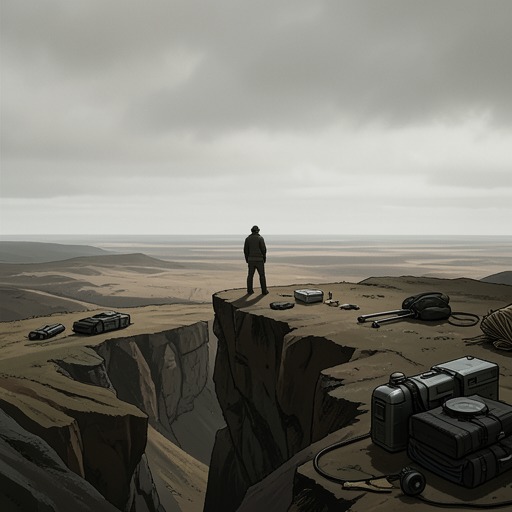
The rock’s recognition that it is an ugly rock is therefore a form of painful knowledge rather than a casual insult. It sees a barren, destroyed surface and understands that no music will spring from it. The comparison with its old mountain deepens the realization. During its long stillness there, it had been unable to hear, yet it can now imagine that birds may have been singing and that wind may have played through cavernous openings like organs. Its earlier world may have contained beauty that its limited senses could not register. The rock has not merely failed to notice beauty; it has also failed to create it, because it spent its existence rolling forward and destroying in pursuit of the quest.
Creation as a New Form of Greatness
The turning point arrives when the rock notices the rings circling the planet. Their movement becomes a dance, faintly rhythmic, as though following a song that still survives in its mind. Then the remembered song changes into something new, a melody the rock has never heard before. This transformation suggests that beauty is not only something received from the outside. Memory, motion, and imagination can combine to generate an original impulse, allowing the rock to consider that it might create beauty as well.
The mountain the rock has carved becomes its first evidence. It recognizes a clumsy form of artistry in the landform, the work of a beginner rather than a finished masterpiece, but perhaps also the beginning of beauty. The rock possesses new skills, new paths to explore, and immense time. Those resources redirect its capabilities away from blind forward motion and toward patient experimentation. The question of whether it can make the stones sing becomes a practical and artistic horizon for its next existence.
The rock then explicitly abandons strength for its own sake. It has become a Planet, a grand being with equally grand abilities, and it has seen what stands at the peak of power. The view is spiritually empty: what use is being the strongest if the only result is destruction? Without a quest to force it onward, the rock chooses a new goal. It will no longer rush ahead merely to destroy. To become the best rock of all, it must become the most beautiful Planet of all. Beauty Over Strength is thus not a renunciation of ability, but a change in what ability is for.
The Beauty Project and Its Fulfillment
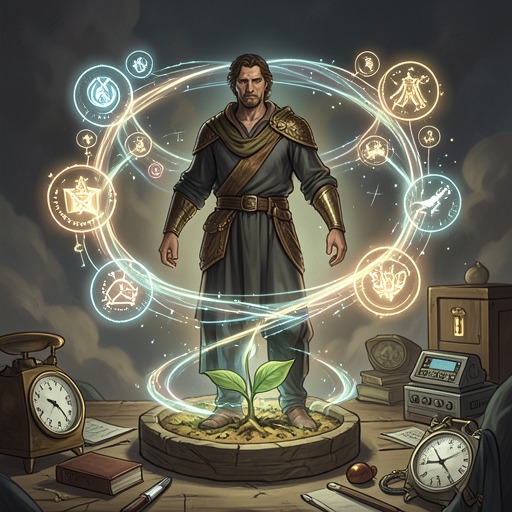
The rock begins creating slowly, over eons and millennia, experimenting, learning, and leveling. Progress continues, but it is no longer valuable simply because a number rises. New abilities matter chiefly as instruments of making. The rock’s first attempts at plant life are awkward, misshapen forms resembling melted candlesticks; with time, however, it learns to sculpt trees from gemstones, whose emerald leaves ring in the wind like chimes. The scene turns the earlier opposition between stone and music inside out: rock is no longer the mute residue of destruction, but the material from which sound and life can be fashioned.
Creation expands until the Planet fills with life: people, animals, plants, mountains, lakes, and forests. Songs multiply, and the Planet listens to them all, spinning its rings to each tune. The project reaches its emotional fulfillment when the rock feels content. This contentment is not identical to the first shock of beauty awakened by the Bard’s song; nothing can surpass the freshness of that first flame. Yet the world the rock has made offers a durable satisfaction grounded in continuation, variety, and care. It is a world of jade, gems, and stone that sings.
The new ideal does not require a world without conflict. Wars occur, but the rock does not regard them as a failure of its creation, because even the warriors sing as they charge into battle and bloodshed. The detail preserves the story’s attraction to violent scale while changing its meaning. Movement, force, and danger remain part of the Planet, but they are no longer the whole of its value. Strength can exist within beauty; it simply cannot stand as the final purpose.
Philosophical and Narrative Significance
Beauty Over Strength resolves the rock’s central crisis by replacing accumulation with composition. Silence becomes music, destruction becomes sculpture, and the inert stone becomes a world capable of hearing and generating songs. The concept also reverses the usual hierarchy between creator and created: the rock once treated the world as terrain through which it could roll, but it eventually becomes responsible for shaping a world in which other beings, plants, landscapes, and melodies can exist.
The reversal gains force from the rock’s long incapacity to perceive what it later values. Its endless patience first serves steering and survival, while its extraordinary scale produces only a barren surface. The same duration that once made waiting tolerable eventually permits learning and making. Time does not automatically create meaning; it becomes meaningful only when directed toward a different end. The rock’s final ambition therefore transforms its identity more profoundly than any numerical advancement or bodily enlargement.
The concept’s deepest contrast is between a peak and a beginning. At the peak of its strength, the rock finds only blended numbers, destruction, and silence. At the beginning of its beauty, it sees clumsy artistry, hears an unrecognized song, and accepts that there are new skills still to learn. Greatness is no longer the condition of having nothing left to overcome. It is the willingness to become a beginner again, to create patiently, and to measure success by the life and music that power makes possible rather than by the ruin it leaves behind.