Old Planet–Young Pebble
Rock Falls, Everyone DiesOld Planet–Young Pebble defines the story’s final inheritance: a retired planetary hero gives a young gneiss stone the chance to begin the adventure that the older one can no longer pursue alone. Their connection turns the apparent ending of one world into the concealed prologue of another quest, while making heroic destiny less an individual possession than a task that can be prepared, transferred, and watched across generations.
The Old Planet’s Retirement
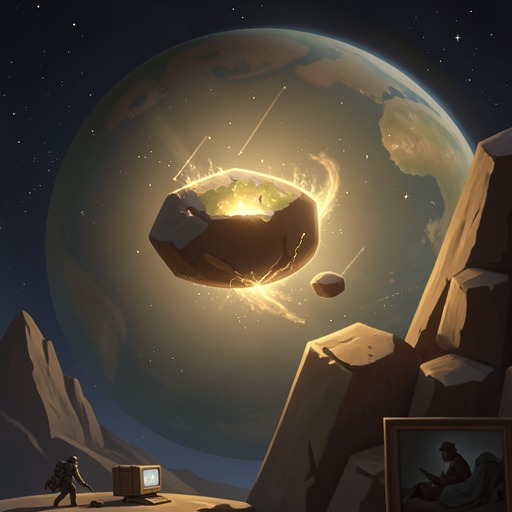
The older figure is the planet created after the rock’s long ordeal, growth, destruction, and reconstruction. By the time the new cycle begins, the old planet has “retired from adventure” and placed its former tools in a basement. The image is domestic rather than triumphant: a veteran stores away the sword that once belonged to its active life, yet leaves the hilt slightly visible from the chest. That small deliberate exposure preserves the possibility of discovery. The old world has stopped acting directly, but it has not stopped preparing the future.
The transfer therefore contains both exhaustion and anticipation. The old planet can no longer undertake the quest by itself, but it still wants to see what a younger hero will do and what will happen when the promised numerical goal is finally reached. Its retirement is not abandonment. It is a change in narrative position, from champion to predecessor, from central actor to watcher and occasional helper.
The Young Pebble’s Beginning
The successor is a modest gneiss stone, a level 1 Rolling Stone, accelerating down a mountainside. The narration insists that the real hero is not the champion associated with the familiar mountaintop battle, but this small stone setting out on a grand quest. Its scale matters: the new protagonist begins not as a planet or a force of cosmic importance, but as a pebble whose movement can easily be overlooked.
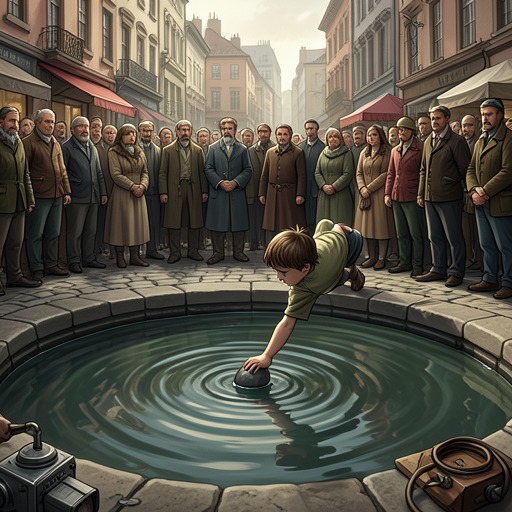
The young stone appears to possess an independent future. It is presented as a brand-new hero, and it may believe that it is master of its own fate. Yet the relation reveals that its first movement has already been shaped by the older world. The apparent beginning is thus also an inheritance scene. The young stone receives not a speech or formal blessing, but a push, a path, and a quest whose conditions have been painstakingly reproduced.
Quest Transfer and Hidden Assistance
The old planet successfully transfers the unresolved quest by replicating the required conditions closely enough for the system to recognize the handoff. The process is difficult: the transfer is not automatic, and the predecessor must reproduce the circumstances that make the quest valid for the next pebble. This effort converts succession into an act of technical and narrative ingenuity. The old planet has repeatedly learned how to deceive or distract the system, and it uses that cunning to create a loophole through which a small piece of its unfinished purpose can be passed onward.
The older planet’s assistance remains carefully limited. It may occasionally place itself on the scales to help the young hero when the latter becomes stuck, but it avoids doing too much because no one can completely control a hero’s fate and excessive intervention might provoke the system’s anger. This restraint preserves the successor’s agency while acknowledging that the new quest has been enabled by deliberate external preparation. The young pebble must still roll, struggle, accumulate levels, and pursue the goal itself; the old planet merely alters the conditions under which that struggle can continue.
Watching the Numbers Rise
The relation deepens through observation. The old planet watches the young rock grow larger and more powerful, struggle toward the final goal, and continue reaching for a reward that remains just beyond the next cliff. The repeated increase of numbers is not merely a mechanical progression. It becomes the shared object of the predecessor’s attention, a visible measure of the successor’s development and a continuation of the old planet’s own unfinished history.
This watching is affectionate, but it is not wholly selfless. The older figure finds the process satisfying and addictive because it has followed the path for so long. It wants the reward, yet it also begins to wish that the search might never end. The contradiction gives the succession its emotional force: the old planet wants the young hero to reach the promised finish line, but the endless approach toward that line has itself become pleasurable. The predecessor therefore passes on both hope and compulsion, leaving the successor an inheritance that is liberating enough to produce a new life and demanding enough to perpetuate the cycle.
Repeated Worlds and Continuing Beauty
The transfer occurs against a recurring narrative structure in which a hero and villain repeatedly stand on a mountaintop before a battle. The same pattern appears at the opening, before the later confrontation, and again at the start of the epilogue, where the battle has not yet begun because the monologues still have to occur. These repetitions make the young pebble’s descent into adventure resemble a ritual restart. One world ends, another is forged, and the familiar stage is prepared once more.
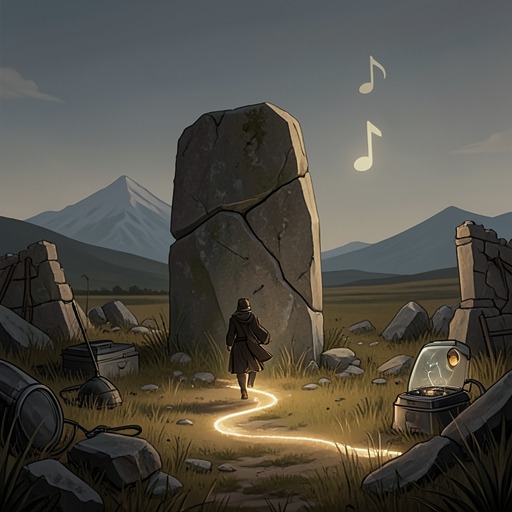
Yet the new cycle is not an exact repetition. The old rock has learned to experience music, beauty, and loss. The music that welcomed it disappears amid destruction, teaching it that loss is real; later, the rings around the newly formed planet move with a rhythm that recalls the vanished song. The planet begins to recognize that it might create beauty rather than merely receive it. That discovery informs the inheritance: the old planet does not only transmit a quest for higher numbers. It passes forward a world in which struggle, memory, and the possibility of art can continue.
The young stone’s quest consequently gives the retired planet a reason to remain engaged with time. It can no longer be the hero who rolls down the mountain, but it can watch another stone begin, intervene sparingly, and wait to learn whether the transferred quest will finally resolve. Old Planet–Young Pebble is therefore both a relationship of care and a mechanism of recurrence: the elder makes room for the younger, the younger renews the elder’s unfinished purpose, and the ending becomes another beginning before either quest has truly escaped the system that governs it.