
From Lease Disaster to Shared Territory
Roommate Wars & Midnight Kisses (My College Romance)This flow traces how a double-booked lease turns a temporary housing dispute into a recurring struggle over control, boundaries, and the meaning of home.
increasing Bearing strength in each event
 decreasing
Bearing strength in each eventdecreasingThe Double Booking

A Home Claimed Twice
The Immediate Crisis
Leah Kim arrives at Apartment 3B expecting a private studio and instead finds Liam Reed occupying it. Both possess apparently valid agreements, and neither can simply retreat without risking money, academic stability, or the loss of housing in Ann Arbor.
Forced Negotiation
The landlord’s administrative mistake becomes a structural trap rather than a minor inconvenience. The conflict matters because it removes the possibility of a clean beginning and forces two strangers to negotiate intimacy before either has chosen it.
The shared space is therefore born under pressure. Leah and Liam do not begin by trusting one another; they begin by defending their right to exist in the same room.
The First Rulebook
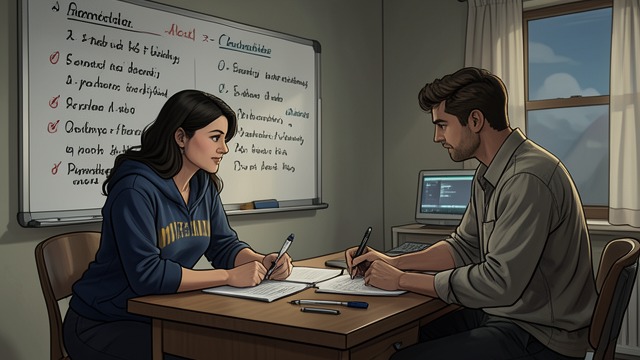
Boundaries on Paper
Competing Needs
Leah and Liam respond to the housing crisis by drafting rules for chores, quiet hours, bathroom warnings, bed use, and personal equipment. Their negotiation is practical, but every rule also expresses a fear: Leah fears instability and academic failure, while Liam fears intrusion and emotional chaos.
A Fragile Settlement
The Division of Labor Chart gives their shared life an artificial legal structure. Alternating the bed and couch acknowledges that neither person can honestly claim the apartment as exclusively theirs, even though the arrangement remains unequal and uncomfortable.
The rulebook lowers immediate friction without creating trust. It is a ceasefire, not a home, and its limitations become visible whenever ordinary domestic behavior carries emotional meaning.
Domestic Escalation
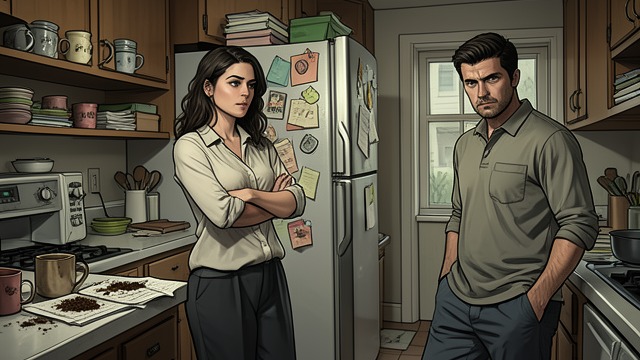
The Kitchen as Battlefield
Small Violations
Coffee grounds, labeled mugs, crowded refrigerator shelves, and misplaced study materials turn the kitchenette into a field of competing habits. Leah interprets disorder as danger and disrespect, while Liam experiences her labeling as surveillance and unnecessary control.
Hidden Histories
The argument intensifies when Liam’s friend mentions his earlier disastrous living arrangement. Leah hears evidence of an undisclosed emotional risk, while Liam treats questions about his past as an invasion. Their domestic conflict therefore becomes a test of whether either can remain present without surrendering privacy.
The apartment’s physical smallness magnifies every disagreement. Nothing can remain merely practical when every object occupies shared territory.
Temporary Shared Ground
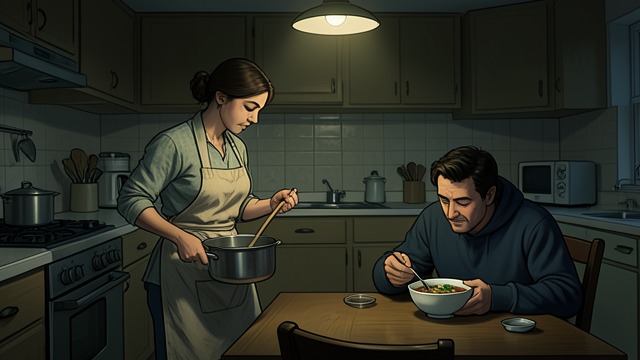
Care Inside the Conflict
Unrequested Kindness
Liam folds Leah’s abandoned laundry and leaves a scolding note, revealing that his resistance to domestic entanglement does not prevent him from noticing her needs. Leah’s irritation is complicated by gratitude because his care arrives in the same voice as his criticism.
Reframing the Space
When Leah cooks Jook and Liam responds with genuine appreciation, the kitchen stops functioning solely as contested territory. Food allows them to exchange family histories without directly demanding emotional confession.
The conflict does not disappear, but its meaning changes. The shared apartment begins to hold evidence that cooperation can coexist with difference, and that boundaries need not exclude tenderness.
Chosen Home
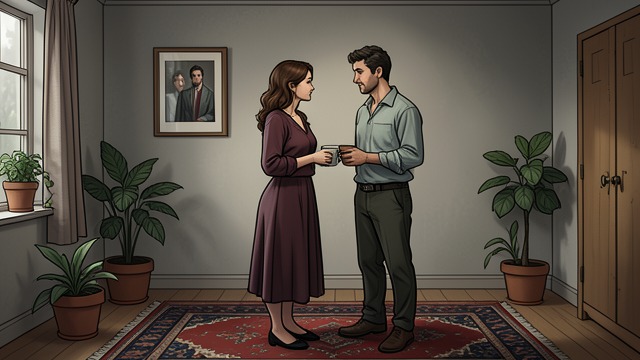
From Accident to Ownership
Rebuilt Domesticity
By November, Leah and Liam have added a rug, plants, photographs, and shared routines to Apartment 3B. The same cramped room that once represented entrapment now contains visible signs of mutual authorship.
Voluntary Belonging
Their home becomes meaningful only after both have learned that staying is a choice rather than a logistical necessity. They can discuss future moves, leases, and separate opportunities without treating the possibility of change as betrayal.
The housing conflict resolves when the apartment ceases to dictate the relationship. It becomes a place they inhabit together because they have chosen one another, not because a landlord’s mistake left them no alternative.
opening chapter
the morning after arrival
the first week of classes
after the first full week together
near the ending
