
Leah Kim’s Recovery of Self
Roommate Wars & Midnight Kisses (My College Romance)This flow follows Leah Kim as she moves from fear-driven accommodation toward boundaries, independent support, and a relationship chosen without self-erasure.
increasing Bearing strength in each event
 decreasing
Bearing strength in each eventdecreasingA Fragile Fresh Start
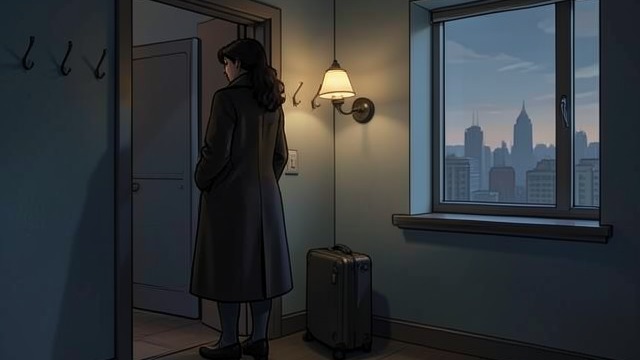
A Fragile Fresh Start
Leaving the old script
Leah Kim arrives in Ann Arbor carrying the pressure of a transfer, a scholarship, family expectations, and the aftermath of a controlling relationship. She tells herself that the new campus will be a clean beginning, but her nervous system still reacts to uncertainty as if every conflict threatens her survival.
Academic stakes
Her need to maintain a high GPA gives the move concrete urgency. Housing, tuition, and belonging are inseparable, so the double-booked lease immediately threatens more than convenience; it threatens the future she has worked to claim.
The first contradiction
Leah wants independence but initially treats every disruption as evidence that she must manage the environment perfectly. Her labels, schedules, and apologies protect her from chaos while also keeping her trapped inside constant vigilance.
The First No

The First No
An old pattern appears
At a party near Packard Street, a classmate presses Leah with unwanted familiarity, a nickname, and an assumption that her refusal is merely shyness. His behavior echoes the coercive social pattern she has spent years excusing.
Boundary without apology
Instead of smoothing the interaction over, Leah states that she is not interested and leaves the conversation. She experiences fear about being judged, but she does not retract the boundary to protect the stranger’s comfort.
A new behavioral script
The moment matters because it demonstrates change before romance can validate it. Leah’s recovery begins not when someone protects her, but when she recognizes that clear refusal is legitimate and sufficient.
Cutting Off Evan
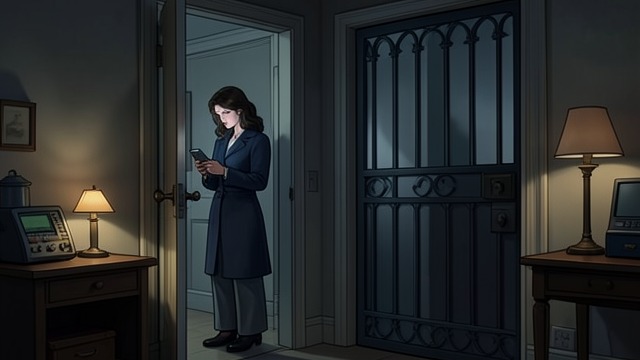
Cutting Off Evan
The past reaches across distance
Evan contacts Leah after learning about her transfer, framing her departure as an injury done to him. His messages revive guilt, self-doubt, and the familiar impulse to revise her own needs until he feels reassured.
Delayed resistance
Leah initially drafts and deletes responses because confrontation still feels dangerous. A lecture on attachment patterns helps her recognize that her hesitation is not evidence of love; it is part of the old cycle of emotional overfunctioning.
A decisive block
Leah blocks Evan and later answers another provocation with a direct final message before blocking him again. The action gives her no dramatic reward, but it proves that she can end access to someone without obtaining his agreement.
Learning to Ask

Learning to Ask
The caretaker reflex
As Liam becomes withdrawn after traumatic shifts, Leah begins monitoring his moods, softening her voice, and minimizing her own needs. She recognizes the sick familiarity of arranging her life around another person’s emotional weather.
External support
The EMT and First-Responder Mental-Health Panel gives Leah language for burnout and secondary strain, while counseling helps her examine why other people’s crises feel like personal assignments. The work redirects her attention from rescuing Liam to understanding her own patterns.
A different responsibility
Leah learns that caring does not require absorbing every feeling or solving another person’s avoidance. She can offer presence, state limits, and leave the other person responsible for accepting help.
Choosing Herself First

Choosing Herself First
A grounded yes
When Liam returns ready to discuss the relationship, Leah does not accept him automatically. She evaluates whether his promises include changed behavior, outside support, and respect for her boundaries rather than merely renewed passion.
Space without disappearance
Leah states that love must not require her to become smaller, quieter, or indefinitely available. Her acceptance is therefore conditional in the healthy sense: she chooses Liam while retaining the ability to leave if the relationship again becomes a place of self-loss.
A new identity
By the ending, Leah speaks in class, seeks counseling, builds campus friendships, and discusses ambitious future paths without rehearsing permission. Her romance becomes one part of a larger self-directed life rather than the substitute for one.
the opening move into Ann Arbor
the first campus party after her transfer
the first week of classes
during the weeks of relationship strain
during the formal reconciliation conversation
