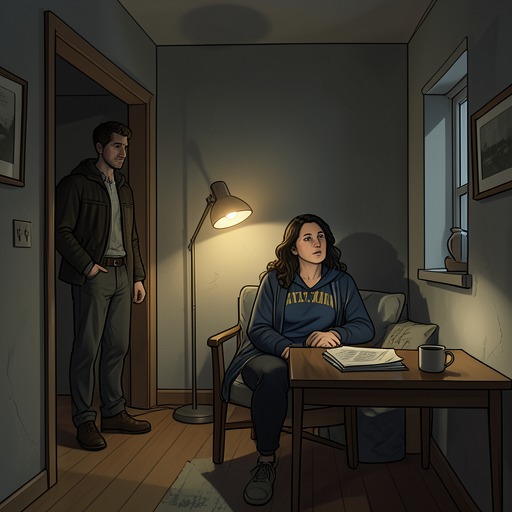
The Best Terrible Idea
Roommate Wars & Midnight Kisses (My College Romance)“The Best Terrible Idea” is the expression Liam Reed uses to reinterpret his relationship with Leah Kim, first framing it as an outrageous mistake and then correcting himself into an unequivocal declaration of commitment. Its decisive significance lies in that reversal: the accidental, difficult relationship is no longer merely something that happened to him, but something he recognizes as the best choice he has made.
The Initial Formulation
Liam first tells Leah Kim that she is “the best terrible idea I’ve ever had.” The phrase deliberately holds approval and alarm together. “Best” conveys exceptional value, while “terrible idea” preserves the sense that the relationship began under circumstances that seemed reckless, inconvenient, or impossible to plan. Rather than offering a polished romantic compliment, Liam names the contradiction at the center of their connection: what appeared to be a bad idea has become emotionally indispensable.
The wording also gives Liam a way to acknowledge the relationship’s disorder without withdrawing from it. Calling Leah the idea he has “had” makes the relationship sound like a decision or experiment, but the superlative prevents that language from reducing her to a temporary impulse. The expression therefore carries both self-mockery and attachment, allowing him to admit that the path was terrible in theory while affirming its extraordinary importance in practice.
Leah’s Challenge and the Revision
Leah rejects the first formulation as “the worst compliment” and asks Liam to try again. Her response exposes the gap between his intention and the effect of his words. Liam means to express devotion, but the adjective “terrible” threatens to make affection sound like regret. The exchange turns a potentially final declaration into a negotiation over how their relationship should be named.
Liam immediately revises the statement: “You are the best decision I’ve ever made.” This second formulation removes the apparent insult and replaces the language of a questionable idea with the language of deliberate choice. The change is not merely cosmetic. It moves from describing Leah as an unexpected possibility to affirming her as a decision Liam actively stands behind.
Speech as Commitment
The two expressions work together as a miniature progression from ambivalence to recognition. The first phrase preserves the history of uncertainty and bad circumstances; the second supplies the clear judgment that the first one lacks. Liam does not erase the relationship’s difficult beginning. Instead, he reinterprets that beginning from the security of what it has become, turning accidental cohabitation and emotional risk into a chosen bond.
The revised wording functions as a performative declaration. Liam is not only describing Leah’s importance; by calling her the best decision he has ever made, he publicly and personally commits himself to the value of the relationship. Leah’s heart responds physically before her verbal answer arrives, and her eventual “Better” confirms that the corrected language has reached her more fully than the original compliment. The scene thus gives emotional force to the distinction between an impulse one survives and a choice one claims.
Tone and Narrative Significance
“The Best Terrible Idea” preserves the book’s balance of romantic intensity and conversational humor. Liam’s first attempt is affectionate but clumsy, while Leah’s criticism keeps the moment from becoming solemn or idealized. Their exchange presents intimacy as collaborative: one person speaks imperfectly, the other identifies what is wrong, and the declaration is reshaped until it can carry the intended promise.
As an expression, the phrase also condenses the relationship’s larger movement from accidental proximity to chosen permanence. “Terrible idea” recalls the instability of how Leah and Liam came together; “best decision” establishes the meaning they finally assign to that history. The completed expression therefore marks not the disappearance of uncertainty, but its absorption into a more confident understanding of love: a relationship can begin as a problem and still become the decision that gives the problem its worth.