Andrew John Woodhouse
Rosemary's BabyAndrew John Woodhouse is the newborn son whom Rosemary Woodhouse insists on naming and claiming for herself, even as Roman Castevet presents him as the child of Satan and demands a different identity for him. His birth reveals the stakes behind the coven’s influence over Rosemary’s pregnancy, but the final struggle over his name and care is not settled on Roman’s terms alone.
Identity and Presence Before Birth
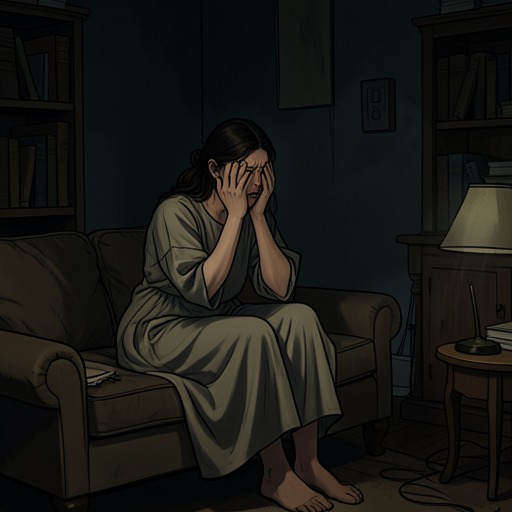
Andrew’s existence is first registered through Rosemary’s pregnancy and fear for the baby’s survival. When friends ask whether her doctor is treating her pain, she says that he is doing nothing. They urge her to seek another opinion from Dr. Hill, describing the ongoing pain as a reason for concern; Rosemary defends her current doctor by pointing to his reputation. The exchange establishes that the child’s arrival is anticipated amid uncertainty about Rosemary’s care, not simply as a private family milestone.
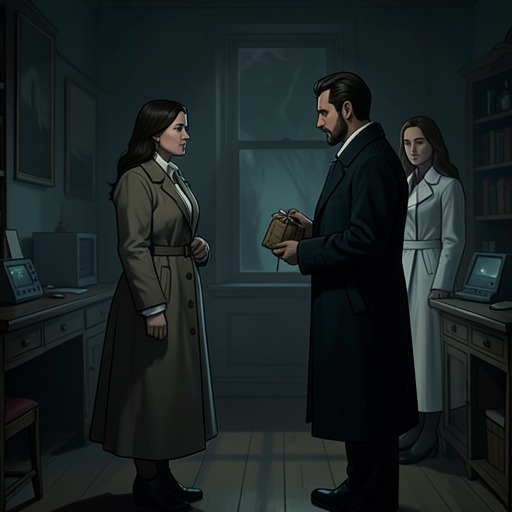
An earlier nightmare supplies imagery that later seems to acquire an unsettling counterpart. Rosemary dreams of a ceremonial gathering that includes Guy Woodhouse, Minnie Castevet, Laura-Louise, and Roman. At a later gathering, she struggles to reconcile her suspicion that these apparently ordinary neighbors belong to a coven with their familiar, everyday manner. The contrast matters to Andrew’s story because the revelation surrounding his birth makes the dream’s strange figures seem less easily dismissed, while the narrative has already shown how readily Rosemary herself questions that interpretation.
Birth and the Bramford Coven
The expected setting for the birth is Doctors Hospital, with its equipment and nurses. Instead, when Rosemary is in labor, Guy and several acquaintances enter her room with Dr. Sapirstein, who is carrying a sedative. Rosemary tries to resist their effort to control the situation, and the group restrains her. Dr. Sapirstein recognizes that she is in labor and gives her an injection. The scene makes the circumstances of Andrew’s birth part of the larger conflict over Rosemary’s bodily autonomy and over who will direct the child’s arrival.
Afterward, Rosemary wakes and learns that the baby has been born. She asks whether he is all right and is told that he is fine. The initial reassurance does not resolve her uncertainty about what has happened: she has been separated from the ordinary hospital setting she expected, and the people around her have controlled the information she receives. Andrew’s birth is therefore both a medical event and the point at which the group’s concealed intentions become harder to keep from her.
Appearance and Claimed Parentage
Rosemary eventually finds Andrew in a black bassinet, dressed in black. When she turns it toward herself, she sees a small, rosy-faced baby with a surprising amount of clean, brushed orange-red hair. He is wrapped in a black blanket and wears little black mitts tied at the wrists. His appearance initially offers the familiar signs of a sleeping newborn, but when he opens his eyes, their golden-yellow color and vertical, slit-like pupils make him visibly unlike an ordinary infant.
Roman interprets those eyes as proof of Andrew’s supernatural parentage. He declares that Satan, rather than Guy, is the child’s father, and casts the birth as the beginning of a struggle against religious authority. This is Roman’s explanation and the coven’s public account of Andrew; the immediate evidence available to Rosemary is the child before her and the unusual eyes she sees. The difference between what she can observe and what Roman claims gives the scene its sharpest conflict: the group treats Andrew as the fulfillment of its beliefs, while Rosemary confronts him as her baby.
Name, Family, and Ending
Roman calls the child Adrian Steven and resists Rosemary’s chosen name. Rosemary answers that he is Andrew John Woodhouse, her child, and that she will not negotiate this point. She also objects to dressing him in black all the time. The naming dispute is thus bound to an argument about custody and daily care: Roman seeks to assign Andrew a place within the coven’s account of him, while Rosemary asserts a maternal claim expressed through both his name and his clothes.
The group responds by changing its acclamation to include Andrew, and Guy joins in. Rosemary, meanwhile, turns back to tucking the blanket around the baby and accepts the group’s attention rather than retreating from him. Her practical gesture stands against the ritual language surrounding the bassinet: she attends to Andrew as a child who needs comfort, not only as a figure in Roman’s prophecy. The story ends with the name she has chosen spoken aloud by the others, even though Roman continues to press for Adrian Steven.
Narrative Significance
Andrew’s role is concentrated in the revelation and final scene, but those scenes reorganize the story around competing claims to identity. Roman’s account makes the baby the center of a supernatural and collective ambition; Rosemary’s naming makes him an individual child and establishes a boundary the coven must hear. The contrast between the black bassinet and Rosemary’s ordinary act of settling his blanket gives that boundary a domestic form. Andrew’s appearance confirms that Rosemary’s fears cannot simply be dismissed, yet his ending is not reduced to Roman’s designation: Rosemary names him Andrew John and remains beside him as his mother.