Pregnancy and Motherhood
Rosemary's BabyPregnancy and motherhood are both Rosemary Woodhouse’s deepest personal hopes and the ground on which her autonomy is increasingly contested. Her desire for children begins as a private plan within her marriage, becomes a source of joy when she believes she is pregnant, and then exposes the gap between the care others claim to provide and the choices they allow her to make. By the time she prepares to reach her child herself, motherhood has become not simply an imagined future but a motive for action.
Desire, marriage, and the prospect of a child
Rosemary is twenty-four and wants three children, spaced two years apart. Guy Woodhouse, by contrast, says he is not ready. She fears that he will keep postponing fatherhood until his acting career makes him feel sufficiently successful. Believing that he does not share her urgency, she privately tries to conceive without openly challenging his decision: she says birth-control pills give her headaches and that other contraceptive devices repel her, while Guy studies the calendar and avoids what he considers her fertile days. She tells him that a particular day is safe, concealing her hope that it is not.
The arrangement makes their disagreement unequal in a telling way. Rosemary treats pregnancy as a shared future she can help bring about, while Guy believes he is managing its timing. Her plan is neither an openly negotiated decision nor a settled agreement between them; it is an effort to act within a marriage in which she has not persuaded him to want what she wants. The disappointment she feels when her period begins marks another month in which his caution has prevailed, although he does not know that she has been trying to conceive.
Guy later promises that he has neglected her own concerns while absorbed in his career. He proposes that they have a baby and speaks of having three, one at a time. His change appears to answer the wish Rosemary has carried alone. Yet his assurance that they will try the following day, after she says they have to make a baby, also places their plans within his timing. The apparent reconciliation between their aims precedes a conception that Rosemary does not experience as a mutual, conscious decision.
Conception, expectation, and pregnancy care
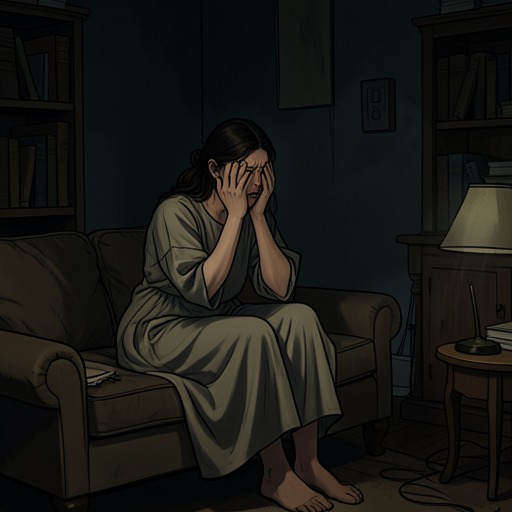
After the night Guy has treated as an attempt to conceive, Rosemary reflects that he took her without her knowledge and that she felt regarded as a body rather than as a person whose mind and feelings mattered. She recognizes that he may have intended to make a baby and that he had also been drinking, but those circumstances do not settle what troubles her. The episode leaves her questioning the quality of his love and wondering whether an actor can be known when he seems sincere. Pregnancy therefore begins not as uncomplicated fulfillment but alongside an emerging suspicion that the words and motives within her marriage may not match.
When pregnancy is confirmed, her attention turns quickly toward the life developing inside her. She imagines the child as Andrew or Susan, with Andrew her preferred name, and wonders about its growth and the dangers that might affect it. The expectation reorganizes ordinary routines: cooking, cleaning, shopping, laundry, and sculpture class now take place against her knowledge that the child is growing. Her happiness is especially vivid because the child makes a long-held wish feel present and concrete rather than postponed.
Care is also shaped by competing forms of authority. Abraham Sapirstein tells Rosemary not to rely on pregnancy books or friends, reasoning that pregnancies differ and that comparisons can cause needless worry. Minnie Castevet brings her a daily drink in the same large, striped glass and waits while she finishes it. When Rosemary develops sharp abdominal pains, Sapirstein examines her and attributes them to the normal expansion of her pelvis, recommending ordinary doses of aspirin and predicting that the pain will pass. His explanation reassures Rosemary, but it also establishes a pattern in which the doctor’s confidence is meant to outweigh her own assessment of what her body is telling her.
Pain, doubt, and the search for another opinion
As the pains become a continuing concern, Rosemary’s friends ask whether Sapirstein is treating her or giving her medicine. She says he is doing neither. They regard the pain as a warning and urge her to seek another doctor, specifically suggesting Dr. Hill. Rosemary resists at first, saying she will not have an abortion; her friends clarify that they are not asking her to end the pregnancy, only to obtain another medical opinion. The exchange shows how fear narrows the choices she thinks are being offered even as her friends try to widen them.
She also recalls Sapirstein’s warning that friends would compare their own pregnancies with hers and assume their experiences were normal. That prediction makes their concern harder for her to trust: it gives her a reason to interpret their objections as the familiar misunderstanding he anticipated. Nevertheless, she tells Guy that she will go to Dr. Hill on Monday and asks to be examined. Her decision is a limited but significant assertion of judgment: she no longer accepts reassurance as sufficient when her pain persists. The conflict is not simply between medical knowledge and ignorance, but between a patient’s account of suffering and the authority that dismisses or explains it.
Childbirth and the withdrawal of choice
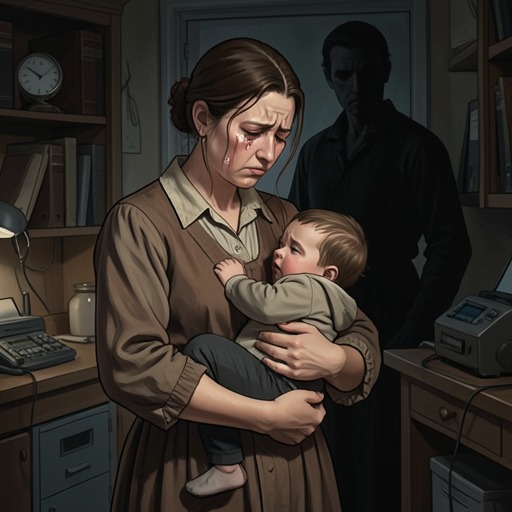
When Rosemary tries to get help, Guy enters with Mr. Fountain, followed by Sapirstein and several others. They describe themselves as friends and say that the injection Sapirstein carries is a mild sedative. Rosemary attempts to resist and call for help, but the group restrains her and prevents her from leaving. A contraction changes the immediate situation: Sapirstein recognizes that she is in labor, and the injection is administered. Her expectation had been to give birth at Doctors Hospital, with its equipment, nurses, and clean, sterile surroundings. Instead, she is held in place at home while Guy promises that she will be all right and begs her not to fight.
The episode makes the distinction between protective language and consent central to the story’s treatment of pregnancy. The people surrounding Rosemary claim to be reassuring her, but they proceed without her agreement and override her stated plan for where she will give birth. The medical setting she expected is replaced by a home birth controlled by the people who have gathered around her. Her labor is treated as a reason to act on her, not as a reason to restore her authority over her body and care.
Motherhood as protection and action
The Bramford’s domestic setting has been shadowed by an earlier discovery: a dead baby was found in the basement. Rosemary considers looking up the old newspaper account but decides that learning more about the place where the child had lain would make the knowledge more frightening. Her deliberate partial ignorance is an early sign of how the prospect of a child changes her sense of danger. The building’s ordinary spaces, including the route to the laundry room, become inseparable from questions about what can happen to infants and what residents choose not to know.
Later, believing that her child is alive and being kept from her, Rosemary decides not to rely on police, acquaintances, or another supposed rescuer. She thinks that Guy’s acting skill and Sapirstein’s professional reputation would make others doubt her account. Instead, she resolves to go in and retrieve the child herself. Her discovery that people have entered despite a chained door leads her to infer that there must be another route between the apartments, and she identifies the linen closet as the likely concealed passage. The plan is rooted in what she has observed about the building as well as in her determination to reach her child.
Across these episodes, motherhood shifts from a hoped-for role to a contested capacity: Rosemary wants a child, but wanting one does not mean she has freely chosen every circumstance of conception, care, or childbirth. The narrative repeatedly sets her own knowledge and decisions against assurances offered by more powerful figures. Its final emphasis in this evidence is her refusal to wait passively for someone else to recognize her claim as a mother; she acts on the belief that her child needs her.