Rosemary Chooses to Mother Andrew
Rosemary's BabyRosemary Chooses to Mother Andrew is the closing action that turns Rosemary Woodhouse’s discovery of the Bramford coven’s deception into a difficult, self-defined commitment to her child. Surrounded by people who have controlled her pregnancy and birth, she moves from imagining the baby’s death to soothing and claiming him, while refusing the name and clothing the coven would impose. Her decision does not undo the coercion that brought her to this moment; it establishes a limited but consequential boundary within it.
Background: Pregnancy and Choice
Rosemary’s path to motherhood begins with a conflict over whether and when to have a child. At twenty-four, she wants three children spaced two years apart, while Guy Woodhouse says he is not ready. She believes he may not be ready until his acting career has made him exceptionally successful, and she hopes to become pregnant by accident rather than continue waiting. Their disagreement is private and concealed: Guy studies the calendar to avoid her fertile days, while she tries to persuade him that a particular day is safe. When her period arrives, she experiences their repeated failure to conceive as another round in a contest whose rules Guy does not know she is contesting.
Later, during the pregnancy, Rosemary’s wishes again meet the decisions of others. She says she will not have an abortion, but her friends’ concern is not a demand that she end the pregnancy: they urge her to seek another medical opinion because her pain is severe and Dr. Sapirstein is offering no treatment. Rosemary initially defends him as a respected doctor, then tells Guy she intends to see Dr. Hill on Monday. This contrast matters to the final action. Rosemary has expressed both a desire to have a child and a desire to make decisions about her care; neither amounts to consent to what is done to her during labor.
Labor Under Others’ Control
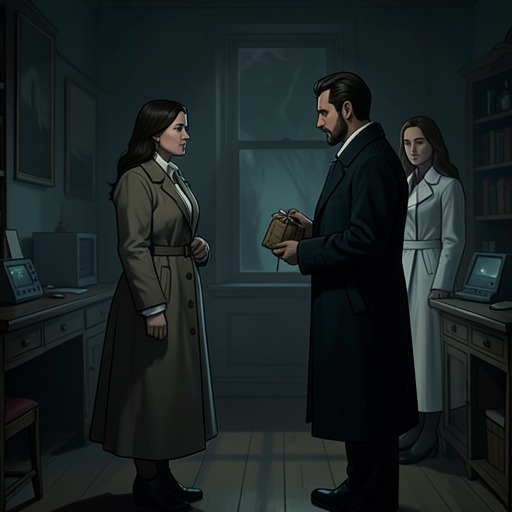
When labor begins, the assurances of friendship become part of the pressure surrounding Rosemary. Guy enters with Mr. Fountain, Dr. Sapirstein arrives with a hypodermic, and other members of their circle gather. They describe the injection as a mild sedative, but Rosemary tries to resist and call for help. After Dr. Sapirstein recognizes that she is in labor, he gives her the injection. The episode makes the gap between reassuring language and Rosemary’s lack of control concrete: people who claim to protect her determine what happens to her body.
Rosemary expects to give birth at Doctors Hospital, with its equipment, nurses, and sterile surroundings. Instead, the people around her hold her and she is taken through labor at home, with Dr. Sapirstein administering further medication. Guy repeatedly promises that she will be all right, but his assurances do not restore her choice of place or care. By the time she learns that the baby is alive, her immediate circumstances have been shaped by the same group whose conduct she has reason to distrust. Her later decision to mother the child therefore cannot be mistaken for approval of the pregnancy’s coercive circumstances.
From Rejection to Care
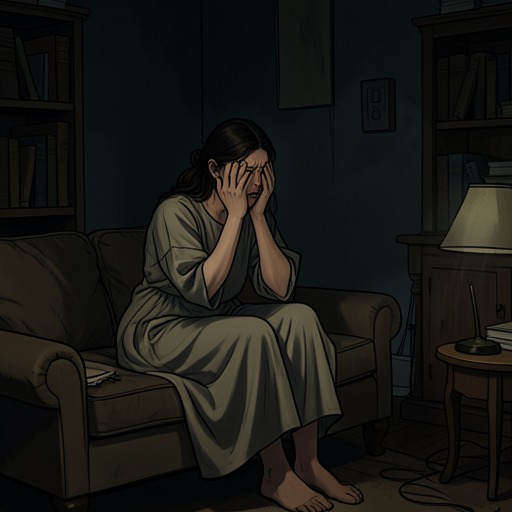
At first, Rosemary sees killing the baby as an obvious course of action and imagines throwing him out of the window along with herself. She also frames the possible consequences on a larger scale, wondering whether destroying him could save the world from what Satan might bring. The thought is a response to the child’s frightening signs and to the revelation of the coven, not evidence that she has settled on an act. As she considers the baby, she remembers that he had looked sweet before opening his yellow eyes and that his chin resembles Brian’s. These details interrupt the prospect of treating him only as a threat.
Rosemary then concludes that she cannot throw him out of the window: he is her baby regardless of who his father is. Her answer is not to accept the coven’s authority. She considers seeking help from a priest and the Catholic Church, and holds to the belief that killing is wrong. When the baby begins whimpering as Laura-Louise rocks the black bassinet too quickly, Rosemary gets up and points out what is troubling him. Roman Castevet invites her to rock the child; she recognizes that he is trying to draw her into being the baby’s mother, but takes hold of the bassinet and rocks it herself. Once Roman lets go, she continues alone, slowly, and attends to the wheels as another possible source of discomfort.
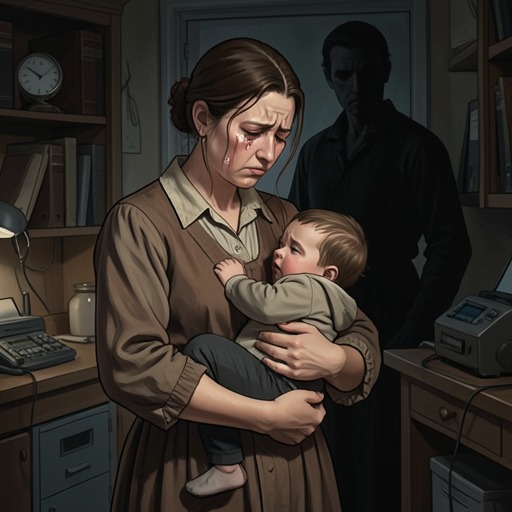
The change is expressed through practical care rather than a declaration of trust in the adults around her. Rosemary tells the baby that she is angry with them for tricking and lying to her, not with him, and promises not to hurt him. When Roman steps away, she loosens the baby’s gown and blanket, both of which she finds too tight. She tells him that he has a room with white-and-yellow wallpaper, a white crib, and yellow bumpers, and explains that the milk he has been drinking comes from her. The attention to his comfort and to the room prepared for him makes her choice specific: she is not merely tolerating his presence but imagining and undertaking the everyday work of caring for him.
Naming and the Limits of Her Choice
The coven tries to define the child through the name Adrian Steven. Rosemary counters with Andrew John Woodhouse, and when Roman insists on his chosen name, she makes clear that the decision is not open to argument. She also objects to dressing the baby in black all the time. These disputes are small in scale beside the control exerted over her labor, but they give her a direct way to assert that the child is hers and that the coven does not own every decision about him. Minnie Castevet’s loud support for the name Andrew prompts the others to repeat it, even as their continued praise of Satan shows that this agreement does not dissolve their larger allegiance.
Rosemary’s acceptance remains uneasy and does not become a simple reconciliation with the coven. She recognizes the baby’s yellow eyes, but, having had time to look at them, finds them less frightening. She tries to coax a smile from him, calls him Andy, and plays with the silver ornament above him while a Japanese photographer takes pictures. The ending holds two facts together: Andrew’s parentage and appearance remain bound to the threat Rosemary fears, while her response to him is maternal and protective. She cannot undo the deception or recover the birth she was denied, but she can refuse the coven’s name for her son and begin addressing him as her child.