Satan
Rosemary's BabySatan is the supernatural figure whom Roman Castevet identifies as the father of Rosemary Woodhouse’s child and names Adrian. He remains absent from the scenes in which this identity is disclosed: the reader encounters him through Roman’s declarations and the coven’s response. That distance is central to his role. Satan is at once presented as the explanation for the child’s parentage and invoked as the authority behind a promised reversal of religious and political power.
Identity and Revelation
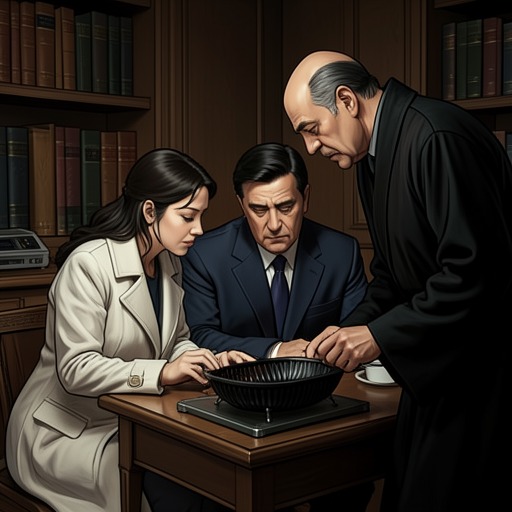
At the climactic encounter around the bassinet, Rosemary looks from the child to Guy Woodhouse and then to Roman, interpreting Roman’s remark about the baby’s eyes as an accusation involving her husband. Roman corrects her: the child’s father, he says, is Satan, not Guy. He describes Satan as having come from Hell and fathered a son with a mortal woman. In this account, Satan is not merely a name for evil but a figure with a specific place in the child’s origin story and a claimed relationship to Rosemary and the newborn.
Roman also supplies the child’s name: Adrian. His declaration joins Satan’s identity to the baby’s, making the name the hinge between the supernatural claim and the infant before them. The revelation therefore changes the meaning of the scene’s central object. The bassinet is no longer simply where Rosemary expects to find her son; in Roman’s account, it holds the proof of Satan’s return in the form of a child. The narrative does not show Satan speaking or acting in these passages. His identity is delivered by Roman, whose certainty and growing forcefulness shape how the claim reaches both Rosemary and the reader.
Roman’s Proclamation
Roman presents Satan’s paternity as part of a larger account of grievance and revenge. He says Satan has come to avenge wrongs committed by worshippers of God against his followers, and he predicts that Adrian will overthrow the powerful and destroy their temples. The child is thus assigned a future before Rosemary can accept Roman’s account of his parentage: Adrian is cast as an agent of vengeance for the despised, the burned, and the tortured. Satan’s significance in the speech lies not only in having fathered the child but in the cause Roman says that child will serve.
Roman’s language grows more emphatic as he speaks. The change in his bearing accompanies the movement from identifying Satan as the father to announcing Adrian’s destiny. This progression gives the revelation the shape of a public proclamation: a claim about the child becomes a promise about the future. The account belongs to Roman, however. The evidence establishes what he asserts and how the coven responds; it does not provide an independent speech or appearance from Satan. Keeping that distinction matters, because the scene’s immediate drama depends on Rosemary being confronted with Roman’s version of events while she is still trying to understand what has happened to her son.
The Coven and the New Era
The assembled group answers Roman’s claims with repeated acclamations to Satan and Adrian. Their response makes the naming collective rather than private: Roman declares the child’s identity, and the coven voices its assent. When Minnie Castevet adds that the child has the buds of horns, her remark reinforces the group’s interpretation of the infant as a supernatural sign. Rosemary responds with distress and repeatedly appeals to God, while Roman counters by declaring that God is dead and that Satan lives.
Roman then frames the moment as the beginning of a new historical era. He calls it Year One and couples the end of God’s reign with the beginning of Adrian’s. The coven repeats its acclaim, turning Roman’s language into a refrain. In this exchange, Satan functions as the opposing pole in a stark declaration of changed allegiance: the old religious order is pronounced finished, and the new one is announced in his name. The scene presents that transformation through speech, repetition, and group response, rather than through any direct action by Satan himself.
Rosemary’s Response and Narrative Role
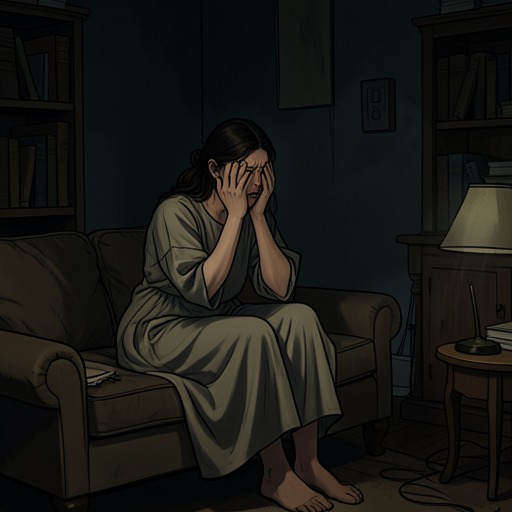
Rosemary does not accept Roman’s announcement as a revelation she can calmly absorb. After looking at Guy and the baby, she challenges the claim about the father and moves away from the bassinet, ready to attack the people surrounding it. As Roman continues, she drops her knife, turns toward the child, and covers her face before crying out to God. She eventually backs away from the watching group and sits between the bridge tables. These shifts in position register her struggle to reconcile the child she sees with the identity Roman insists upon.
Satan’s narrative role is therefore inseparable from the conflict over who has the authority to define the child. Roman names Satan as father and Adrian as son; the coven ratifies that account; Rosemary’s protests refuse its terms even as the group’s ritualized confidence presses them upon her. The scene gives Satan immense significance without giving him a speaking part or a visible presence in the cited material. He is made legible through the claims organized around him: a disputed fatherhood, a promised avenger, and the emblem of a new era that Roman announces while Rosemary recoils.