The Bramford
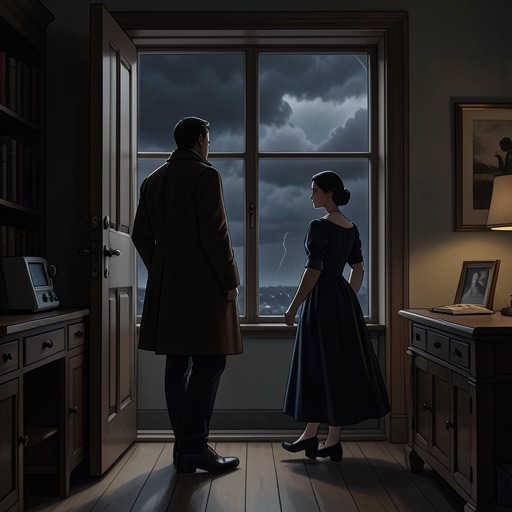
Rosemary's BabyThe Bramford is an old, black, elephantine apartment house in New York City: a place prized for its high ceilings, fireplaces, and Victorian detail, but burdened by a reputation for grotesque crimes and a past that its restored prestige cannot erase. Rosemary Woodhouse and Guy Woodhouse choose it as their home despite warnings, and its architecture becomes central to the contrast between domestic promise and concealed danger.
Building and Apartments
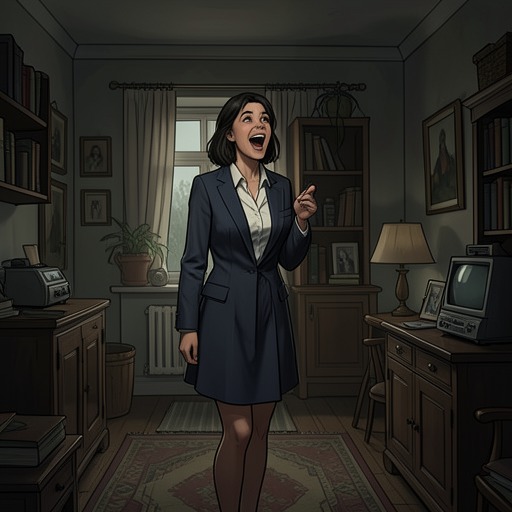
The Bramford is described as a warren of apartments, and its rooms preserve traces of an earlier, more spacious arrangement. Apartment 7E, the four-room home Rosemary Woodhouse and Guy Woodhouse lease, was once the rear portion of a ten-room apartment. Its living room had originally been the master bedroom; its bedroom had been another bedroom; and two former servants’ rooms had been combined to create a dining room or second bedroom. The apartment also had two bathrooms and five closets, including an unusually large original kitchen and master bath. Its layout was presented as especially suitable for a young couple planning to have children: one bedroom had a full bathroom and a large closet.
The couple’s decision to live there comes after they have already signed a lease elsewhere. They had been on the Bramford’s waiting list since their marriage but had given up hope of an apartment becoming available. Once they learned that one had opened up, Rosemary pressed Guy to reconsider their new lease. On the following Monday, they signed a two-year lease for 7E and paid $583, covering one month’s rent in advance and one month’s rent as security. They arranged to move in before September 1, while the apartment was cleared and prepared for painting.
The apartment’s former furnishings became part of the couple’s effort to make the old interior their own. From the previous tenant’s son, they bought two air conditioners, a rosewood vanity with a petit-point bench, a Persian rug, and the fireplace andirons, firescreen, and tools. Rosemary measured the living room and bedroom with a six-foot folding rule, then worked through decorating schemes, samples, and sketches. The move took place on August 27. Later, she hung curtains, added a Victorian glass lamp, and covered the closet shelves with gingham contact paper. That careful domestic work would eventually make the very closet she organized the site of the building’s most consequential architectural discovery.
Reputation and History
The Bramford’s sinister reputation predates the Woodhouses’ arrival. Edward Hutchins warns them that the building was known for unpleasant associations early in the century. Among its former residents were the Trench sisters, who were described as occasional cannibals and were said to have cooked and eaten several young children, including a niece. Keith Kennedy, Adrian Marcato, and Pearl Ames also lived there. Hutchins additionally recalls that a dead infant was found wrapped in newspaper in the basement in 1959.
The building’s reputation had changed with time without its history disappearing. During the 1920s it was known as Black Bramford, and sensible people avoided it. World War Two and the resulting housing shortage brought residents back; later, the Bramford acquired the prestige associated with a grand old apartment house. Its present respectability therefore rests alongside an older record of violence rather than replacing it. The residential address is also tied to Marcato’s public notoriety: an account Rosemary reads describes the 1896 tumult in which he claimed to have summoned Satan and was attacked by a mob outside the Bramford.
These stories shape how Rosemary experiences the building even when she tries not to dwell on them. The basement laundry is reached by a small, unmanned service elevator given to sudden creaks and tremors. Below, the brick passageways, caged bulbs, abandoned refrigerators, and distant footsteps make the route feel unnerving. Rosemary remembers Hutchins’s account of the dead infant and wonders about its identity, death, and the person who left it there. She considers looking up the old newspaper story but decides that knowing the exact place where the baby had lain would make the laundry trip harder to bear. The Bramford’s history is thus not only a set of anecdotes: it intrudes into the ordinary route between apartment and laundry room.
Domestic Life and Unease
At first, the Bramford is the setting for the Woodhouses’ practical, hopeful beginning. They settle into 7E, furnish it, and make decisions about the rooms as a shared home. Hutchins sends a telegram predicting that the Bramford will change from a bad house to a good one when a door bears the Woodhouses’ names. His wish gives their move the shape of a domestic renewal, even as his earlier warning makes the optimism uneasy.
The apartment’s social life brings the neighboring residents close. The couple gradually realizes that their apartment had originally formed part of a larger one, now divided into separate homes. Sounds from next door cross that partition: a woman’s loud arguments are heard on many nights, and a Castevet party keeps Rosemary awake with flat singing and the sound of a flute or clarinet. The building’s division into smaller apartments creates the privacy of separate households, but its former scale and thinly separated lives make those boundaries feel incomplete.
That tension becomes sharper in the basement and in Rosemary’s growing attention to the building’s past. The Bramford presents itself as a prestigious apartment house, with fireplaces and ornate detail, while its basement, remembered crimes, and unnerving service spaces suggest a different character beneath the polished domestic surface. Its menace is effective partly because it shares the same setting as laundry, furnishing, and the routines of a young household; the ordinary and the threatening occupy the same address.
Hidden Architecture and Significance
Late in the story, the apartment’s layout becomes more than a record of how a large residence was subdivided. Rosemary reasons that the people who entered her apartment must have used another route: the door between the homes had been chained, yet the group had still come in. She suspects the linen closet, which had been installed to divide the original apartment into smaller units, and removes the shelves she had covered with gingham paper years earlier.
Behind them, she finds a large white-painted panel. A continuous break in the paint marks its join with the molding; when she presses it, the panel swings inward on scraping hinges. Beyond it lies a second closet, dark except for a spot of light at a keyhole. Looking through, Rosemary can see a curio cabinet in the hallway of Minnie Castevet and Roman Castevet’s apartment, about twenty feet away. The door opens, confirming that the closet is a passage between the two homes. An architectural feature that had seemed merely useful for dividing rooms has concealed a means of moving between them unseen.
Rosemary crosses into the neighboring apartment with a kitchen knife. The hallway is empty, voices are audible from the living room, and there is no crib or baby in the bedroom. Above the curio cabinet hangs a vivid painting of a church in flames, an image that contrasts with the apartment house’s outward respectability and the familiar domestic interiors around it. The passage turns the Bramford’s history of divided apartments into an immediate threat: walls and closets that seem to secure private homes have instead made covert access possible. As a Gothic setting, the building’s force lies not simply in its age or reputation, but in the way its architecture allows old and hidden structures to persist inside the routines of home.