The Bramford’s sinister reputation
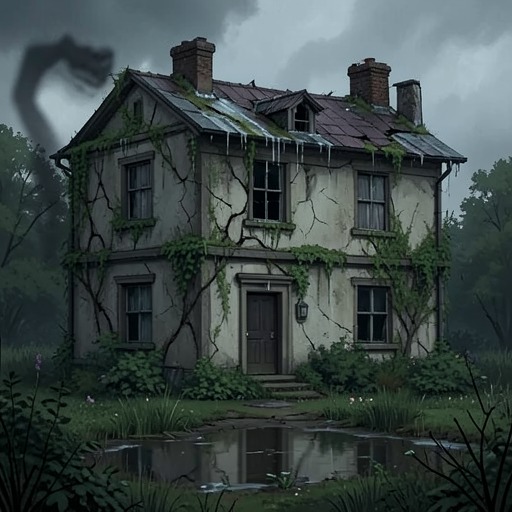
Rosemary's BabyThe Bramford’s sinister reputation is the accumulated record of disturbing incidents that gives the apartment house a second identity beneath its celebrated Victorian character. Old, black, and imposing, with high-ceilinged apartments, fireplaces, and period details, it is the kind of New York City building Rosemary Woodhouse and Guy Woodhouse had long hoped to inhabit. But Edward Hutchins calls it a danger zone: its history, he argues, is not a collection of unrelated anecdotes so much as a reason to be wary of the place itself. At first, the couple treats that warning as an argument to be weighed against rent and architectural charm. As the story proceeds, the building’s basements, concealed spaces, and unexplained access between apartments give the old reputation a more immediate and unsettling force.
A history behind the address
Edward Hutchins traces the building’s notoriety to a succession of residents and incidents. He says that alongside better-known figures such as Isadora Duncan and Theodore Dreiser, The Bramford housed people whose presence made its history less respectable. The Trench sisters, two Victorian women, were reported to have cooked and eaten several children, including a niece. Adrian Marcato practiced witchcraft and attracted attention in the 1890s by claiming he had conjured the living Satan. According to Edward Hutchins, Marcato displayed hair and claw-parings as evidence; a mob that believed him attacked him in The Bramford’s lobby and nearly killed him.
The building’s reputation did not end with these stories. Edward Hutchins connects the later Keith Kennedy affair and Pearl Ames with the same history, although his account does not detail their cases. By the 1920s, he says, the apartment house was half empty and known as Black Bramford. The change in occupancy came only with World War Two and the housing shortage, after which renewed demand and the building’s architectural prestige helped make it desirable again. Its improved standing therefore marks a change in fashion and occupancy, not necessarily a resolution of the past that made residents wary.
Edward Hutchins also points to incidents closer to the time of his warning. In 1959, a dead infant wrapped in newspaper was found in the basement. He reports that an elevator operator had been killed in an accident the previous winter, and says that The Bramford had experienced more suicides than comparable buildings of similar size and age. These are distinct kinds of incidents, from an unexplained infant death to fatal accidents and suicides, but Hutchins presents their frequency as the crucial pattern. The case he has assembled comes not only from memory: he says he spent three hours at the library consulting the Times Index and microfilm.
Warning, evidence, and disbelief
When Rosemary Woodhouse and Guy Woodhouse learn that an apartment has become available, the opportunity interrupts their plans to move into a different building. They had already signed a lease on a five-room apartment on First Avenue, but had waited for a home in The Bramford since their marriage. The desired address is thus attractive before it is ominous: its distinctive architecture, fireplaces, and Victorian detail help explain why its history has not erased its appeal.
Edward Hutchins tries to persuade them not to move there. He does not claim that a particular disaster is certain to befall them; his point is that a troubling record should count alongside the reasonable rent and working fireplace. He suggests the Dakota or the Osborne as alternatives, but Rosemary notes that the Dakota is a co-op and the Osborne is due to be demolished. The practical limits on their choices help the warning compete with what the apartment offers, rather than simply overcoming it.
Guy Woodhouse answers the historical pattern with an analogy: a coin can produce five heads in a row without being different from other coins, and past incidents do not prove that more will follow. He calls the pattern coincidence. Rosemary also wonders whether a genuinely dangerous building would have been demolished, comparing it with a house in London; Edward Hutchins replies that The Bramford belongs to the church next door. Their exchange leaves the reputation in an unresolved position. The incidents are concrete in Hutchins’s account, but their meaning remains disputed: Guy sees a run of chance events, while Hutchins sees a reason not to enter a place with an unusually bad record.
The building as lived space
After the move, the reputation becomes part of ordinary household experience rather than merely a history recounted over dinner. The basement is where Rosemary Woodhouse most remembers Edward Hutchins’s warning. To reach the laundry, she uses a small, unmanned service elevator that creaks and trembles. The basement’s brick passages, caged bulbs, old refrigerators, and distant sounds make the route feel disquieting; it is also the place where the infant wrapped in newspaper had been found. Rosemary considers searching old newspapers for more information, but decides that knowing the precise place and circumstances could make the fear harder to bear. Her partial ignorance is a choice to live with the report without making its details more immediate.
This recollection gives the building’s history a physical geography. The dead infant is not only a fact about The Bramford’s past; the basement makes that fact difficult to separate from a routine trip to the laundry. Domestic life continues in the same building as the disturbing history, and the ordinary task carries the remembered possibility of what happened there. The apartment house’s reputation therefore works through small, repeated encounters with its spaces, not only through dramatic stories about former residents.
Hidden passage and continuing menace
Late in the story, Rosemary Woodhouse’s discovery of a passage between apartments gives the building’s concealed architecture new significance. She reasons that there must be another way into the neighboring apartment because its door had been chained on the night people nevertheless came pouring in. She suspects that the linen closet dividing the large original apartment into smaller units might conceal that route. This is initially Rosemary’s deduction, not independent confirmation of every part of her theory.
She finds a painted panel behind the closet’s shelves. It swings inward to reveal another closet, and a keyhole looks toward a curio cabinet in Minnie and Roman Castevet’s apartment. The door opens into their hallway. When Rosemary enters, she sees that the hallway is empty, hears distant voices from the living room, and finds no crib or baby in the bedroom. The passage makes hidden movement between the apartments physically possible, giving a concrete basis to her belief that people could enter without using the chained door.
The discovery does not establish that every old story about The Bramford is true, nor does it prove Rosemary’s suspicions about the building’s entire history. It does, however, alter the force of the reputation: the house has spaces that can conceal both a route and the fact of passage through it. What Edward Hutchins described as a danger zone is no longer only a place associated with past misfortunes. Its divided apartments, basement corridors, and concealed opening make secrecy part of the present setting. The gap between respectable home and sinister history narrows as Rosemary finds that the building itself can hide what is happening within it.