Witchcraft and the occult
Rosemary's BabyWitchcraft and the occult organize the novel’s passage from uneasy suspicion to a revelation that reshapes Rosemary Woodhouse’s understanding of her home, her pregnancy, and her child. At first, the supernatural remains one possible explanation for The Bramford’s history and strange atmosphere; later, the Bramford coven presents its beliefs as fact and claims Satan as the child’s father. The concept is therefore bound to a gradual shift in what can be known: from old stories and unsettling objects to concealed access, ritual, and an explicit declaration of allegiance.
History and the House
The Bramford’s occult associations precede Rosemary and Guy Woodhouse’s arrival. The couple had been waiting for an apartment in the old building, whose Victorian detail and high ceilings made it attractive, but its history offered a counterweight to its appeal. Edward Hutchins tells them that Adrian Marcato practiced witchcraft and claimed, in the 1890s, to have conjured Satan. Marcato displayed supposed physical evidence, and a mob attacked him in the building’s lobby. Hutchins also links the house’s later notoriety to a history of troubling events and an unusually high number of suicides.
Hutchins does not settle what such a history means. He proposes that a place’s reputation might attract people already inclined toward disturbing behavior, allowing notoriety to accumulate through human actions. He also leaves open the possibility that a place could be malign in a more literal, unexplained sense. His account gives the occult a double status: it is an explanation offered by people who believe in it, but it is also part of a broader uncertainty about whether The Bramford’s reputation produces its horrors or reflects something already present. Rosemary’s suggestion that some houses might be associated with love, marriage, and children offers a domestic counter-image, one that the later plot will make painfully unstable.
Signs in Ordinary Life
The signs associated with witchcraft enter domestic life in forms that can initially be treated as eccentric or merely unpleasant. Terry Gionoffrio shows Rosemary a silver charm given to her by Minnie Castevet. Minnie says that the substance inside it was grown in her greenhouse and that the charm is meant to bring good luck. Its appearance and smell unsettle Rosemary, but the object arrives as a gift within an ordinary neighborly relationship, not as an openly declared instrument of harm. Its significance lies in that mismatch: a token of protection carries an unexplained substance and connects Terry to Minnie’s private practices.
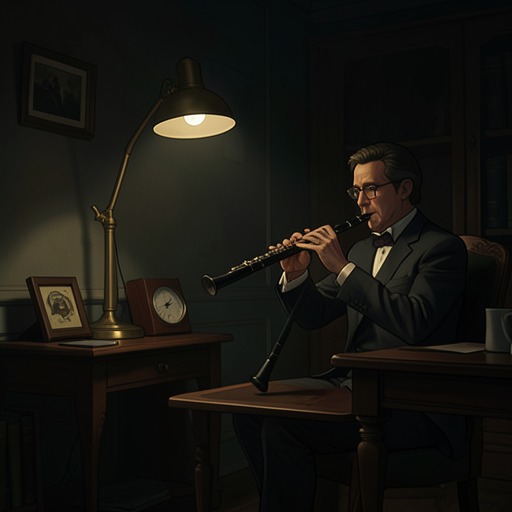
The building’s communal life also acquires an occult cast through recurrence. Rosemary hears singing and a flute or clarinet during parties in the Castevets’ apartment; later, the same combination of voices and music accompanies the ceremony she experiences. The repetition turns what might have seemed like background noise into a pattern. Likewise, the basement laundry area becomes charged by the story of a dead baby found there. Rosemary considers looking up the old newspaper account but decides that knowing more would make the place still more frightening. Her partial ignorance is not evidence that the supernatural is real, but it shows how The Bramford’s history makes ordinary spaces feel occupied by concealed violence.
From Uncertainty to Ritual
A later episode presents a ceremony involving Minnie and Roman Castevet, Laura-Louise, and others gathered around Rosemary. The scene is framed through Rosemary’s experience and carries the strangeness of a dream, yet she recognizes it as real within the moment. Chanting and accompanying music echo what she has heard through the wall, while Roman performs a ritual over her. The narrative thereby brings earlier domestic sounds into a new context: they have not simply been unsettling atmosphere but signs associated with the coven’s practice.
This revelation does not turn witchcraft into a fully explained system with a clear set of rules. Instead, its force comes from the gap between the coven’s confidence and Rosemary’s lack of control over what is happening. The occult is shown through actions and objects rather than through an abstract account of doctrine. The ceremony connects the neighbors’ private gatherings to Rosemary’s pregnancy, making the apartment building’s social closeness part of the threat. The supernatural claim is inseparable from the coven’s power over access, information, and Rosemary’s ability to decide whom to trust.
Hidden Space and the Covens’ Claim
Near the end, Rosemary acts on the conviction that she must reach her child herself. She reasons that the members of the coven could not all have entered her apartment through a door that had been chained, and infers that another route must connect the apartments. She suspects the linen closet, which had been used to divide a larger apartment into smaller ones. When she removes its shelves, she finds a panel opening into another closet and a passage to Minnie and Roman’s apartment. Through the keyhole she can see into the adjoining space; when she enters, the hallway is empty, and there is no crib or baby in the bedroom.
The passage gives physical form to the novel’s occult concealment. What Rosemary had experienced as an inexplicable ability of the neighbors to appear in her home has a hidden architectural route. The discovery does not resolve every supernatural question, but it demonstrates that the household’s apparent boundaries have been manipulated. The route also changes Rosemary’s position: she no longer relies on others to explain what is happening and uses the secret space to search for her child.
When she reaches the black bassinet, she sees that her son’s eyes are golden-yellow, with narrow black pupils. Roman explains that Satan, not Guy Woodhouse, is the child’s father, and identifies the child as Adrian. The coven’s ensuing declaration that God is dead and that a new year has begun makes its occult belief explicit as a collective creed. The novel has moved from Hutchins’s uncertainty about a malign house to the coven’s confident account of Satanic paternity and purpose. Rosemary’s reaction, including her appeal to God, preserves a conflict between the coven’s proclamation and her own religious horror rather than making its claims emotionally neutral.
Narrative Significance
The occult links the novel’s Gothic architecture to its central domestic violation. The Bramford first appears as a sought-after home, but its divided apartments, unsettling basement, and concealed passage make the building’s physical structure part of the mechanism of secrecy. What seems like neighborly access becomes a system that permits the coven to intrude while withholding the means by which it operates.
The concept also governs the narrative’s changing balance between natural and supernatural explanations. Hutchins’s account allows for human and environmental causes as well as the possibility of a literally malign place. Later scenes provide concrete evidence of conspiracy and hidden access, while the child’s appearance and Roman’s account give the coven’s beliefs a supernatural dimension. The distinction between what can be explained by architecture and deception and what exceeds ordinary explanation remains important: occultism is not merely a label for strangeness, but the coven’s own framework for interpreting and justifying its actions.
By the conclusion, the occult has transformed the meaning of earlier details without erasing their ambiguity. The charm, the repeated music, the house’s reputation, and the unseen route all become parts of a pattern whose full significance Rosemary can recognize only after being trapped within it. The resulting horror comes not only from belief in Satan, but from the collision of supernatural claims with recognizable forms of domestic trust, medical authority, and private space.