Rosemary gives birth at the Bramford and is told the baby died
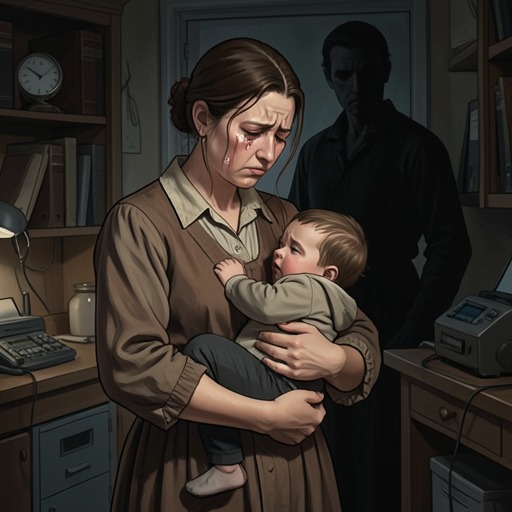
Rosemary's BabyRosemary Woodhouse’s labor and the announcement that her baby has died mark the point at which her pregnancy is taken decisively out of her control. She had wanted a child, but the birth does not happen at the hospital she expected, and the people who claim to protect her instead restrain her and administer medication. When Abraham Sapirstein tells her the baby is dead, Rosemary rejects the explanation and accuses him and Guy Woodhouse of taking the child. The scene’s central uncertainty is not whether Rosemary wants to be a mother, but whether she can trust the people who control access to her labor and to her newborn.
Background: Pregnancy, Pain, and a Disputed Warning
Rosemary’s pregnancy follows an earlier tension in her marriage: at twenty-four, she wanted three children spaced two years apart, while Guy said he was not ready. She considered becoming pregnant by accident, citing headaches from contraceptive pills and her dislike of other methods; Guy, meanwhile, tracked the calendar and avoided the days he considered dangerous. The contrast matters to the birth: Rosemary’s desire for a child is real, but it does not mean she has agreed to every decision later made about her body or the delivery.
As the pregnancy progressed, Rosemary suffered severe pain and feared that the baby might die. When friends asked whether Abraham Sapirstein had offered medicine or treatment, she said he had done nothing. They urged her to seek another opinion from Dr. Hill, arguing that pain was a warning that something was wrong. Rosemary initially defended Sapirstein as a respected doctor, but she also insisted that she would not have an abortion. Her friends clarified that they were asking her only to consult another physician. She then told Guy she intended to see Dr. Hill on Monday and wanted him to examine her.
That decision brings the conflict into focus: Rosemary is trying to obtain an independent assessment, while Sapirstein’s earlier assurances have prepared her to doubt the comparison with other pregnancies. He had warned that her friends might consider their own pregnancies normal and hers abnormal. When she later recalls that warning, it makes her uncertainty harder to resolve: her pain seems to demand attention, yet the doctor has supplied a reason to distrust precisely the people who urge her to seek it.
Labor at the Bramford
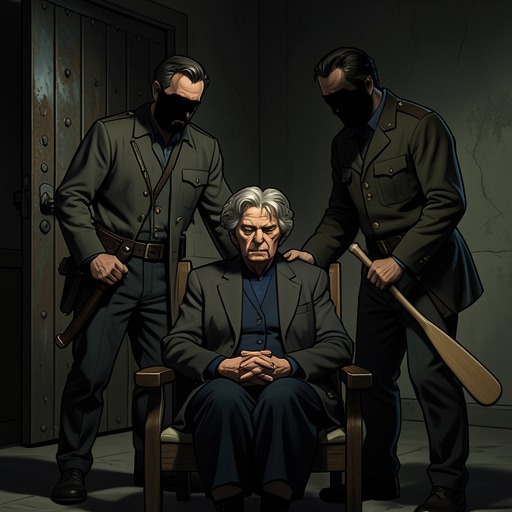
As Rosemary is about to call for help, Guy enters with Mr. Fountain. Abraham Sapirstein follows with a hypodermic, accompanied by Dr. Shand, Mrs. Fountain, and Mrs. Gilmore. They describe themselves as her friends and tell her she has nothing to fear; Sapirstein calls the injection a mild sedative intended to calm her and help her sleep. The reassurance is contradicted by the circumstances: Rosemary is surrounded, and her attempt to resist and call for help is stopped. Guy tells her he would not let anyone hurt her, while he and Mr. Fountain restrain her so Sapirstein can approach.
Then a much more severe contraction interrupts the effort to sedate her. Sapirstein examines her and recognizes that she is in labor; the news is passed in a whisper outside the room. The sudden recognition changes the immediate purpose of the gathering. Instead of simply calming Rosemary for the night, those present now manage a delivery already under way. Sapirstein gives her an injection, and she is held while Guy promises that she will be all right.
Rosemary had expected to deliver at Doctors Hospital, with its equipment, nurses, and sterile surroundings. The realization that she is instead at the Bramford gives the scene one of its sharpest reversals: the place of birth is not the one she had anticipated or chosen. Another contraction follows, and Sapirstein gives her another injection. The narrative presents the setting and the medication as decisions controlled by others, while Rosemary’s stated expectation of a hospital makes clear what has been taken from her.
Birth and the Announcement
After the labor, Rosemary remembers that it is over and that the baby has been born. She asks whether the baby is all right and is told that the baby is fine. Later, at five past nine, Guy and Sapirstein enter looking grave and resolute. Rosemary asks where the baby is. Sapirstein refers to complications but says they will not affect future births, then tells her that the baby is dead. The assurance about future births sits beside the claimed death of this one, directing attention toward a reproductive future Rosemary cannot yet verify while withholding the child she has just delivered.
Rosemary does not accept the announcement as an established truth. She tells Guy and Sapirstein that they are lying, and says the baby did not die but was taken. She calls them witches and repeats that they are lying. The scene does not present her accusation as a calm investigation; it shows her making it at the moment when the men controlling her care also control the information she receives about her child. Sapirstein’s grave manner, with a shred of coconut caught in his moustache, provides an incongruously ordinary detail as he delivers the news, but it does not resolve the question for Rosemary.
Aftermath and Significance
Guy holds Rosemary down while Sapirstein gives her another injection. Later, as she eats soup and buttered bread, Guy tells her she had been out of her mind and attributes her condition to a kind of prepartum hysteria named by Sapirstein. His explanation recasts her accusation as illness rather than engaging with its substance. The people around her have thus supplied both the account of what happened to the baby and the account of why she doubts them.
The event binds together two forms of lost agency. Before labor, Rosemary had tried to seek a second medical opinion and had stated her refusal of abortion; during labor, she is kept from the hospital she expected, restrained, and medicated; afterward, she is told that her child is dead and that her protest was madness. Her earlier wish to become a mother makes the withholding of the baby especially consequential, but it does not erase the distinction between wanting pregnancy and consenting to the treatment imposed on her. The announcement therefore closes neither the question of the baby’s fate nor Rosemary’s resistance. It leaves her isolated within a story others insist on telling for her.