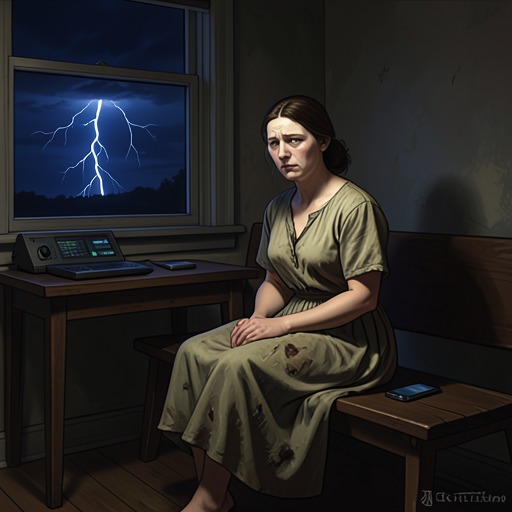
Dawn's paternity DNA test results
SCOTTISH ROMANCE: My Sinful Surrender to a Highlander Werewolf (Scottish Werewolf Pregnancy Romance) (Historical Medieval Shape Shifter Paranormal Science Fiction Short Stories)Dawn's paternity DNA test results are the decisive instrument in the conflict over Dawn's unborn child. The test is not merely medical paperwork: because both Borg and Uth may have fathered the baby, its result determines which man can claim parental authority and whether Dawn will retain any meaningful relationship with her child. The result ultimately confirms Borg as the father, but the circumstances surrounding the test expose a larger system in which Dawn's body, pregnancy, and future are subject to male, familial, and interspecies control.
Purpose and Circumstances
The test becomes necessary after Dawn acknowledges that she may be pregnant. Borg demands to know whether the child is his, while Dawn recognizes that the pregnancy may fulfill the obligation Uth imposed on her. She asks whether paternity should matter if her DNA is compatible with the arrangement that brought her to the brothers, but she also admits that she does not know how she would feel if the child were not Borg's. Her uncertainty gives the test an emotional weight beyond biological classification: it may decide not only who the father is, but which relationship Dawn must preserve.
Borg explains that his species can test for the father, and that the result will carry legal consequences on their home planet. If Uth is the father, Uth would receive custody because fathers usually raise the offspring in that society. Dawn, meanwhile, is described as a slave and as a member of another species, leaving her without rights. The test therefore operates inside a patriarchal and interspecies custody system rather than a neutral medical setting. Its apparent objectivity masks the fact that the available choices have already been narrowed by status, species, and reproductive law.
Administration and Disclosure
Uth insists that the test must be performed because their leader will want to know who fathered the child. He also states that he wants the child if it is his, even while acknowledging that Dawn is now Borg's mate and promising not to touch her again. Borg agrees to let Dawn appear for testing, but threatens to kill Uth if he hurts her. He further insists that Dawn is already attached to the child and must be allowed to know it if Uth proves to be the father.
After Uth conducts the test, he returns roughly an hour later with the results on a tablet and hands them to Borg. Borg chooses to deliver the information himself rather than have Uth tell Dawn. The device thus passes through a chain of authority: Uth produces the result, Borg controls access to it, and Dawn waits for knowledge of her own pregnancy to be returned to her. When Borg finds her resting in his bed, he hesitates before waking her, then tells her that they need to talk. Dawn immediately asks whether the test results have arrived, revealing how completely the tablet's contents govern the emotional atmosphere of the scene.
Result and Immediate Consequences
Borg tells Dawn that he is going to be a father. The result settles the biological question in Borg's favor and changes the relationship between them. His face softens as he looks at her belly, while Dawn responds by embracing and kissing him intensely. The result therefore produces an intimate reversal: what had been a potentially coercive reproductive arrangement becomes, at least in this moment, a shared pregnancy claimed by Borg and welcomed by Dawn.
The result does not remove the danger surrounding the pregnancy. Borg warns Dawn that they will soon return to his home planet and that her condition will expose her to intense scrutiny from their leader, who will want extensive information about humans. He promises to protect her but cautions her not to provoke the leader, whose violent outbursts could force Borg into lethal action. Paternity settles the question of the child's father while increasing the political and physical stakes of Dawn's pregnancy, because the confirmed connection to Borg places her and the unborn child directly within the attention of his society.
Reproductive Power and Narrative Significance
The test's importance lies in the unequal meanings attached to biological fatherhood. Dawn bears the physical changes, carries the child, and already feels attached to it, yet the surrounding society treats fatherhood as the basis for custody and authority. The same reproductive event can therefore promise emotional belonging for Borg while threatening separation and dispossession for Dawn. Her fear that she might have to give up the child if it were Uth's makes clear that the test is also a measure of whether she will be recognized as a mother.
Across the wider narrative, the test belongs to a recurring pattern in which reproduction is tied to contracts, inheritance, species survival, and social power. Amy's discussion with Sloan centers on a will requiring marriage and pregnancy within six months; William learns that he must marry and produce an heir to control his family's estate; Valerie's transformation is connected to survival and the expectation that she become a mate; the Watchers use selected humans as slaves or breeding subjects in an attempt to combine their genes with humanity; and Kember distinguishes donating eggs from carrying and surrendering a child because pregnancy creates an attachment that cannot be reduced to a transaction. Against this background, Dawn's paternity DNA test results crystallize the book's central reproductive tension: technology can identify biological descent, but it cannot by itself resolve who has the right to choose, carry, raise, or keep a child.