Homelessness
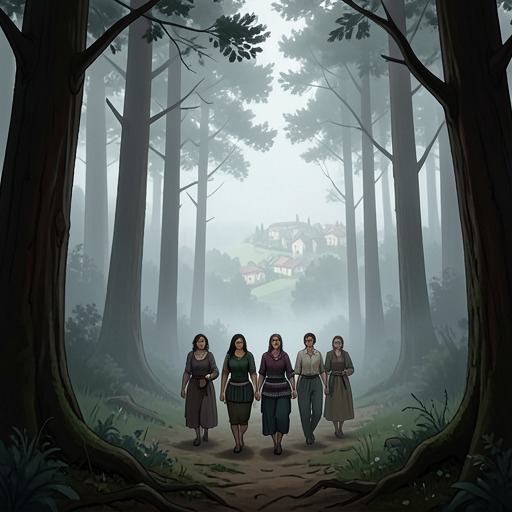
SCOTTISH ROMANCE: My Sinful Surrender to a Highlander Werewolf (Scottish Werewolf Pregnancy Romance) (Historical Medieval Shape Shifter Paranormal Science Fiction Short Stories)Homelessness is not merely the absence of a house in this narrative; it is a state of exposure in which hunger, debt, unemployment, insecurity, and the threat of capture strip ordinary assurances from daily life. Tonya faces the prospect of becoming homeless while buried in debt, Naomi moves between couches, apartments, and a park while fighting illegally for survival, and Opal travels north in flight from enslavement, sleeping in woods and living on discarded food. Their circumstances differ, but each reveals homelessness as a social condition: a person may be surrounded by towns, employers, acquaintances, or property and still have no reliable place in which to live. The contrast between precarious wandering and sudden refuge gives the condition its decisive significance, showing how a bed, a meal, or an offered coat can mark the difference between being treated as a person and being left to endure as disposable life.
Material Insecurity and Social Abandonment
Homelessness first appears through Tonya’s blunt account of economic collapse. She explains that she has lived in debt for years and is now thousands of dollars in debt, while the people around her respond with assurances that circumstances will improve rather than practical assistance. Her fear is immediate rather than abstract: she is starving and expects to become homeless. The repeated promise that someone will help her up is exposed as empty because no one actually does so. Her sisters have moved on, she is the last one left, and she cannot make it alone; homelessness therefore emerges from the erosion of family support as much as from insufficient income. When Tonya looks down in shame after admitting this reality, the scene makes poverty an intimate humiliation as well as a financial fact.
Naomi’s housing insecurity has a different cause but the same brutal consequence. After losing her job, she searches for work, accepts temporary jobs, and suspects that she has been blacklisted around town. She turns to illegal backyard fights because they are the only work that comes close to paying enough for survival, while the possibility of earning a larger share depends on becoming more successful and more dangerous. Maria lets her sleep on the couch once or twice a week, but the arrangement cannot be called a home: the rest of the time Naomi stays at other people’s houses or apartments or makes a last-ditch camp in a nearby park. The temporary nature of every shelter leaves her life suspended between one night and the next.
The narrative makes Naomi’s self-reliance both a resource and a limitation. She learned hunting and fishing from her father before he died of cancer, never knew her mother, and had no siblings, becoming a virtual loner by the age of eighteen. Those lessons allow her to endure outdoors, and she resists the trap of credit-card debt or borrowing for unnecessary desires. Yet personal discipline cannot solve structural exclusion. Her homelessness is not presented as the result of extravagance; it follows unemployment, unstable work, and the lack of a secure place to return to.
Wandering, Capture, and the Meaning of Freedom
Opal’s homelessness is inseparable from escape. Moving through the shadows of small frontier towns, she searches behind saloons and inns for scraps of food and travels from one nearly identical settlement to another. Her limited reading skills make navigation difficult, though an older field worker has taught her to read and she practices whenever possible. She borrows a horse blanket and old shoes, takes an apple or a carrot from the edges of farms, and tries to remain unseen because asking for help may expose her to people willing to place her back in chains.
Her journey north lasts for months. She travels at night and hides during the day, choosing between towns with supplies but greater danger and open country with room to breathe but almost no resources. Heat makes breathing difficult in some places; cold threatens to put her to sleep permanently in others. She survives by an inward determination that keeps her moving, yet the narrative refuses to romanticize her freedom. She sleeps in the dirt, wears stolen clothing, eats discarded food, and curls beneath a stolen horse blanket in the woods. The question of what kind of freedom she has gained is therefore material and political: escape from ownership does not immediately provide food, safety, shelter, or recognized personhood.
Each town embodies the double promise of survival and capture. Its general store, saloons, dining hall, and possible inn offer supplies, but the same settled world contains people who might exploit a fugitive. Opal has no intention of returning to a homestead where she was treated as property, even though life outside it is nearly unlivable. Her homelessness becomes a form of resistance under extreme conditions: the open ground is dangerous, but surrendering freedom would be worse than surrendering life.
The Threshold of Hospitality
William discovers Opal while checking the wooded perimeter of his property, where he usually searches for calves caught in brambles. She is not encountered in a domestic room but in shaded greenery, concealed from the settled household and reduced to the visible signs of deprivation: a threadbare dress, a slender frame, long black hair, fearful dark eyes, and a horse blanket more suitable for a dog than a person. Her canvas bag contains a can of tomatoes, a small act of theft shaped by hunger rather than presented as moral corruption.
William’s first gesture is to offer his coat, but Opal refuses it because she has already taken enough and fears the consequences of being seen as a thief. His suspicion remains, yet he does not turn that suspicion into punishment. Instead, he asks whether she will come to the house, where it is warmer and he can offer leftover breakfast. The invitation changes the meaning of the encounter. Opal has barely spoken to another person in months, and the simple human gesture brings tears to her eyes; unable to trust her voice, she nods and follows him.
The movement back through the woods is a small but decisive passage from concealment toward provisional shelter. William rides while Opal follows on foot, preserving the imbalance between the property owner and the fugitive stranger, but the direction is no longer toward pursuit or capture. It is toward heat, food, and the possibility that a household might receive her without demanding ownership in return. Hospitality is thus shown not as a grand institution but as a concrete decision made over a meal and a warm stove.
From Bare Survival to a Bed
The sharpest value shift occurs in the space of a single night. Opal arrives at William’s home after nearly starving and after spending months without dependable shelter. By evening she has been fed and is preparing to sleep on her first real bed in nearly a year. Her bafflement at this overnight reversal records how thoroughly homelessness has altered her expectations: comfort appears almost unreal, something she must test against the possibility that it is still a dream.
William arranges a bedroll in the corner behind the stove, and Lady immediately curls up at its foot. The domestic details matter because they transform survival into an inhabitable routine. The stove provides heat, the bedroll provides a defined place for the body, and Lady’s presence supplies warmth and companionship. Opal falls unconscious as soon as her head reaches the pillow, suggesting that exhaustion, rather than simple relief, governs her first sleep in safety.
The next morning continues the restoration through ordinary objects and repeated care. Coffee, fried eggs, fried bread, and the warmth of the stove replace discarded food and cold earth. William pours Opal a cup of strong black coffee and watches as she holds the warm metal with delicate fingers. Nothing about the meal is extravagant, but its regularity gives it force: homelessness is countered not by luxury but by a place at a table, food prepared in advance, and the assumption that there will be another morning.
Narrative Significance
Through Tonya, Naomi, and Opal, homelessness links different narrative worlds: contemporary debt and isolation, precarious urban survival, and the historical violence of enslavement and flight. Tonya’s crisis is voiced as a plea against people who offer prayers instead of aid. Naomi’s is organized around improvised shelter and illegal labor. Opal’s is enforced by the danger of recapture, making every empty road and darkened town part of a continuing struggle for freedom. The forms differ, but the underlying condition is the same absence of dependable protection.
The episodes also distinguish self-sufficiency from security. Naomi’s outdoor skills help her camp alone, and Opal’s endurance carries her north, but neither skill supplies a home. Survival knowledge keeps a person alive; it does not guarantee dignity, legal safety, or belonging. William’s intervention becomes meaningful precisely because it interrupts that cycle without being preceded by proof of productivity or repayment.
Homelessness consequently functions as a test of social recognition. A person living outside a house can be ignored, hunted, exploited, or treated as a burden, while a person brought indoors can suddenly be seen as a guest and household member. The narrative’s most powerful contrast is between the scale of the hardships and the modesty of the remedy: a couch, a park, a blanket, a can of tomatoes, a bedroll, breakfast, and coffee. These ordinary things reveal how thoroughly the vulnerable have been deprived of ordinary life—and how quickly an act of humane attention can begin to restore it.