Lorne
SCOTTISH ROMANCE: My Sinful Surrender to a Highlander Werewolf (Scottish Werewolf Pregnancy Romance) (Historical Medieval Shape Shifter Paranormal Science Fiction Short Stories)Lorne is introduced through Freya’s terror: a tall Highlander with long brown hair, a close-cut beard, and the physical authority to overturn a household and remove her from hiding. His decisive significance lies in the gap between what his actions look like and what he ultimately intends. He is both an agent of the raid that destroys Freya’s security and the man who carries her away from the danger that follows, turning an apparent abduction into a complicated movement toward protection, intimacy, and parenthood.
Identity and Introduction
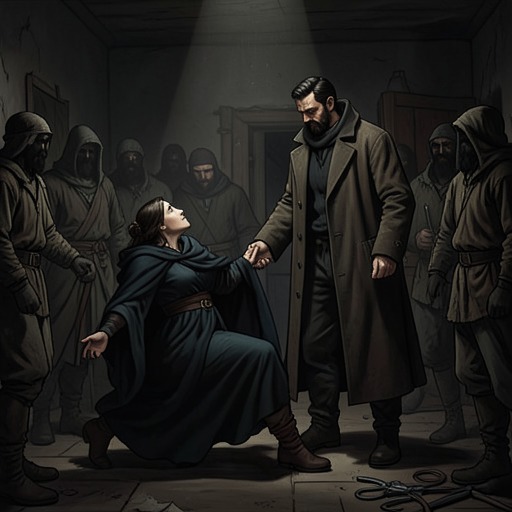
Lorne enters Freya’s story as an armed Highlander searching her home. While Freya hides inside a cupboard, he ransacks the room, overturns the kitchen table, and rifles through her belongings. When the cupboard doors fly open, she is paralyzed into silence by the sudden light and by the sight of him towering over her. He grips her arm and pulls her from her hiding place, then demands her money and coins. The scene establishes him through physical force before it supplies any explanation of his motives.
His authority becomes still more threatening when he orders Freya to come with him. She refuses, pleading that she has nothing of worth and fearing the stories she has heard about Highlanders looting villages and raping captives. Lorne responds by grabbing her calves, throwing her over his shoulder, and marching away. She faints almost immediately, so the first stage of their relationship is marked by helplessness, bodily displacement, and uncertainty about whether she will survive.
Captivity and the First Reversal
When Freya regains consciousness, she is being carried across damp morning grass. She can see the back of Lorne’s kilt and hears only the sound of marching feet, leaving her unsure whether she is the sole captive taken in the raid or what fate awaits her. Lorne knows that she is awake and lowers her carefully onto the grass before offering her water from his flask. His command to drink remains brusque, but the act itself introduces care into a relationship that began with seizure and coercion.
Freya tests the limits of that care by refusing the flask and declaring that, if she is going to die, she would rather die of thirst. Lorne does not draw his sword. Instead, he laughs and insists that she will not die that day, eventually persuading her to drink until the flask is half empty. This exchange is the first clear value shift in his portrayal: the Highlander who seemed to embody immediate lethal danger becomes, at least in this moment, the person preserving her life.
Freya then asks directly whether he intends to rape her. Lorne answers that women offer themselves to him freely and that he has no reason to want one who does not. The statement does not erase the violence of taking her, but it establishes a boundary he chooses not to cross: he distinguishes between possessing physical power and forcing sexual access. When Freya asks what use she can be if he will neither kill nor rape her, he tells her that she will stay with him until morning and leads her to a small thatched house.
The apparent explanation he gives there deepens rather than resolves her fear. Lorne tells Freya that in the morning she will be sold to the highest bidder, and he shuts the door. For Freya, this seems to confirm that her captivity is part of a commercial system in which her future can be transferred to someone else. For the reader, the statement creates a deliberate postponement: Lorne’s conduct has contained signs of restraint, but his declared plan still presents him as a captor preparing to profit from her.
Relationship with Freya
In the darkness of the house, Freya asks Lorne’s name. He answers simply, “Lorne,” then asks for hers. When she gives it, he calls Freya a pretty name; although she cannot see his face clearly, she hears the smile in his voice and finds herself smiling back. The exchange is small but structurally important. Names replace the anonymous categories that have governed their first encounter—raider, captive, Highlander, woman—and allow attraction and recognition to enter the relationship.
The intimacy remains unstable because Freya continues to interpret Lorne through his earlier deception. She believes that he has obtained what he wanted and that she was naïve to believe his talk of freedom. Lorne briefly appears angry, then relaxes and laughs before embracing her. His reaction reveals an ability to move from confrontation to reassurance without abandoning the seriousness of her suspicion; he does not treat her fear as irrational, even though he has helped produce it.
Lorne finally clarifies that he is not taking Freya to be sold but to safety. He explains that his clan moved overnight, while he and Freya fell behind because he had been tired from carrying her. The house where they stopped was only an emergency shelter for the wounded and for people needing refuge after the attack on Freya’s village. Their delay has left them without the protection of the rest of the clan, and Lorne fears that vengeance will reach Freya if she remains exposed to her own people. His account recasts the journey as an escape from a second danger: the village has already been attacked, and the community that should have protected Freya has failed her.
Protection, Parenthood, and Change
Lorne’s protection is therefore not simple benevolence. He participates in the violent world of the Highlanders, removes Freya from her home against her will, and initially lets her believe that she is merchandise. Yet he also gives her water, refuses to force himself on her, carries her when she is unconscious, and tries to place her beyond the reach of retaliatory violence. His behavior makes him a threshold figure between threat and refuge: the same strength that makes him terrifying becomes the means by which Freya is transported to safety.
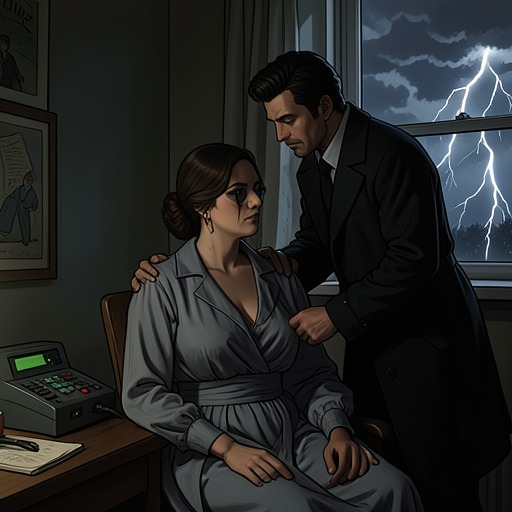
The relationship reaches its clearest transformation when Freya tells Lorne that they are going to have a baby. She rests one hand on her belly and asks him to sit before delivering the news. Lorne reaches for her hand, his eyes widening as he asks whether he is going to be a father. Freya confirms the doctor’s diagnosis, and he looks from her belly back to her face with a smile. The pregnancy converts the precarious bond formed during the raid into an explicitly shared future. Lorne is no longer only the man who took Freya from danger; he is also the prospective father whose response binds him emotionally to her and to the child.
Narrative Role and Significance
Lorne’s characterization depends on controlled reversal rather than a clean division between villain and rescuer. The narrative first restricts the reader to Freya’s frightened perspective: scraping furniture, approaching footsteps, sudden light, the cupboard opening, and the body of a stranger above her. Only afterward does it disclose the motives that complicate those impressions. This limited knowledge makes Lorne’s stated intention to sell her credible before his later explanation forces both Freya and the reader to reinterpret the earlier journey.
His arc also links several of the story’s recurring pressures: Highlander raids, the vulnerability of women in warlike societies, the danger of abusive or failed communities, and the possibility that intimacy can emerge from a relationship beginning under coercive conditions. Lorne does not undo the violence of Freya’s capture, but the text gives his later choices concrete moral weight. His refusal to rape her, his insistence that she drink, his effort to keep her from vengeance, and his delighted response to the pregnancy all move him away from the role of raider and toward that of protector and father. The resulting tension is central to his significance: Lorne’s love and care are presented not outside the violent social order he inhabits, but as a difficult redirection of its power.