Maggie
SCOTTISH ROMANCE: My Sinful Surrender to a Highlander Werewolf (Scottish Werewolf Pregnancy Romance) (Historical Medieval Shape Shifter Paranormal Science Fiction Short Stories)Maggie’s decisive role in the narrative is to make the Watchers’ apparently benevolent rule visible from the inside. On the first day of spring, every adult over eighteen must enter the annual lottery, and Maggie faces the ritual for the first time with a nervous awareness that she may be taken from her home. Her selection as number 5842 transforms a public celebration into the threshold of captivity, breeding, and a possible challenge to the system that has governed humanity for generations.
Identity and Ordinary Life
Maggie is presented as a young woman whose self-image resists the narrow standards imposed by mainstream beauty culture. She is short, curvy, and described through her long blonde hair, dark brown eyes, olive complexion, large hips, and full figure. Rather than treating her body as a defect because she lacks the fashionable “thigh gap,” she values the way she looks and accepts the movement of her body with confidence. This self-acceptance becomes important because the society around her treats human bodies as resources to be selected, transported, and used.
Before the Choosing, Maggie has lived among people who have been deliberately kept ignorant of the lottery for as long as possible. Children generally learn about it only when parents or other adults have already been selected, leaving Maggie with fragments of frightening information rather than a full understanding of what awaits her. She knows that the chosen person must leave with the Watchers, but the secrecy surrounding the institution prevents her from imagining ordinary resistance or informed consent. Her first participation therefore carries both personal fear and the weight of a society trained to regard submission as normal.
The Watchers’ Choosing
The lottery is not a voluntary civic ceremony but the annual mechanism by which each human community supplies one person to its rulers. The Watchers arrived on Earth before Maggie was born, took control of human life, and became the providers of technology, healing, and even environmental power. Their authority is presented as a bargain: in exchange for the benefits of Watcher rule, each community must surrender one of its own people every year.
The bargain conceals a sharply unequal division of power. Those taken may become servants who work in fields, build as carpenters, and attend to every Watcher need on the Watchers’ planet, a place described as resembling Earth. Their lives are short, and the Watchers’ violent tempers make human safety dependent on constant perfection. Others are used for breeding because the Watchers seek to merge their genes with humanity and create a superior hybrid being. The institution thus classifies human lives according to usefulness, reducing service, reproduction, and survival to administrative outcomes.
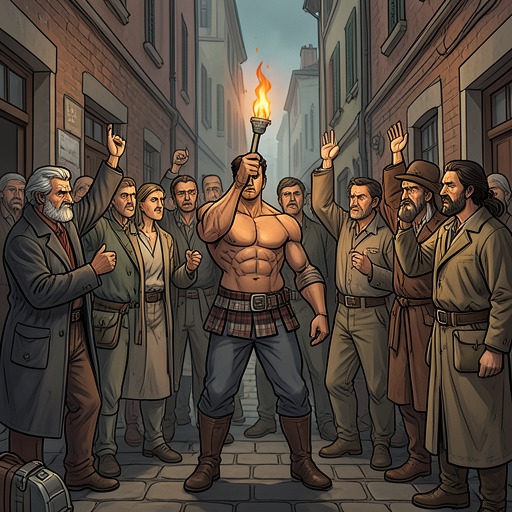
Maggie’s fear intensifies during the public announcement. While the crowd cheers the designation of a “lucky winner,” she looks down and prays to return home safely. The announcer then calls number 5842. Maggie looks at the rock bearing her number, sees its gold surface glinting, and freezes before being instructed to approach the stage. The contrast between the crowd’s celebration and her bodily shock reveals the ideological function of the ritual: a coerced transfer is made to look like communal honor.
Captivity and Urieal’s Intervention
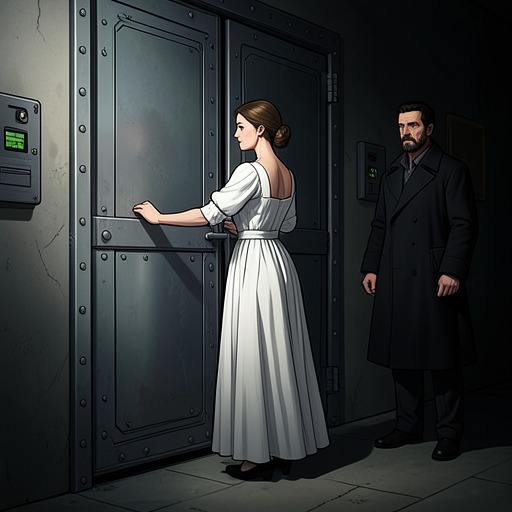
After Maggie is taken to the Watchers, her immediate circumstances confirm the brutality hidden behind the ceremony. She is found naked and marked by cuts from spikes, frightened and bleeding. Her treatment makes the language of service impossible to separate from physical violence. Even the food and shelter later provided to her cannot erase the fact that she has entered the Watchers’ world without the power to determine what happens to her body.
Urieal responds differently from the Watchers who have normalized the abuse of breeders. He has not previously understood what the breeders endure, because he trusted his men to care for them properly. Once he sees Maggie’s condition, he becomes angry and orders that no one touch her, intending to reserve her for himself and pursuing the possibility that royal blood should father one of the first hybrids. His protectiveness is therefore morally mixed: it interrupts the immediate abuse, but it does not initially free Maggie from being treated as a reproductive subject.
Urieal’s response changes when he confronts the larger meaning of the breeding system. He tells his father that he has bred one of the humans because he believes the first hybrid should come from royal blood. At the same time, he argues that humans must not be treated like animals and points specifically to Maggie’s cuts, fear, and bleeding as evidence that the program is intolerable. His proposed solution is to treat humans as equals, but his father rejects that premise, insisting that humans are not equal to the Watchers. Maggie’s body thus becomes the site where a political disagreement over species hierarchy, royal succession, and reproductive control is made concrete.
Reproductive Politics and Relationships
Maggie’s story belongs to a wider pattern in which marriage, inheritance, mating, and pregnancy are imposed through institutions that claim authority over private life. Elsewhere, Amy must confront a will requiring marriage and pregnancy within six months, while William learns that he cannot fully control his family estate without marrying and producing an heir. Valerie’s supernatural marriage is shaped by a life-saving transformation and an obligation to the man who saved her. These parallel arrangements show that Maggie’s predicament is not an isolated abuse but part of the book’s recurring interest in bodies made answerable to dynasties, species, contracts, and inherited power.
The logic is especially stark in Maggie’s case because the Watchers openly describe humans as material for genetic integration. Unlike Amy’s negotiation over whether she wants children or Kember’s fear that a surrogate might bond with a child she must surrender, Maggie is selected before she can establish the terms of reproduction at all. The key question is not simply whether she might become pregnant, but whether a human woman is allowed to possess bodily dignity, parental standing, and the right to refuse the use of her body.
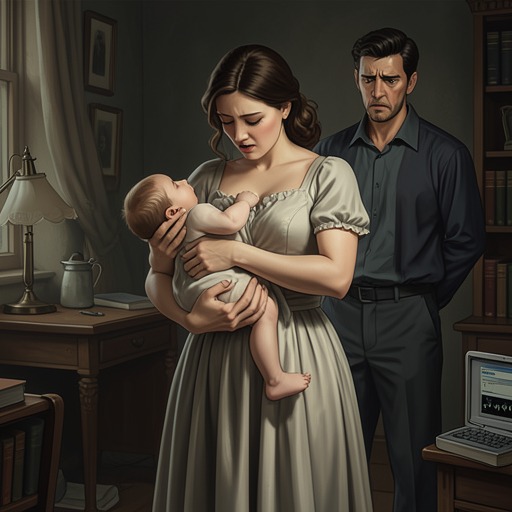
Urieal’s relationship with Maggie remains inseparable from this conflict. He seeks offspring and believes royal lineage should enter the hybrid population through him, yet his recognition of her injuries leads him to demand protection from further mistreatment. That contradiction gives the relationship its central tension: Urieal can oppose the cruelty of the system without immediately abandoning the system’s reproductive objective. Maggie’s significance lies in forcing those positions into the same room, where protection is shown to be inadequate unless it includes equality and meaningful consent.
Change and Narrative Significance
Maggie begins as an ordinary young adult who knows the Choosing only through rumor and inherited fear. By the time her number is called, she has become the clearest human embodiment of the Watchers’ annual sacrifice. Her selection changes the meaning of the spring festival, the community’s relationship with its rulers, and Urieal’s understanding of the breeders entrusted to his people. What had been presented as provision and progress is exposed as a system sustained by secrecy, bodily violence, and the threat of replacement: the Watchers know another human will be supplied the following year.
Her arc also links individual survival to the possibility of a new political order. Urieal’s defense of human equality does not erase his role within Watcher royalty, but it introduces an internal challenge to the belief that superior technology justifies domination. Maggie’s wounds, fear, and forced selection provide the evidence that makes reform imaginable. She is not merely a chosen victim or a prospective mother of a hybrid; she is the person through whom the narrative tests whether a society built on compulsory breeding can recognize the humanity of those it claims to improve.