The Choosing
SCOTTISH ROMANCE: My Sinful Surrender to a Highlander Werewolf (Scottish Werewolf Pregnancy Romance) (Historical Medieval Shape Shifter Paranormal Science Fiction Short Stories)The Choosing is the central institution through which the Watchers govern human communities on Earth. Each year, the adults of a community are required to enter a lottery, and one person is taken to serve the Watchers. The ritual disguises coercion as tradition: children play, food is served, and the announcer calls the selected person a “lucky winner,” even though selection can mean enslavement, forced breeding, or death.
Origins and Political Function
The system exists within a society that believes the Watchers arrived before the present generation and ended an earlier period known as “The Time Of Trouble.” The Watchers provide food, technology, healing, assigned work, and even control over the weather, including the ability to stop the rain when humans disobey. Older people therefore tend to describe their rule as rescue and order rather than occupation. Maggie’s grandfather, who had lived before the Watchers, considered service to them a privilege and wished that someone in his family would receive that honor. Maggie, who had never known the earlier world, could not share his gratitude; the same arrangement that appeared beneficial to him looked like a fate imposed on the people he loved. The exchange is explicit. Every community must surrender one person each year to its “providers.” The Watchers’ material generosity does not erase the asymmetry of the bargain, because humans cannot refuse the yearly demand. The festival’s language of luck and service converts a compulsory extraction into a public custom, allowing domination to appear normal even to those who fear it.
Rules and Public Ritual
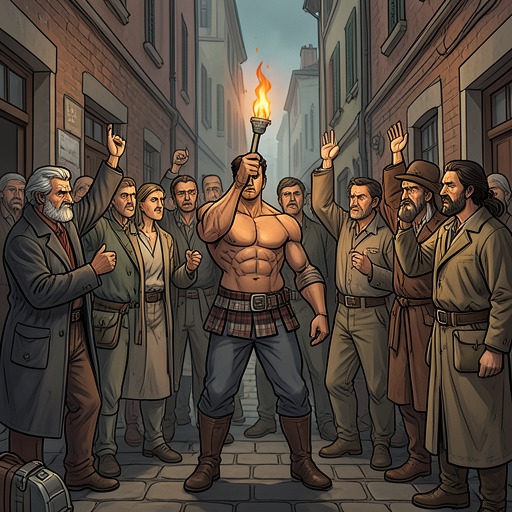
All adults over eighteen must participate on the first day of spring. A person remains eligible until reaching forty-five, when the Watchers permit withdrawal from the list, or until selection removes the person from the lottery. Maggie’s first year is therefore marked by a double threshold: she has just become an adult, yet she is still decades away from the age at which the system might release her. The lottery is not a single youthful initiation but a recurring condition imposed across adult life. Each participant receives a numbered stone, and the assigned number remains attached to that person until withdrawal or selection. The stone must be protected and brought back every year. Maggie’s stone is smooth, with numbers coated in gold. The gold, once imagined as a medium of exchange, has become abundant on the Watchers’ planet and therefore economically meaningless; the stone survives not as money but as an instrument of identification. A personal object is transformed into a permanent administrative label. The public ceremony begins when bells summon the adults to the center of the park while children continue eating and playing. The announcer welcomes the crowd, praises the festivities, and explains that one person will become a servant to the Watchers. The spectators cheer, but Maggie looks at the ground and prays to return home safely. The ceremony thus places celebration and terror in the same scene: communal entertainment continues around a selection that can destroy an individual’s life.
Selection and Removal
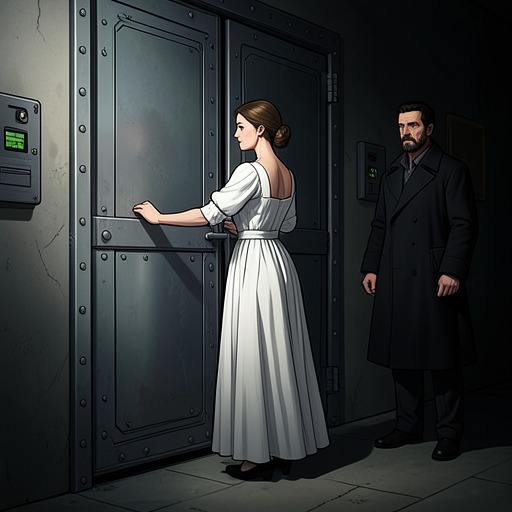
Maggie’s fear intensifies as the drawing approaches because she can see it in the faces of the other adults. She is especially conscious of parents who might be taken away from their children, while also recognizing that her own lack of children gives her one less immediate attachment to lose. Her fear is not vague superstition; she has been told that selected people must leave with the Watchers, and that those judged unwanted may be “disposed of” and replaced by someone else. The public announcement names number 5842. Maggie looks down at the stone in her hand and freezes when the gold catches her eye. She cannot walk forward, loses consciousness, and next becomes aware of being carried onto the stage by men from the community as the crowd cheers. The people around her treat the moment as a successful ceremony, while her physical collapse exposes the emotional reality that the official language conceals. The announcement calls her a winner and offers congratulations, but the immediate result is not a prize: she is separated from Earth and transferred into Watcher custody. After being given water, Maggie discovers that the setting has changed from the space behind the stage to a metallic room with a hard chair and other bewildered people. The transition makes the lottery’s true function unmistakable. The park ceremony is only the visible entrance to a process of removal, and the selected person passes from a public community into an alien-controlled environment before she has even recovered from the shock.
Labor, Breeding, and Bodily Control
The Watchers divide their human captives into workers and breeders. Workers are transported to the Watchers’ planet, a place resembling Earth, where they labor in fields, work as carpenters, and attend to the Watchers’ needs. Their lives are short because the Watchers are violent and treat human replacements as inexhaustible; another person will be supplied the following year. Human beings therefore function as a renewable labor population rather than as protected members of a political community. Breeders are subjected to an even more controlled existence. They are isolated in sterile containment so that no human can impregnate them and so that the Watchers can record the development of each fetus. The program has produced no successful birth so far. Pregnancies have involved severe abnormalities, including babies growing at twice the normal rate and fetuses taking so many nutrients from their hosts that the women die within months of conception. A person selected as a breeder therefore faces a system in which reproduction is treated as an experiment and maternal survival as an uncertain cost. Maggie understands that her appearance makes her likely to be classified as a breeder. The Watchers choose women they consider physically healthy, particularly those with large hips and breasts, because they believe such bodies are suited to carrying a Watcher child. She knows that a successful pregnancy could change the world, but she also knows that the chance of survival is small. Her body is assessed before she has any meaningful power over what happens to it, and the lottery’s supposedly random selection is followed by a second classification based on reproductive usefulness. The annual ritual also supports a larger project: the Watchers seek to combine their genes with those of humanity and create a superior being. They can change into human form, while no person on Earth has seen their natural bodies. Their biological secrecy and technological superiority reinforce the imbalance between the species. The Choosing supplies the bodies through which the Watchers attempt to reproduce themselves, making the lottery part of a population-management program rather than merely a labor draft.
Resistance and Narrative Significance
The Choosing reveals a society organized around unequal exchange, surveillance, and the conversion of fear into obedience. Humans are told that they owe service because the Watchers provide everything, and many older citizens accept that explanation because they remember the disorder that preceded Watcher rule. Yet Maggie’s experience demonstrates the cost hidden inside that collective gratitude. The crowd’s cheers, the gold-numbered stone, and the announcer’s congratulatory language cannot make her consent real. The institution also connects to other systems in the wider world where bloodline, reproduction, and social rank determine a person’s rights. Pure-blood werewolves value ancestry and exclude mixed members; family estates can require marriage and an heir before inheritance passes; alien rulers can select human bodies for breeding. The Choosing is the most openly bureaucratic version of that pattern. It assigns value through categories, separates useful bodies from disposable ones, and makes the continuation of a ruling order depend on controlled reproduction. Its most important narrative reversal is the collapse of the expected meaning of winning. Maggie prepares in her best clothes because selected people are supposed to appear worthy, and the community celebrates the result as an honor. Once number 5842 is called, however, the language of privilege gives way to paralysis, blackout, transport, and confinement. The Choosing’s decisive significance lies in that contradiction: it is a festival that performs consent while delivering people into involuntary service, and it is a lottery whose apparent randomness conceals a stable political purpose.