The Vampire-Werewolf Bride Conflict
SCOTTISH ROMANCE: My Sinful Surrender to a Highlander Werewolf (Scottish Werewolf Pregnancy Romance) (Historical Medieval Shape Shifter Paranormal Science Fiction Short Stories)The Vampire-Werewolf Bride Conflict turns Valerie’s arranged mating into a direct test of whether a supernatural community can treat a woman as a consenting person rather than as a political or reproductive asset. Valerie had been selected for Kale’s son under pressure from the werewolf leadership, but her attachment to John leads her to reject that future. John’s protection prevents the dispute from becoming an immediate armed clash, while Kale’s demands expose the violent assumptions beneath the language of obligation, marriage, and family continuity.
Causes and Background
Valerie explains that Kale’s son chose her partly because he found her attractive and partly because, after hearing her story, he wanted to give her the possibility of a real life. The proposed marriage was initially meant to exist largely on paper: Valerie wanted to finish college, while the young werewolf wanted to pursue his own plans. She understood that the arrangement carried an expectation that she would bear pups, but she believed there was no immediate pressure to consummate it. Her account presents the match as a compromise that might have allowed both parties some independence, even though the werewolf community treated it as a binding reproductive obligation.
The arrangement is also shaped by werewolf bloodline politics. Tate’s reflections elsewhere in the narrative distinguish ancient pure-blood werewolves from those born of human-werewolf unions or changed by another werewolf, and he recognizes that his own ancestry extends back thousands of years. Accalia treats non-pure werewolves and humans as inferior, whereas Tate rejects that hierarchy. Valerie’s conflict therefore belongs to a wider pattern in which ancestry, marriage, and reproduction are used to preserve supernatural status. Her proposed union is not merely romantic; it is tied to the pack’s authority over bodies and succession.
The Confrontation at John’s House
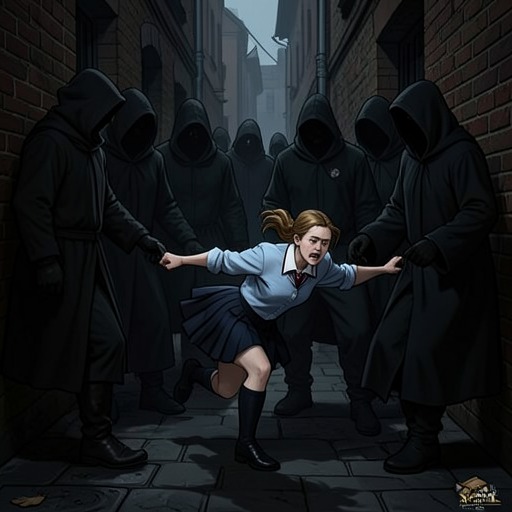
The immediate crisis begins when Melonius warns his father, John, that the wolves are at the door demanding Valerie’s return and have brought enforcers with them. He fears that the household lacks enough guards to prevent the meeting from becoming bloody. John agrees to meet Kale without either side’s guards present, but he orders Melonius to protect Valerie. His response makes the stakes clear: he is willing to negotiate, but not to surrender her to a force that intends to treat her choice as irrelevant.
Kale enters John’s office as the wolf leader and declares that John has his son’s bride-to-be. John acknowledges the claim but insists that Valerie is not being held against her will and offers to let Kale ask her directly. Kale argues that Valerie was chosen as his son’s mate and therefore has an obligation to return. John counters with the werewolves’ own law, reminding him that an unwilling mate cannot be married. The dispute thus turns on competing interpretations of the same social order: Kale emphasizes selection and duty, while John invokes consent as a limit on those claims.
When Valerie enters the room, she is visibly nervous. Kale moves toward her, and John instinctively steps between them, warning Kale away as his eyes flash red and his fangs emerge. The physical gesture makes the moral conflict visible: John’s protection is not abstract sympathy but a bodily refusal to let the werewolf leader intimidate Valerie. Kale accuses her of abandoning the people who saved her and joining the vampires, but Valerie answers that his son deserves a woman who loves him. Kale replies that his son needs pups and a wife, not love, reducing marriage to breeding and social function.
Valerie’s Choice and the Threat of War
Valerie’s decision becomes explicit when she tells Kale that she will not return to a relationship without love. She places her hand on John’s cheek and tells him that he has never frightened her, a gesture that confirms both her trust in him and the difference between his protective force and Kale’s coercive demand. When Kale mocks the possibility that they are in love, John states that Kale cannot have her and draws Valerie protectively against his side.
Kale then reverses his language, claiming that he does not want Valerie and calling her damaged goods while insisting that his son deserves better. The insult reveals the possessive logic beneath his earlier demand: Valerie is valuable when she serves the pack’s reproductive purpose, but disposable when she refuses it. He threatens revenge before leaving, making clear that the immediate negotiation has not ended the hostility between the groups.
The meeting nevertheless avoids open violence. Valerie stands stunned because she had expected bloodshed, while John explains that the last physical war between vampires and werewolves caused heavy losses on both sides and that the groups generally try to avoid repeating it. Their disputes are often petty, but the bride dispute carries the potential to reactivate that older conflict. Valerie’s choice therefore functions as both a romantic decision and a narrow peacekeeping moment: her refusal prevents her forced return, while John’s intervention keeps the confrontation from becoming a battle.
Law, Consent, and Reproductive Power
The event’s central contradiction is that several characters describe reproduction as a communal necessity while Valerie experiences the same expectation as a threat to her autonomy. Kale believes that being selected makes her responsible for producing pups, and his claim treats the young werewolf’s need for a wife as more important than Valerie’s feelings. John, by contrast, argues that a woman who needs the chance to live her own life cannot be claimed simply because a pack has designated her as a mate.
This tension echoes other inheritance and breeding arrangements in the narrative. William learns that he must marry and produce an heir to control his family estate, while Sloan and Amy discuss a will requiring pregnancy within six months of marriage. Urieal defends the breeding of a human for a royal hybrid program but argues that humans should be treated as equals rather than animals. In another conflict, a husband proposes that Penelope remain until she gives birth and then surrender the baby to his wife, threatening to leave her destitute when she refuses. Valerie’s case belongs to this recurring structure: institutions convert intimacy and fertility into contractual resources, and the plot tests whether individuals can resist that conversion.
The contrast is sharpened by relationships that move beyond reproductive purpose. Dennis tells Kember that he wants not merely a baby but a genuine relationship with her, explicitly joining his desire for the child to his desire for Kember herself. Borg, by comparison, speaks of claiming Dawn and timing the pregnancy so paternity can be established. Valerie’s rejection of Kale’s arrangement aligns her with the narrative’s recurring insistence that partnership cannot be reduced to lineage, biological proof, or institutional duty.
Consequences and Narrative Significance
The immediate outcome is that Valerie remains with John rather than returning to Kale’s son. John’s defense gives her a protected space in which her own answer determines the result, and Kale leaves without taking her. Yet the ending is deliberately unstable: Kale promises revenge, refuses to accept John’s moral authority, and declares that he will raise his pack according to his own principles. The conflict is contained, not resolved.
As an event, the confrontation combines the dramatic situations of threatened abduction, forbidden love, rivalry between groups, and resistance to imposed marriage. Its decisive value shift is from Valerie’s presumed status as an already assigned bride to her recognition as an agent whose refusal can redirect the future of two communities. The wolves arrive expecting possession and perhaps violence; they leave without Valerie because her choice, supported by John’s authority and force, cannot be silently overridden.
The conflict also exposes the difference between a rule that exists on paper and a society willing to honor it. John can invoke the principle that an unwilling mate cannot be married, but Kale’s behavior shows that the principle is contested whenever bloodline and reproduction are at stake. Valerie’s selection of John therefore has significance beyond the love triangle. It challenges the pack’s claim to define her belonging, interrupts a hereditary mating system, and briefly replaces the logic of compulsory alliance with the possibility of chosen attachment.