Carden
SCOTTISH ROMANCE: My Sinful Surrender to a Highlander Werewolf (Scottish Werewolf Pregnancy Romance) (Historical Medieval Shape Shifter Paranormal Science Fiction Short Stories)Carden is a Highland werewolf mercenary whose decisive significance lies in the way a political abduction becomes an intimate bond. Hired by the king of Kigom to seize Zuzulla, King Sven’s daughter, he begins as an instrument in a wider struggle against conquest but soon acts from personal loyalty, protectiveness, and desire. His conduct repeatedly places him between brutality and compassion: he belongs to the clan that fights through force, yet he is also the man who covers a murdered woman with a blanket, shelters survivors, and recoils from the destruction inflicted on civilians.
Identity and Background
Carden belongs to a Highlander clan employed as mercenaries by the king of Kigom. The assignment arises after Sven the Conqueror takes over the Kingdom of Berigord and continues pressing into the Kingdom of Kigom. Kigom’s king knows that his own army cannot defeat Sven’s forces, but he also knows that the Highland werewolves are willing to do whatever is necessary to complete a contract. Because Sven values his daughter, the king calculates that Zuzulla’s disappearance could redirect Sven’s attention from conquest to finding her.
Carden therefore enters the story as part of a calculated military strategy rather than as an independent romantic adventurer. His clan is expected to use its strength and supernatural identity to accomplish what a conventional army cannot. Yet the assignment also exposes the moral cost of the war surrounding him. The clan’s work is entangled with burned villages, displaced humans, and the treatment of vulnerable people as instruments in conflicts between rulers.
War, Violence, and Compassion
Carden encounters the aftermath of a raid in which Sven’s army has attacked a small village, burned its shacks, and taken whatever remained. He can still smell the smoke from the previous night as he moves through the woods, exhausted after the long operation. The setting establishes him inside the violence of the Highlander campaign, but his response to what he finds is not presented as indifference.
Inside a partially burned cottage, Carden discovers a dead woman lying naked on a bed. He takes a blanket from the floor and covers her body, attempting to restore a measure of dignity after imagining what Sven’s men may have done to her. His anger becomes physical and immediate, described as fire flowing through his veins. The gesture does not erase his participation in a mercenary world, but it distinguishes his moral reaction from the cruelty he witnesses.
Carden then finds a young girl hiding behind a table. She is no more than sixteen and is known among the younger Highlanders. When she takes his hand and embraces him while sobbing, he recognizes that he cannot leave her behind. He expects to take her to the clan and have the Alpha change her into a werewolf, and he wonders whether she understands what that future will mean or whether death at the hands of Sven’s army would have been less terrible. His rescue is thus also an act of forced transformation, preserving life by placing the survivor under the clan’s irreversible social order.
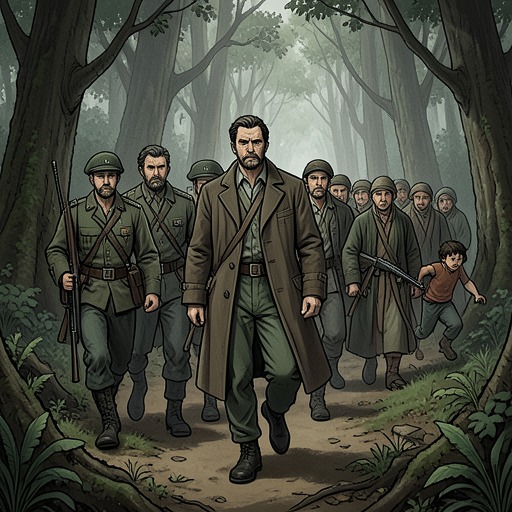
After the other Highlanders locate additional survivors and gather the small amount of food and water left in the village, Carden orders them to escort the humans back to the Highlander camp. He refuses to accompany them immediately because he intends to ensure that King Sven never inflicts the same destruction on another person. His objective shifts from completing a contract to confronting the wider source of the violence, even though the means available to him remain violent.
The Abduction of Zuzulla
Zuzulla has been raised inside the palace, surrounded by attendants and guards who bathe her, dress her, supervise her meals, and watch nearly every aspect of her life. Her evening walks are one of the few ways she can escape that surveillance. King Sven dislikes the walks but permits them under strict conditions, believing that guards remain close enough to protect her. Zuzulla, however, has grown up around them and knows how to recognize and evade them.
The forest initially represents freedom rather than danger. As a child, Zuzulla hid in bushes as a game while the guards searched for her; as she grows older, the same act becomes her only private space. Carden has watched her on previous days and understands that she generally has only about an hour before the search begins. That knowledge allows him to time the abduction and intercept her beyond the reach of the palace guard.
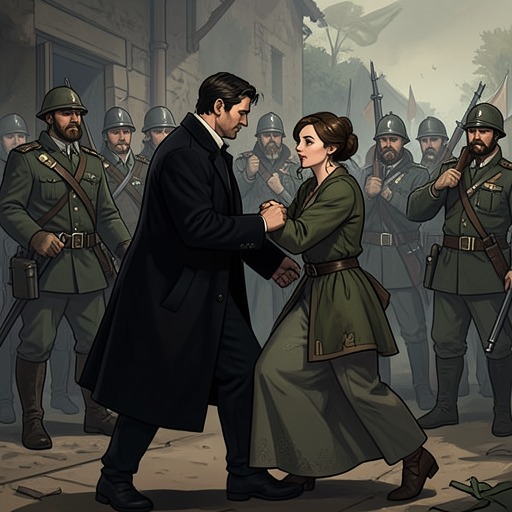
When branches break behind her, Zuzulla assumes the guards have followed farther than usual. Before she can react, Carden places a hand over her mouth and an arm around her waist. She struggles but cannot overcome his size or strength, and an object held over her mouth causes her to weaken and lose consciousness. The scene makes the power imbalance unmistakable: Zuzulla’s escape from surveillance does not lead directly to freedom but into the hands of a stronger captor.
Carden has arranged a horse on the far side of the forest and knows he must move quickly before the guards realize she is missing. He throws the unconscious princess over his shoulder and runs through the woods. Her dress impedes him, so he tears away the excess fabric, leaving a short skirt and abandoning the discarded material in the dirt. He deliberately recognizes that her father will panic when he finds the ripped dress, using the visible damage to intensify the search and misdirect the response.
Once he reaches the horse, Carden seats Zuzulla facing him, wraps her legs around his waist, and rests her head against his chest. The brief guilt he feels as he looks down at her signals that the mission has already begun to trouble him personally. He has successfully taken the political hostage, but the physical closeness created by the escape also begins the emotional transformation of the assignment.
Zuzulla and the Desire for Transformation
Carden eventually returns with two rabbits and a handful of berries, preparing a small fire so that he and Zuzulla can eat. He asks whether she is sure she does not want to go home. The question acknowledges that the abduction has become more than a simple transfer of a prisoner: Zuzulla is being given an opportunity, however constrained, to state whether she wishes to return to King Sven’s palace.
While hunting, Carden has reconsidered what he wants. He would prefer to take Zuzulla back to the Highlanders, but he knows that they must remain apart from the clan until the search ends. More importantly, he wants the Alpha to change her, making her a werewolf like him. He has not felt this way about a woman for more than a hundred years and does not want to lose her. His language of transformation joins desire to clan membership, so that loving Zuzulla also means drawing her into the supernatural community that controls his own identity.
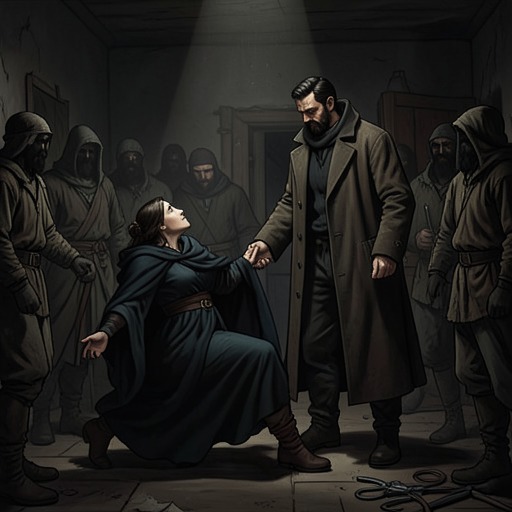
Zuzulla answers that she is sure she does not want to go home. Carden treats that answer as decisive and resolves to make her his. He lifts the cloak from her body, exposes her to the cold, and then gathers her into his arms to share his warmth before laying her on the grass. The moment combines apparent tenderness with the coercive circumstances of captivity. Her stated refusal to return matters to him, but it does not undo the fact that he engineered the situation in which that choice is made.
Carden’s attachment consequently carries the structure of a forbidden union shaped by war. He is a hired Highland werewolf; she is the daughter of the enemy king whose campaign has devastated villages. Their relationship could redirect the political conflict, but it also threatens to turn a royal hostage into a clan-bound werewolf. The story presents his protectiveness as genuine while leaving its possessive dimension visible.
Bloodline, Power, and Narrative Role
Carden’s choices resonate with the book’s recurring concern with bloodline and belonging. Elsewhere, Tate is identified as a prince expected to preserve pure royal werewolf lineage, while he rejects the idea that pure-blood werewolves are inherently superior to mixed or changed werewolves. William faces an inheritance stipulation requiring marriage and an heir before he can control his family estate. Valerie is selected as a potential mate because a powerful werewolf sees her beauty and wants to offer her a new life, even though the arrangement carries expectations of breeding. Urieal likewise challenges the treatment of human breeding subjects by arguing that humans should be treated as equals.
Against that larger pattern, Carden’s wish to have Zuzulla changed is both intimate and political. He does not merely want her safe; he wants her to become like him and enter his world. His attachment offers protection from the human war surrounding her, but it also subjects her to a new hierarchy, a new body, and the authority of the Highlander clan. The character’s dramatic force comes from that unresolved contradiction: he resists the cruelty of conquerors, yet he remains willing to determine another person’s future through strength, capture, and transformation.
Carden’s trajectory therefore follows a rescue-and-escape pattern with a deliberate inversion. He begins by serving a king’s strategy, passes through the burned village and its survivors, and emerges as the personal guardian and claimant of the very hostage he was hired to take. His most important change is not a public victory over Sven but the shift from mercenary duty to emotional investment. The evidence leaves his ultimate fate beyond the recorded scenes, but it establishes the decisive turn clearly: Carden no longer wants merely to deliver Zuzulla or use her as leverage. He wants her to remain with him, become part of his supernatural world, and share the life he has chosen to protect.