Dragon shifters
SCOTTISH ROMANCE: My Sinful Surrender to a Highlander Werewolf (Scottish Werewolf Pregnancy Romance) (Historical Medieval Shape Shifter Paranormal Science Fiction Short Stories)Dragon shifters are the book’s clearest embodiment of a divided identity: they possess human minds and relationships while carrying a physical form capable of flight, violence, and terror. The category is first experienced through Avery’s red-dragon curse, but it expands beyond one man into a wider social and biological order involving ancient dragon lineages, hunters, organized dragon communities, and cross-species descendants. Their significance lies in the way the stories make transformation both an intimate bodily crisis and a political problem. A dragon shifter is feared as a threat to humanity, hunted as a monster, disciplined by other dragons, and yet also capable of tenderness, restraint, family life, and moral choice.
Definition and Bodily Manifestation
A dragon shifter may appear human while retaining unmistakable signs of another nature. Avery is presented as a tall, heavily muscled man with military scars and a red dragon tattoo on his left shoulder. His eyes are unusually colored, one green and the other marked by yellow flecks, so that even before his transformation he seems not entirely human. The tattoo is not merely decoration: two puncture wounds within it reveal the bite that imposed the curse. His body therefore becomes a record of violence, with the mark preserving the memory of the attack that killed his fiancée and changed him.
The dragon form is specifically red and physically immense. It has outstretched wings, scaly red hide, red eyes, and a screeching, animalistic howl. April first encounters that image in a nightmare after falling from a mountain, where red wings descend through the sun and a creature’s eyes seem to look through her. The dream later becomes a material memory: during Avery’s transformation, the same wings replace his human body, and the same sound confirms that the nightmare was not only a product of fear. The apparent divide between dream and reality collapses when the creature strikes April with a wing and sends her across the room onto a sofa.
Transformation is not represented as a clean change from one stable body into another. During moments of extreme physical intensity, Avery becomes visibly caught between forms: scales appear across his shoulders, his voice changes, and the wings and red hide emerge before retracting. April observes that the transformation can be reversed, but only after the pair have learned how to control the conditions that release it. The body’s instability makes the dragon shifter a living threshold rather than a simple human disguise.
Avery’s Curse and Recognition
Avery’s history gives the dragon-shifter condition a traumatic origin. After an alley attack, he awakes beside his dead fiancée and finds the dragon tattoo on his shoulder, although he had never believed in tattoos and had no explanation for its appearance. The police suspect him of killing her, while he withholds the tattoo because the explanation sounds implausible. Afterward, two men ransack his condominium, prompting him to abandon ordinary life and hide in a remote cabin known to very few people. His isolation is therefore caused not only by grief but also by the fear that unknown pursuers are searching for what has been placed inside him.
April initially interprets the red creature as a frightening image connected to Avery’s tattoo. The physical evidence forces a more radical explanation. Using a magnifying glass, she examines the punctures in the mark and links them to a series of symptoms: blackouts, waking in unfamiliar places, dreams accompanied by blood or tissue beneath the fingernails, and the taste of copper. She tells Avery that the bite has transformed him into what she can only call a dragon shifter. The revelation changes the mystery from a criminal investigation into a supernatural hunt and gives meaning to the men who searched his home.
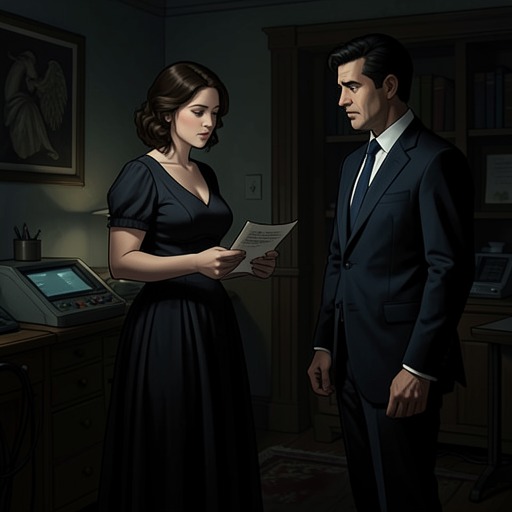
Avery does not immediately understand his own condition. When April confronts him with the evidence, he looks into a mirror and admits that he has never seen the wounds before. His ignorance makes the curse especially frightening: he is not concealing a known identity but trying to assemble one from missing time, bodily evidence, and the testimony of the woman who has witnessed his transformation. His grief becomes visible when he realizes that the hunters may be pursuing the creature within him. April responds by holding his shoulders and promising that they will solve the problem together, converting the discovery from a sentence of isolation into the beginning of an alliance.
Dragon Communities and Moral Order
The wider mythology establishes that dragon shifters are not a single undifferentiated mass of monsters. Niq is described as an Alpha and the father of the dragons hunted by Alissa. He has lived for hundreds of years while retaining the appearance of a man in his mid-twenties, and he governs a group whose members ordinarily maintain human form but may shift and fly above the clouds. Their flights sometimes expose them to airplanes, after which the dragons must stop shifting until public dragon hunts subside. The need to conceal their bodies shows that human fear is not an incidental reaction but a force shaping how the dragon community lives.
Niq’s authority is also ethical rather than merely physical. Dragons once lived on human flesh, especially the flesh of female virgins, but the community adapted in order to survive persecution. When a member kills a human, Niq does not treat the act as an innocent mistake. He understands that one killing can provoke human hunters and produce further deaths on both sides, so punishment is determined by the Alpha. This code distinguishes the organized dragon population from the isolated, uncontrolled danger represented by Avery’s early blackouts. Dragon nature does not erase moral responsibility; the community’s survival depends on regulating it.
Alissa’s relationship with Niq further complicates the category. She has hunted shapeshifting dragons and killed members of his group, so he is initially her enemy. Yet he also recognizes that she would have been justified in killing dragons who preyed on humans, and she comes to regard him as more humanlike and predictable than many other supernatural beings. The alliance between hunter and dragon does not remove the history of violence, but it reveals that the boundary between monster and protector is governed by conduct as much as by species.
Relations with Humans and Other Species
Avery’s story makes intimacy the first practical test of dragon-shifter identity. April is frightened when she sees him become a red dragon, but the couple does not end their relationship. They leave the cabin because Avery is being hunted and because the pursuers may want either to eliminate him or to experiment on him for government purposes. Their solution is concealment combined with learned control: they remain out of public view and practice techniques intended to prevent the dragon from emerging uncontrollably.
The relationship also becomes reproductive. By the end of Avery and April’s story, April is carrying a child, and she anticipates that the child may itself be a dragon shifter. Pregnancy turns the curse into a hereditary question. What began as Avery’s private bodily catastrophe now affects the next generation, making family life inseparable from the management of supernatural identity. April’s imagined future is not a return to ordinary human domesticity but the creation of a household that must accommodate a child whose nature may be visibly nonhuman.
Elsewhere, dragon shifters are connected to wider systems of classification. Werewolf communities distinguish among pure-blooded werewolves, those born from a werewolf and a human, and those changed by another werewolf; the existence of such categories provides a parallel for understanding dragon identity as a lineage and social status rather than merely an infection. The book also places dragons in contact with aliens and other supernatural beings. The Chubalahans, for example, conduct experiments on selected human populations from Pisces 9, while Watcher rule seeks to combine human and Watcher genes. These plots make dragon transformation part of a larger world in which bodies are repeatedly studied, altered, bred, hunted, and claimed by institutions.
Narrative Function and Significance
The dragon shifter operates simultaneously as creature, secret, victim, and potential guardian. Avery’s red dragon first appears through a woman’s terrified perception, so the reader encounters the form as an overwhelming sensory event: wings obscure the sun, a howl exceeds a human scream, and red eyes replace recognizable facial features. Later, the same creature is attached to a man who rescues April, treats wounds as a former medic, carries the scars of military service, and weeps when he understands what has happened to him. The reversal does not deny the dragon’s power; it forces power and vulnerability to occupy the same body.
The stories repeatedly challenge human-centered assumptions about what counts as a person. Dragon shifters can be hidden from public view, mistaken for ordinary humans, hunted from the air, or reduced to experimental material. Yet they also form communities, enforce rules, make judgments about killing, preserve collective survival, and pursue relationships whose consequences extend across generations. Their humanity is not established by the absence of animal traits. It is demonstrated through memory, responsibility, restraint, grief, loyalty, and the capacity to choose how inherited or imposed power will be used.
The ending of Avery and April’s story leaves the dragon-shifter condition unresolved in one sense but integrated in another. The wings and red hide retract, proving that the transformation can be controlled, and the couple leaves the cabin together rather than allowing fear to dictate separation. April’s pregnancy ensures that the condition will continue beyond Avery, but it also makes the future a shared family problem rather than a secret carried by one isolated man. Dragon shifters therefore remain dangerous and unfamiliar, yet the narrative refuses to treat danger as proof that they are without a place among humans.