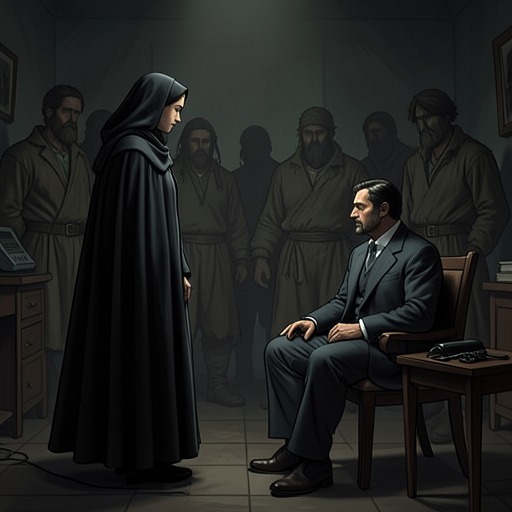
Jasper
SCOTTISH ROMANCE: My Sinful Surrender to a Highlander Werewolf (Scottish Werewolf Pregnancy Romance) (Historical Medieval Shape Shifter Paranormal Science Fiction Short Stories)Jasper’s decisive significance lies in what remains after him. As Emma’s husband and the father of Laura, he belongs to the domestic world she loses in a single fire: his death leaves Emma widowed, bereaved, financially diminished, and determined to cross the Atlantic rather than remain surrounded by unbearable memories.
Identity and Family Role
Jasper is identified only through Emma’s account of their household and the catastrophe that ends it. He is her husband, and Laura is their little daughter. Their family appears to be established enough to possess land, a home, and a recognizable way of life, yet the narrative gives Jasper no independent biography or sustained viewpoint. His importance is therefore relational: he is the husband whose loss makes Emma’s former identity impossible to continue and the parent whose death is inseparable from the loss of their child.
The fire reveals the fragility beneath that domestic stability. Emma awakens to Jasper on the floor, coughing and gasping while flames billow around him and acrid smoke makes it difficult for her to see or breathe. The emergency immediately divides her attention between rescuing him and reaching Laura, forcing a choice that Emma will revisit through guilt for the rest of her life.
Death in the House Fire
Emma leaves Jasper temporarily because her first concern is their daughter. She forces open a door so hot that it scorches her fingers, is thrown backward by the flame, covers her mouth with a shirt, and moves through the burning house toward Laura’s room. When she sees that Laura is already dead, the collapsing ceiling removes her last hope of reaching the child. The rescue attempt is thus transformed from a possible recovery into a sequence of irreversible losses.
Emma returns to the bedroom and finds Jasper still there, but his death has not come from smoke inhalation. The fire has consumed him. She does not know why she did not hear him scream, and the unanswered detail becomes part of the trauma rather than a mystery the narrative resolves. The image of his burned body is presented as something that will haunt her for the rest of her life, regardless of whether she later finds happiness.
The death also carries Emma’s self-accusation. She believes that she was too late again, although she had tried to move through the inferno and had already risked her life to save the family. After rescuers pull her from the house, she struggles against them because she wants to die as well; with Jasper and Laura dead and everything she possessed destroyed, survival initially feels like an intolerable remainder rather than a gift.
Consequences for Emma
Jasper’s death leaves Emma in profound grief and makes the house itself uninhabitable in an emotional sense. She describes her world as having crumbled suddenly, like a bad dream, and recognizes that the surrounding possessions and rooms contain too many painful reminders. Her mother, Edith, tries to reassure her that the fire was not her fault and that she must eventually learn to forgive herself, but Emma cannot immediately accept that consolation.
The material consequences are equally concrete. The sale of the land allows Emma to repay the debts, but leaves her with very little money. Even the suitcase she carries is bought from a used store, a sharp contrast with the style of living to which she had been accustomed. Jasper’s death therefore removes not only a beloved person but also the economic and social structure that had defined Emma’s life.
Emma’s guilt is complicated by religious doubt. She wonders whether the fire punished her for having moved away from the Catholic life and for becoming absorbed in material things, then tries to reinterpret the disaster as something that happened for a reason. She does not know what that reason is. Her uncertainty does not resolve the loss; it shows how Jasper’s death continues to generate questions that no explanation can close.
Narrative Function and Aftermath
Jasper’s death functions as the threshold between Emma’s past and her forced reinvention. She boards a boat for the American West, accepting a mail-order marriage with Lucas because she needs distance from the house and its memories and believes Lucas is a good man who needs help with his niece. Texas becomes the destination of a life she calls a new adventure and her destiny, even though that decision grows directly from devastation rather than free, uncomplicated choice.
Emma does not claim that she would make every decision differently if given the chance, but the remembered fire remains permanently present. She had believed she could save both Jasper and Laura, and the impossibility of that hope becomes the emotional fact around which her future is organized. Jasper has no later actions or independent ending in the available narrative; his lasting presence is instead the absence Emma carries away, embodied in the burning bedroom, the destroyed home, the debts, and the refusal to turn back.