Valerie
SCOTTISH ROMANCE: My Sinful Surrender to a Highlander Werewolf (Scottish Werewolf Pregnancy Romance) (Historical Medieval Shape Shifter Paranormal Science Fiction Short Stories)Valerie’s decisive significance lies in the contrast between the vulnerability that first shaped her transformation and the agency she asserts afterward. Once marked as a werewolf, she becomes the object of a planned abduction and the point around which competing claims of protection, possession, and violence gather. Yet her own account insists that her altered life began not as a conquest but as a choice made possible by someone who saved her from imminent death.
Identity and Circumstances
Valerie is identified as a wolf and appears healthy and fit, but that apparent health conceals the medical crisis that preceded her transformation. She had a brain tumor and cancer, was in severe pain, and had only weeks to live. The pressure of the tumor impaired her ability to think clearly, creating an ethical danger around any decision made at the time of her wedding. Her condition therefore makes the transformation more than a supernatural change: it is presented as an intervention that restored both her body and the possibility of making a lucid choice.
Valerie explains that she had already been turned before the matter was disclosed to others. The person who transformed her acted while she was still healthy enough to understand what was happening, specifically so that her consent would not be compromised by the tumor’s effects. Valerie regards this act as lifesaving rather than coercive. She says that he saved her life and that she remains permanently grateful, defining her identity through a bond of chosen indebtedness rather than through the illness that once threatened to erase her future.
Threat of Abduction
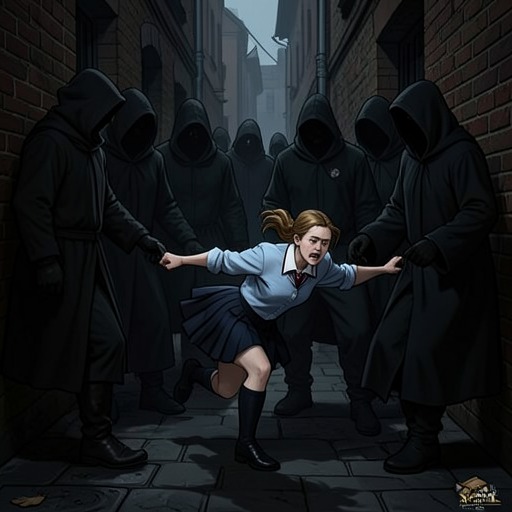
Valerie’s immediate plot danger begins when Melonius watches her walk from the parking lot into a college building. He has planned the operation in advance and intends to persuade her to accompany him far enough from other people that he can take her without being seen. The language of the plan reduces Valerie to a target, turning her movement through an ordinary public space into the opening of a kidnapping attempt.
The operation is organized rather than spontaneous. Jesse waits with a getaway car in a secluded part of the college, while Melonius communicates with him through an earpiece and a tiny microphone pinned to his shirt pocket. Jesse reports that his systems are functioning and urges Melonius to acquire the target so they can leave, while admitting that remaining there makes him nervous because he could not defend himself if the werewolves found him. Valerie is thus caught inside a conflict in which her supernatural identity makes her both prey and the source of danger feared by those trying to seize her.
Agency, Gratitude, and Moral Conflict
When John asks about the circumstances of her transformation, Valerie briefly hesitates over whether the truth is safe to disclose. She knows that he already understands that she is a wolf, and she recognizes that if he intends to kill her, she may be unable to stop him. Her hesitation reveals the pressure under which she speaks: testimony is not offered from security but from a position where truth itself may carry risk.
Her answer nevertheless rejects the idea that her transformation should be judged solely as an act imposed upon her. Valerie distinguishes the life-threatening illness from the decision made before her wedding, emphasizing that the transformation was performed when she could think clearly and know what she wanted. The resulting account holds two realities together: she was physically desperate and dependent on another person’s intervention, but she was not incapable of choosing. Her gratitude does not erase her agency; it is the form through which she claims that agency.
Conflict with Kale and John’s Protection
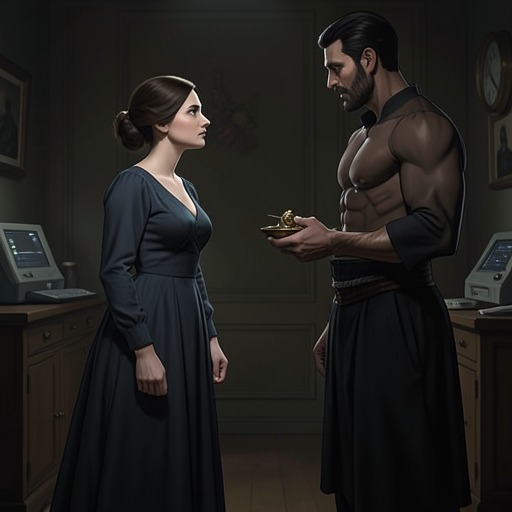
Valerie’s precarious safety becomes visible when Kale insists that she must come home where she belongs. John contacts her by phone, and a few minutes later she enters the doorway, visibly nervous upon seeing Kale. Her reaction supplies the emotional evidence that Kale’s claim of belonging is not experienced by Valerie as simple reassurance. Home, in this confrontation, is a contested destination rather than an unquestioned refuge.
Kale takes a step toward her, but John instinctively moves between them. He warns Kale not to approach, his eyes flashing red as his fangs emerge. The physical arrangement makes Valerie the person whose safety determines the scene’s moral alignment: Kale advances, Valerie shows fear, and John’s body becomes a barrier. The moment also reverses the logic of the planned abduction. Valerie is no longer merely a target watched from a distance; her presence forces the surrounding men to reveal whether they will treat her as someone to protect, possess, or attack.
Narrative Role and Unresolved Future
Valerie’s storyline concentrates the book’s broader conflict between supernatural identity and personal consent. Her wolf nature makes her legible to others as a threat or prize, while her medical history gives the transformation an intimate, life-or-death origin. Against the machinery of surveillance, getaway cars, and the language of targets, her testimony restores the missing human question: what did Valerie want, and who has the right to decide where she belongs?
The available scenes leave her immediate future unresolved, but they establish a clear direction in her characterization. Valerie survives the illness that was expected to kill her, accepts the supernatural life that replaced it, and speaks openly in defense of the person who enabled that survival. When she later appears before Kale, her nervousness and John’s intervention show that survival has not ended the struggle for autonomy. Her continued significance lies in that unfinished contest: she is alive, transformed, grateful, frightened, and still not reducible to anyone else’s claim over her.