Vampire–Werewolf War
SCOTTISH ROMANCE: My Sinful Surrender to a Highlander Werewolf (Scottish Werewolf Pregnancy Romance) (Historical Medieval Shape Shifter Paranormal Science Fiction Short Stories)Vampire–Werewolf War is the enduring conflict between vampires and werewolves, a condition of political hostility that turns intimate relationships into strategic weapons. Its most important force is not only battlefield violence but the way an old dispute has been preserved through dynastic law, bloodline ideology, mate claims, and inherited revenge. The war repeatedly makes a person’s body and affection legible as property belonging to one supernatural side or the other, while the narrative also presents characters who challenge that logic by choosing consent, freedom, and personal attachment over factional command.
Origins and Historical Memory
The conflict has lasted for centuries, yet its original meaning has eroded among those born into it. Melonius, the vampire King’s son, observes that he was born after the war began and no longer understands why it remains worth continuing. He argues that the casualties on both sides are not worth the price and asks whether the factions should finally call a truce. His father refuses to reconsider, ordering him instead to find a human girl who has been selected as the werewolves’ princess bride.
The explanation Melonius receives from Jesse reduces the distant history to a disputed love affair. According to the account circulating among guards, an old werewolf pack leader fell in love with a vampire and stole her from the man to whom she had been promised. The couple was rumored to have remained together for hundreds of years, although no one had seen them for the last couple of centuries. Whether every detail is reliable is left uncertain, but the story shows how the war has been transformed into an inherited legend: a private act of love became the justification for generations of public hostility.
Mate Claims as Warfare
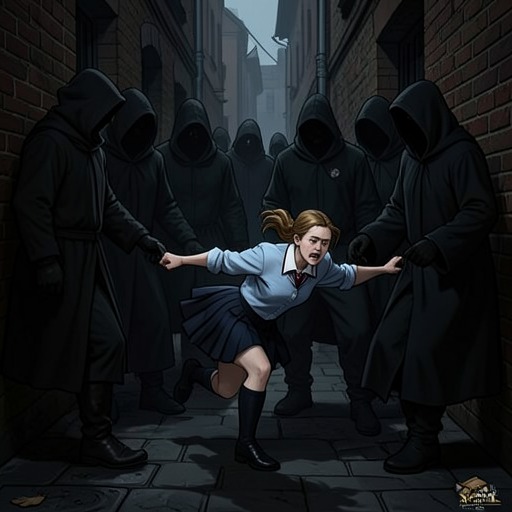
The war’s logic becomes most direct when the vampire King orders the abduction of Valerie. He wants her seized before the werewolves can turn her into one of their own, because taking a human mate from them would damage their leadership and place the vampire faction beneath their enemies’ skin. The proposed kidnapping is therefore not merely an attack on an individual. Valerie is treated as a symbolic resource whose conversion, marriage, or removal could alter the balance between the factions.
The werewolf side has already selected Valerie as the prospective mate of its leader’s son. Valerie explains that the arrangement was initially intended to remain largely formal: she wished to finish college, while the young werewolf wanted to pursue his own plans. She understood that the werewolves expected her eventually to bear pups, but she had not agreed to surrender her future or to become an instrument of factional reproduction. The vampire intervention exposes the coercive structure from both directions. One side claims an obligation created by selection; the other seeks to steal that selected bride specifically because she belongs, symbolically, to its rival.
When Kale arrives with werewolf enforcers demanding Valerie’s return, he insists that she has an obligation because she was chosen as his son’s mate. John answers that the werewolves’ own laws do not permit marriage to an unwilling mate. The dispute thus turns on competing systems of authority: Kale invokes pack custom and political selection, while John invokes the principle that a woman cannot be married without consent. The argument does not erase the larger conflict, but it prevents the immediate confrontation from becoming a battle over Valerie’s body.
Violence, Retaliation, and Restraint
The vampire King’s command reveals how the war reproduces itself. He presents the capture of Valerie as a response to werewolf strategy, while his grief over the death of the vampire Queen makes the conflict personal as well as political. Melonius reminds him that his mother attacked a wolf first and died in a fair fight, challenging the King’s attempt to use her death as an unquestionable justification for continued hostility. The father’s anger shows how memory of injury can survive even when the original act has become morally complicated.
The confrontation over Valerie nevertheless stops short of open combat. John protects her and meets Kale without guards, while Melonius warns that the werewolves have brought their enforcers and that the vampire household lacks enough guards to prevent a bloody clash. Valerie expects bloodshed but is surprised when the meeting ends without a physical battle. John explains that the last full war caused heavy losses on both sides, so the factions generally avoid direct fighting when possible and allow their disputes to remain petty. The restraint is fragile rather than reconciliatory: Kale leaves threatening revenge, and the old antagonism remains intact.
The scene’s value shift is therefore from imminent collective violence to temporary containment. The war is not ended, and neither side renounces its claims, but Valerie’s expressed refusal prevents the encounter from becoming an unquestioned act of retrieval. Her presence forces the factions to confront the person hidden beneath the category of bride, mate, or political asset.
Bloodline Politics and Reproductive Power
The conflict belongs to a wider supernatural order in which lineage is treated as a foundation of authority. Tate, the prince of the werewolf pack, understands why his family wants to preserve royal blood but rejects the contempt shown toward mixed or human-connected werewolves. He distinguishes between wolves born from long lines of werewolf ancestry, those born from a werewolf and a human, and those changed by another werewolf. Accalia represents the most rigid form of purity politics, with ancestry reaching back thousands of years and no human or half-bred werewolf admitted into her family line.
Tate recognizes the historical importance of his own ancestry but argues that a werewolf remains a werewolf and a human remains a human. His objection directly challenges the social hierarchy that treats blood purity as moral superiority. Accalia’s treatment of non-pure werewolves and humans demonstrates how the war’s categories become everyday discrimination, not merely military strategy. The conflict between vampires and werewolves is thus mirrored within werewolf society itself: the same language of inherited legitimacy that separates species also ranks members of a single pack.
Reproduction repeatedly becomes a political condition outside the supernatural war as well. William learns that he must marry and produce an heir to control his family’s estate, home, property, and business. Sloan faces a will requiring marriage and pregnancy within six months. In another household, a wealthy man proposes that Penelope carry a baby for his wife and surrender the child afterward, threatening to withhold her pay and leave her to starve when she refuses. These human examples echo the supernatural conflict’s treatment of mates and heirs: inheritance systems and factional systems alike turn reproduction into a form of property management, while consent is treated as an obstacle to be negotiated or overruled.
Resistance and the Possibility of Truce
The war is repeatedly challenged by relationships that cross imposed boundaries. Melonius questions the conflict even while obeying his father’s order to locate Valerie. John rejects the claim that Valerie belongs to the werewolf succession simply because she was selected, and Valerie’s attachment to John makes the rival factions’ preferred arrangement impossible. The immediate result is not peace but a refusal to let inherited law determine her entire life.
Similar resistance appears in other reproductive and relational plots. Urieal tells his father that he has bred a human because he believes the first hybrid should come from royal blood, yet he also insists that humans must not be treated like animals. Kember rejects the idea that her role is limited to producing a child when Dennis tells her that he wants a relationship with her as well as the baby. Dawn’s pregnancy likewise becomes a matter of contested paternity and political danger when Borg plans to establish whether the child is his or Uth’s, while the anticipated return to the home planet exposes her to scrutiny by a violent leader. These episodes do not belong exclusively to the vampire-werewolf conflict, but they clarify the same narrative pattern: bloodline systems seek control over intimacy, and personal bonds repeatedly complicate that control.
The Vampire–Werewolf War therefore persists as both history and habit. Its original grievance survives through stories, commands, mate obligations, bloodline rules, and threats of revenge, even as younger characters question its purpose. The possibility of peace appears not through a formal treaty but through acts that interrupt possession: a son asking his father to stop, a leader acknowledging a woman’s right to refuse, and a prospective mate choosing a relationship over the role assigned by an inherited war.