Zuzulla
SCOTTISH ROMANCE: My Sinful Surrender to a Highlander Werewolf (Scottish Werewolf Pregnancy Romance) (Historical Medieval Shape Shifter Paranormal Science Fiction Short Stories)Zuzulla is the eighteen-year-old princess at the center of the opening conflict between royal power and the Highlanders. Her decisive importance lies in the way she converts a political abduction into a personal choice: raised to inherit Sven’s expanding kingdom, she escapes the palace’s surveillance, encounters Carden in the woods, and elects to follow him despite being told that joining his people means she can never leave.
Identity and Background
Zuzulla is Sven’s only child and the object of his most private tenderness. Her mother died giving birth to her, and Sven never remarried, instead devoting himself to preparing Zuzulla to become a powerful ruler. He wants to leave her the largest kingdom in history, presenting her future marriage and political position as part of the inheritance he is building for her. Although servants and attendants surround her, Sven remains haunted by her lack of a mother and treats his protective care as a form of compensation.
The princess has recently turned eighteen and is already attracting inquiries from men seeking her hand. The narrative emphasizes her beauty and the attention it provokes: she has fair skin, long black hair, blue eyes, and full red lips, while the palace clothing that reveals her figure makes soldiers’ interest visible to Sven. His unease is not merely political. He wishes he had given her a brother who could watch over her, and he imagines marriage as a relief from the constant responsibility of guarding his daughter. The contrast between Sven’s public severity and his concealed gentleness establishes Zuzulla as the one person who sees the vulnerable side of the king.
Life Inside the Palace
Zuzulla’s privilege is also a form of confinement. She dislikes being unable to enter the town and mix with ordinary people, and she resents the guards who accompany her everywhere. Her evening walks offer a controlled escape beyond the palace walls, but Sven insists on knowing exactly where she goes and keeps guards close even when he believes she has not noticed them.
Zuzulla understands palace surveillance because she has grown up inside it. As a child, she hid in bushes and watched the guards search for her as part of a game; as she grows older, the same practice becomes her only reliable method of solitude. The palace is crowded with people who bathe her, dress her, watch her eat, and observe nearly everything she does. Running into the woods therefore represents more than recreation. It is the one setting in which she can temporarily exist without being managed.
Before leaving, she conceals her identity beneath a hooded cloak. Men have approached her during these walks, and she has claimed to be a local villager searching for berries. The first encounter frightened her, but familiarity with her father’s guards gives her confidence that she can evade both unwanted attention and the protective system surrounding her. Her ability to lose the guards reveals an early form of independence, though it remains an independence exercised within the boundaries created by Sven’s authority.
Encounter with Carden
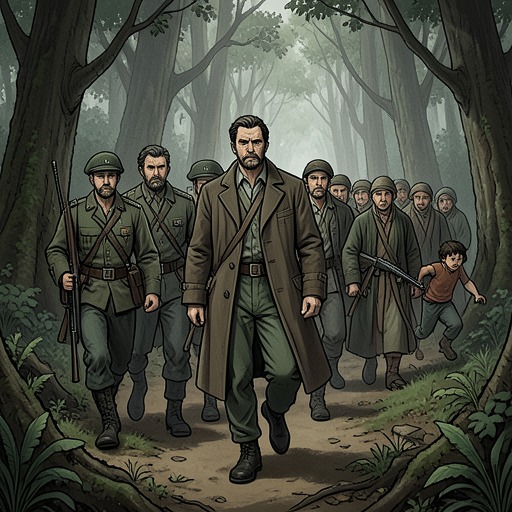
Zuzulla’s escape from supervision brings her into the Highlander crisis that Sven has been investigating for years. Sven has heard stories of these mercenary warriors since childhood and has learned that ordinary attacks do not stop them; soldiers have reported shooting Highlanders only to see them return more angrily. Carden knows that Sven has come closer than previous kings to uncovering the Highlanders’ secrets and regards the king as a ruler willing to sacrifice anyone for territorial expansion.
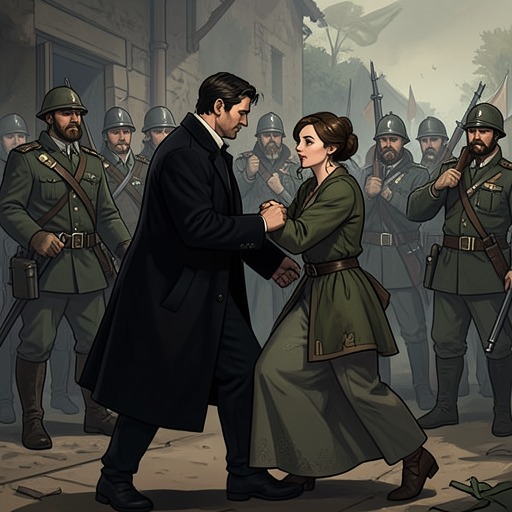
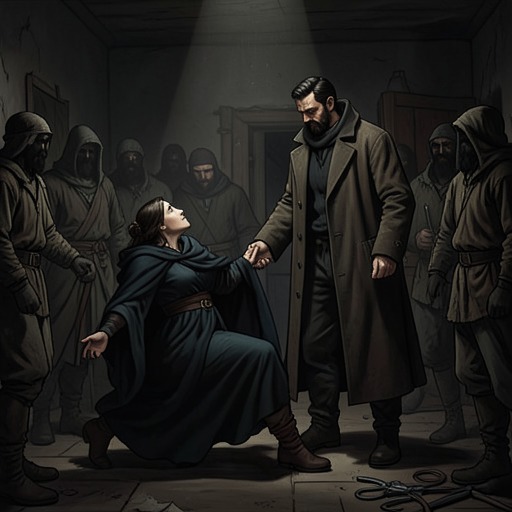
When Carden discovers Zuzulla hiding in the forest, he recognizes the political value of taking her. He tells her that he can deliver her to the King of Kigom, whose treatment of her is uncertain, or claim that he has captured her while keeping her for himself. Her disappearance would distract Sven, exactly as the King of Kigom wants, while Carden could carry her away to his own people. This choice places Zuzulla between competing powers, but it also gives her an immediate opportunity to reject the royal future arranged around her.
Zuzulla answers that she wants to go with Carden. Her decision is made after he explains the practical consequences: they must reach the Highlander people, hide until Sven stops searching, and accept that she will never be permitted to leave once she joins them. The warning is explicit rather than concealed. Her choice therefore functions as both an act of consent to escape and an entrance into a society whose rules are irreversible.
Marking and Transformation
After their first sexual encounter, Carden tells Zuzulla that the first time is the worst and recognizes that she is in pain. He declares ownership, and Zuzulla responds that she is his. Carden then bites her wrist deeply, but the wounds heal when he licks them. The bite is a supernatural mark as well as a physical one: Zuzulla understands that she has been marked outwardly and claimed inwardly.
The marking establishes the Highlander mating bond as the narrative’s decisive mechanism. It is not presented as a temporary romance or an uncomplicated change of residence. Carden’s warning that she can never leave is confirmed by the bite, which turns her declaration of allegiance into a bodily condition. Her transition from princess to Highlander is thus expressed through a combination of choice, erotic attachment, and supernatural permanence.
The ending leaves Zuzulla with Carden inside a cave after they have eaten beside the fire. They sleep naked and unashamed, with Carden’s protective hand resting on her stomach and the narration suggesting that his seed has taken root. The image closes her arc not with a return to Sven’s court, but with apparent pregnancy, physical marking, and incorporation into Carden’s hidden community. Her old identity as royal heir remains part of the conflict’s background, yet the final scene gives narrative priority to the new bond that may determine her future.
Narrative Role and Significance
Zuzulla embodies the collision between inherited power and self-directed escape. Sven wants to protect her, marry her advantageously, and leave her a vast kingdom, but his protection also produces the suffocating surveillance from which she repeatedly flees. Carden, by contrast, offers immediate escape while imposing a different absolute structure: Highlander membership is permanent, and the choice cannot be reversed.
Her trajectory therefore resembles a romance and abduction plot at once, with the expected rescue structure inverted. Zuzulla is captured by an enemy of her father, yet she refuses the alternatives offered by the surrounding political powers and chooses the captor’s world after hearing its cost. The ending does not resolve the conflict between Sven and the Highlanders; it transfers that conflict into Zuzulla’s body and allegiance. Her mark, her movement into hiding, and the suggestion of pregnancy make her the living link between the royal dynasty Sven is trying to enlarge and the secretive supernatural people he has spent his life trying to understand.