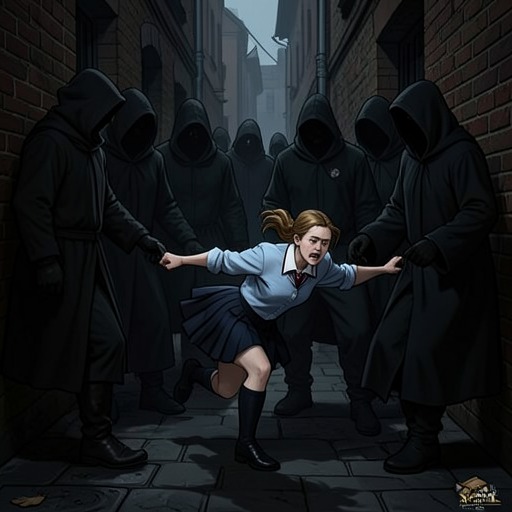
John
SCOTTISH ROMANCE: My Sinful Surrender to a Highlander Werewolf (Scottish Werewolf Pregnancy Romance) (Historical Medieval Shape Shifter Paranormal Science Fiction Short Stories)John is the vampire king at the center of Valerie’s abduction and the resulting dispute with the werewolves. His decisive significance lies in the contradiction between his political reasoning and his emerging personal attachment: he initially seeks Valerie because she is a valuable mate chosen for the werewolf pack leader, yet later insists that she must be allowed to choose her own life. Through John, the conflict becomes more than a struggle between rival supernatural groups; it becomes a contest over whether a woman can be treated as property, leverage, or an autonomous person.
Identity and Position
John rules the vampire side of the conflict and commands enough authority to order a human girl’s capture. He tells Melonius to find Valerie before the werewolves can turn her into one of their kind, arguing that taking potential mates from the opposing group would weaken them and place pressure on their leadership. His language is openly strategic: Valerie matters because the werewolves have selected her as the princess bride of their pack leader, and removing her would damage their authority.
John’s decision is therefore rooted in intergroup rivalry rather than in Valerie’s prior relationship with him. He views her as a political opportunity, a means of provoking the werewolves and undermining the alliance implied by their leader’s marriage. The plan also reveals the coercive logic governing the supernatural conflict: human bodies and mating bonds are treated as resources that powerful groups may seize in order to advance their own position.
The Abduction and Its Immediate Consequences
John’s scheme brings Valerie into the vampire household, where Melonius helps settle her in the dining hall while John attends to other matters. His household is not merely a hiding place; it is a contested space in which the werewolves may attempt to recover her and the vampires must decide whether she is captive, guest, political hostage, or prospective member of their kind.
When John later speaks privately with Melonius, he admits that Valerie is not what he expected. He finds her fascinating, but he is also disappointed that the vampires can no longer turn her himself because the werewolves have already transformed her. This reaction shows that John’s interest remains entangled with supernatural allegiance and reproductive politics. Valerie’s completed transformation prevents him from possessing her in the particular way he intended, but it does not end his interest in her.
The werewolves soon arrive at John’s door demanding Valerie’s return, accompanied by their enforcers. Melonius warns that the vampires do not have enough guards to prevent the confrontation from becoming bloody. John agrees to meet the opposing leader without either side’s guards accompanying him, but he specifically orders that Valerie be protected. The instruction marks a shift in emphasis: the woman once targeted as a strategic prize is now someone whose safety John actively prioritizes.
Conflict with the Werewolves
John’s confrontation with Kale exposes the competing legal and moral systems surrounding Valerie. Kale maintains that Valerie was selected to be his son’s mate and therefore has an obligation to the werewolves. John counters that, under the werewolves’ own laws, an unwilling mate cannot be forced into marriage. His argument turns their customary authority against them: if their laws recognize consent, the selection of Valerie cannot by itself settle her future.
Kale accuses John of stealing a woman who belonged to his son. John rejects the premise that Valerie can belong to another group before she has had the chance to live her own life. He warns that marriage to the wolves could deprive her of the freedom to decide for herself. Although John remains an enemy of the werewolves and continues to taunt their assumptions, this is also the clearest expression of his developing protective stance.
The exchange does not erase John’s original motives. He abducted Valerie precisely because her position mattered to the werewolf leadership, and his intervention helped create the danger he later claims to oppose. His defense of her autonomy is consequently morally complicated: it is both a genuine challenge to coercive mating and a position advanced by the ruler who first removed Valerie from her previous circumstances.
Relationship with Melonius and Valerie
Melonius is John’s son and the principal person through whom his decisions are questioned. Melonius does not understand why his father wants to kidnap a human, pointing out that Valerie seems useful only for angering the werewolves. John responds with the strategic explanation that her selection as the pack leader’s princess bride makes her capture especially damaging. Their conversation establishes Melonius as a skeptical counterweight to John’s political calculations.
Later, Melonius recognizes that John’s behavior toward Valerie has changed. When he sees his father’s protective concern during the werewolves’ arrival, he asks whether John loves her. The question is presented as a shock, implying that John’s attachment has become visible even to his son. John does not directly answer by declaring his feelings; instead, he insists that Valerie is not being held against her will and offers to let the werewolf leader ask her directly. His response substitutes procedural proof for emotional confession, but the need to defend Valerie’s freedom indicates how far his conduct has moved from the original abduction plan.
John’s relationship with Valerie is therefore defined by a persistent imbalance. He has the authority, guards, and political power to control her circumstances, while she must struggle to remain more than an object of exchange between vampire and werewolf factions. His fascination may develop into personal feeling, but the narrative keeps that feeling under pressure from the coercive conditions through which the relationship began.
Change and Narrative Significance
John’s trajectory is a movement from possession toward protection, though not a complete moral transformation. At first, he seeks Valerie because her capture would injure the werewolves and because transforming her would strengthen his side. After discovering that she has already become a werewolf, he remains fascinated rather than abandoning her. When the werewolves come to reclaim her, he protects her and argues that neither supernatural law nor political selection gives them the right to determine her future without her consent.
That change gives John a role in the book’s broader examination of forced mating, political marriage, and reproductive control. Other conflicts in the narrative similarly frame marriage or pregnancy as conditions imposed by estates, families, rulers, or species. John’s position echoes those structures while also challenging them. His words about Valerie’s freedom are meaningful because they identify the central injustice, yet they are also ironic because he helped create her captivity.
John thus functions as both agent and critic of supernatural patriarchy. He begins as a ruler who treats Valerie as leverage in a vampire–werewolf struggle, but his response to her presence makes the human cost of that strategy impossible to ignore. The available evidence does not establish whether Valerie ultimately chooses John or whether his protection becomes a lasting relationship. It does establish that his understanding of her changes: she is no longer only the bride the werewolves selected or the asset he intended to steal, but a person whose consent must determine what happens next.