Luna
SCOTTISH ROMANCE: My Sinful Surrender to a Highlander Werewolf (Scottish Werewolf Pregnancy Romance) (Historical Medieval Shape Shifter Paranormal Science Fiction Short Stories)Luna’s story turns captivity into a paradoxical route toward freedom. At the beginning, she is confined by a husband who treats her as property and suppresses her artistic ambition; after the Highlander Conner Patrick takes her prisoner, the power structure surrounding her changes. The abduction is violent and coercive, but it removes her from Henry’s household and places her before a man who recognizes the dignity Henry denied her. By the time Conner proposes in Scotland, Luna has transformed from an isolated, controlled wife into a woman who believes she has found the partner with whom she is meant to spend the rest of her life.
Identity and Background
Luna is married into the Everly royal family, a position that gives her servants, social standing, and material comfort without granting her meaningful independence. She tells Henry that she wants to pursue painting because creating something with her own hands has always been a genuine passion. Henry dismisses her work as worthless and insists that her place is inside the home, arguing that public exhibition would embarrass the family. His objection is not merely aesthetic: he treats Luna’s desire to create and appear in public as a challenge to his authority.
Her life is further restricted by surveillance and enforced dependence. Henry does not allow her to go out alone and supplies her with a guard, while outside the house she is forbidden to dress in ways he considers daring. Although he permits her to paint behind closed doors, he destroys her creations when he returns drunk from a nearby tavern, laughing in a way that continues to terrify her. The household staff address her formally, but the polished surface of aristocratic service conceals the abuse taking place in private.
Luna understands that her marriage is a personal nightmare. She recalls her mother’s warning that Henry would never change and that Luna needed a man who would treat her as a real woman. Her mother has been dead for two years, and Luna regrets not following that advice. She admits that she once thought she could love Henry, yet each day has instead deepened her sense of entrapment.
Abuse and the Desire for a Life of Her Own
Henry’s control includes physical punishment as well as humiliation. When he threatens to make an example of Luna if she speaks publicly about painting, she instinctively touches her arm because she knows he can become physically aggressive when punishing her disobedience. The violence has not broken bones or caused permanent injury, but hard slaps, spankings, and constant verbal abuse have made her feel diminished and powerless. His brutality is presented as a system of ownership: he wants Luna partly because he does not want anyone else to have her.
Luna’s appearance intensifies that possessiveness. She is described as five feet six inches tall, weighing 130 pounds, with blonde hair, green eyes, and a curving figure that attracts attention when she serves patrons at a tavern. Henry noticed the way men looked at her and converted their interest into a justification for possession. Luna, however, does not see her beauty as proof that she belongs to him. She knows she is better than the life he has imposed and recognizes the marriage as a burden she has been forced to bear.
The scene in which Henry leaves after their argument crystallizes the atmosphere of fear. He slams the door so violently that the painting on the wall swings back and forth, and Luna worries that he will blame her if it falls. From the window she watches people crossing the courtyard and imagines the ordinary lives available to everyone else. Her confinement is therefore social as well as domestic: she is surrounded by movement, labor, and public life while being denied participation in all three.
Capture by Conner Patrick
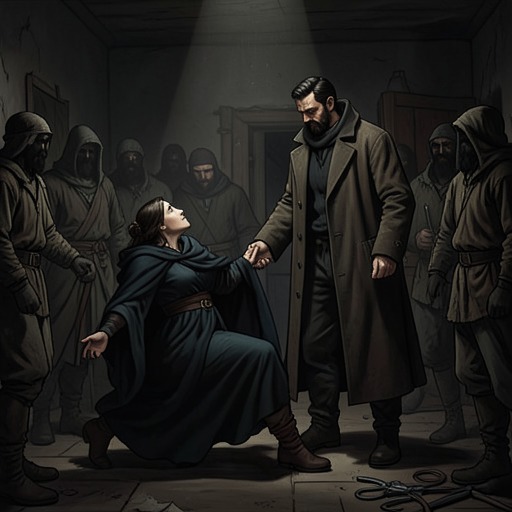
Luna’s escape begins during a Highlander raid. The attackers force their way through the gate, destroy everything in their path, and stand over the bodies of those who resisted with triumphant cries. The men of the settlement are dead, while women and children hide; Luna alone remains visible, leaving her exposed at the exact moment when the old order has collapsed. Her reaction is conflicted: she feels vulnerable, but also excited by the sudden break in Henry’s authority.
Conner Patrick identifies himself as a member of clan Patrick and declares that Luna is his prisoner. Before she can respond, he lifts her onto his shoulders and carries her toward the woods, warning that he will bind her hands and ankles if she struggles. Luna remains silent rather than submit to restraints. The Highlanders take her to a clearing where a vessel waits on the water, presumably the ship that brought them and will carry them away. Conner makes her swim in her dress; her strength as a swimmer prevents her from drowning.
The raid also produces Luna’s sharpest immediate revenge against Henry. She remembers his face and smiles because she believes he has received a fate he deserves. Henry had exploited the suffering caused by the black plague to buy land cheaply, making him, in Luna’s judgment, despicable. She does not excuse the barbarity of his death, but she experiences his destruction as the collapse of a man who had used wealth and rank to make other people vulnerable.
Conner Patrick and the Reversal of Possession
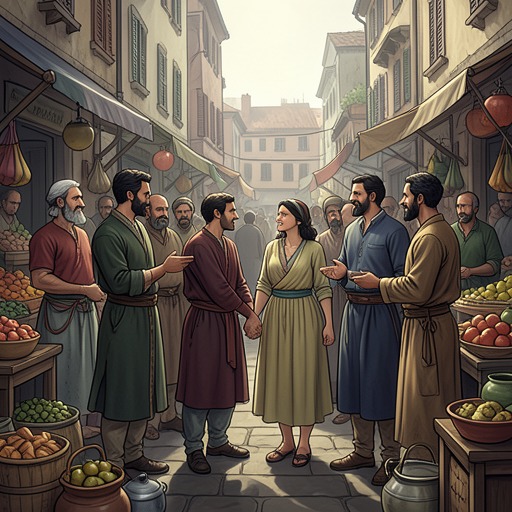
Conner first appears through force, but his later conduct creates a contrast with Henry’s version of male authority. Walking beside the water, Luna and Conner talk for more than an hour about their lives. Conner apologizes for the way Luna was made to feel possessed like cattle and says that a woman should feel safe in a man’s arms, knowing that he would protect her with his life. He tells her that he has never encountered a woman with such elegance and character and that he feels he has known her far longer than the few days they have spent together.
The physical gesture accompanying his apology matters to Luna. Conner holds her hand gently rather than with the rough, uncompromising manner associated with his capture of prisoners. Beneath his hardened exterior, she perceives a compassionate man. Their near-kiss is interrupted by an assassin sent by the royal family, who confronts Conner while carrying a knife in each hand. Conner accepts the challenge and fights him with a broad sword, whose greater reach cuts through the assassin’s clothing and draws blood even though the attacker continues searching for an opening.
Luna’s emotional and sexual attachment to Conner develops rapidly after the confrontation. In their intimate encounter, she experiences mutual physical pleasure and imagines that they are at home in each other’s arms. She also begins to identify with Conner’s warrior world, thinking that she might learn to use a blade herself. The possibility that she could stand beside him against future assassins marks a significant shift from the woman who had been guarded, silenced, and punished inside Henry’s home.
Commitment and Ending
Conner’s men recognize that something has changed between the pair when they return to the ship. Luna suspects that their mutual looks reveal the change, or that Conner has spoken openly about it. Whatever the cause, none of the men touches her again. This altered conduct gives Luna a new status within the group: she is no longer treated simply as a captured woman but as someone connected to Conner and therefore protected by his authority.
After a week at sea, the party reaches Scotland. Conner uses the opportunity to kneel and offer Luna a small piece of jewelry taken during one of his raids. Luna accepts it gleefully and concludes that he is the man with whom she is meant to spend the rest of her life. The ending therefore converts the language of captivity into the language of chosen belonging, though the conversion remains morally complicated because Luna’s new relationship begins with abduction and dependence on a different powerful man.
Luna’s arc is built on reversal rather than a clean escape from power. Henry’s household gives her rank without respect, comfort without liberty, and marriage without partnership. Conner’s raid takes away her formal security, yet his apology, protection, combat against the assassin, and proposal offer the recognition she has been denied. Her decisive change is not the abandonment of danger but the movement from being possessed and silenced toward imagining herself as an active participant in love, danger, creativity, and future commitment.