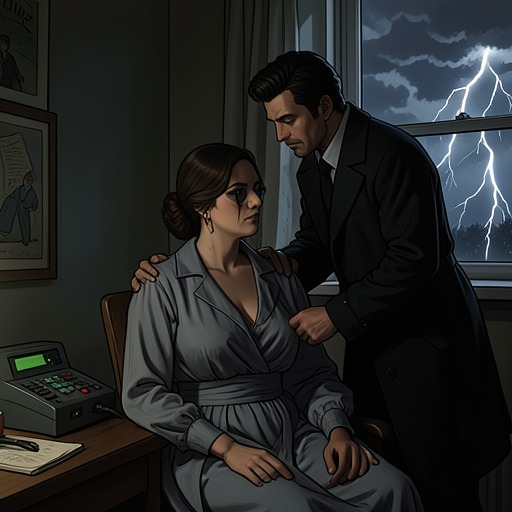
Marie’s Break from Chris
SCOTTISH ROMANCE: My Sinful Surrender to a Highlander Werewolf (Scottish Werewolf Pregnancy Romance) (Historical Medieval Shape Shifter Paranormal Science Fiction Short Stories)Marie’s Break from Chris is the turning point at which Marie leaves her abusive husband, survives the immediate aftermath of fear and bodily harm, and begins constructing an independent life with Slate. The break changes the meaning of her future: Chris becomes a “distant nightmare,” while Marie’s new apartment, restored confidence, and renewed relationship with Slate embody freedom that she had not previously believed possible.
The Abuse and the Decision to Leave
Marie’s separation follows a period in which fear has become physically lodged in her experience. After the violence and danger associated with Chris, she reaches a state of exhaustion in which thoughts of bruises, cuts, and fear finally recede. This sleep is not presented as a simple romantic resolution; it is the body’s temporary release from the vigilance imposed by abuse. The immediate value shift is from bodily threat to enough safety for Marie to rest.
Her departure is also connected to the practical act of filing for divorce and removing her possessions from the marital home. The belongings held in storage are modest, but their arrangement reveals her priorities: her book collection comes first, followed by family items and basic furniture. What she takes is therefore not a replica of the old household but a carefully reduced inheritance from it, centered on reading, memory, and the material necessities of a new life.
Marie later recognizes that leaving Chris was not simply the result of Slate persuading her to abandon her marriage. She understands that something changed in her when she first rode away with Slate, before she even fully knew who he was. Slate showed her that alternatives existed; he did not make the decision for her. The distinction preserves Marie’s agency. Her break from Chris is an awakening initiated by contact with another possibility, but carried through by Marie herself.
Chris’s Defeat and the End of His Authority
The consequences reach Chris even while Marie is rebuilding. Several months later, Marie can look down at Slate sleeping beside her and regard Chris as a distant nightmare. Slate’s friends have ensured that Chris understands the relationship is over, and Chris’s hospital stay lasts long enough for him to grasp that he no longer controls Marie’s life. The event’s title therefore includes Chris’s defeat, but the defeat is broader than the end of a marriage: the social and physical power that once surrounded him has been broken.
Marie’s recovery remains marked by bodily memory. In the shower, she notices dark pink marks on her skin, traces left by her recent intimacy with Slate, and interprets them through pleasure rather than fear. The contrast does not erase what came before; it shows how the same body that carried bruises and exhaustion can gradually become a site of desire, choice, and pleasure. Her laughter, flirtation, and willingness to leave Slate’s bed for the work of moving into her apartment indicate that intimacy no longer confines her to someone else’s authority.
Slate and the Reconstruction of Intimacy
Slate becomes the person through whom Marie discovers that attraction and tenderness need not reproduce the emotional conditions of her marriage. She is surprised that the feelings she once had for Howard blend so naturally into the relationship she develops with Slate. Beneath his shaved scalp, leather clothing, and tattoos, she recognizes the same sweet soul she had known before. This recognition overturns her earlier assumptions about appearance and makes the relationship part of a larger lesson in refusing to judge by surfaces.
The relationship is intimate without being presented as an immediate surrender of independence. Marie temporarily stays with Slate, but she deliberately decides not to rush into living with him permanently. She is excited to have a place of her own for a while, even as she looks forward to cooking for Slate, having him spend the night, and waking beside him over the pancakes he makes. The arrangement allows love and autonomy to coexist: Slate can be part of her new life without becoming its owner.
Her new confidence is visible in the way she carries herself. A receptionist at work tells Marie that she is walking taller and has a beautiful smile. Marie had always performed well professionally, but she notices that happiness in her personal life improves her work as well. She still enjoys solitary lunches in the park with her books, yet she becomes less resistant to occasional invitations from colleagues. Recovery thus appears not only in romance but in posture, social openness, and a renewed ability to take pleasure in ordinary choices.
The New Apartment as a Symbol of Freedom
The move gives the separation a concrete setting. Marie meets the moving van at the storage unit, opens the garage-style door, and watches the limited contents of her former life begin their passage into a one-bedroom apartment. The new home is initially disordered, but its disarray feels freeing and more like home than the old house ever did. The contrast makes domestic space a measure of power: the old house represented a life from which she had to escape, while the unfinished apartment belongs to her precisely because she can shape it.
Marie’s book collection carries particular significance. She is most eager to display the books, placing them before the furniture and treating them as the first sign that the apartment is truly hers. Her imagined future includes Slate visiting, cooking for him, and even arriving at work on his motorcycle while the “prim and proper lawyers” watch. These possibilities are playful, but they also dramatize a transformation in self-presentation. Marie no longer organizes herself around the expectations associated with Chris or around the judgment of others.
Change, Consequence, and Narrative Significance
Marie does not claim certainty that Slate is her forever partner. Instead, she calls him a wake-up call, acknowledging both the importance of the relationship and the uncertainty of its final duration. This qualified hope is central to the break from Chris. Freedom does not require Marie to replace one permanent authority with another; it gives her room to discover what she wants without pretending that every answer is already known.
The action therefore completes a movement from fear and confinement toward agency and chosen connection. Chris’s defeat ends the immediate threat, divorce and the move restore control over material life, and Slate’s affection helps Marie imagine intimacy without surrendering herself. By the time she begins opening boxes and preparing to put her books on display, the decisive change has already occurred: Marie is no longer merely escaping the old home. She is authoring a different one.