Poverty
SCOTTISH ROMANCE: My Sinful Surrender to a Highlander Werewolf (Scottish Werewolf Pregnancy Romance) (Historical Medieval Shape Shifter Paranormal Science Fiction Short Stories)Poverty is not a single background condition in the novel but a recurring pressure that determines where people can live, what work they can accept, whom they can trust, and how freely they can enter intimate relationships. It appears as rural deprivation, homelessness, grief after catastrophic loss, immigration insecurity, and dependence on wealthy partners. Against these forms of scarcity, the book repeatedly places food, shelter, employment, inheritance, and marriage in the same moral and economic field.
Material Deprivation and Restricted Futures
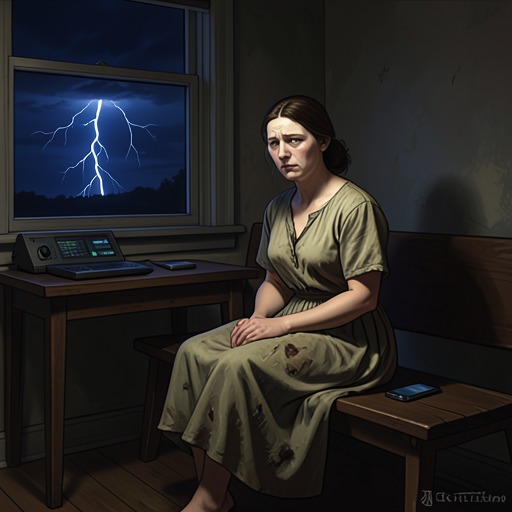
Poverty is most plainly embodied in Lilly’s household. She carries two full water buckets nearly a mile from the well, while her mother works in the vegetable garden and her sisters wash clothes beside the small house. The family survives on vegetables and eggs, selling a little to neighbors, and spends humid evenings on dilapidated chairs waiting for a breeze. Their labor keeps the household functioning but does not create a realistic path out of deprivation. Lilly’s family history reinforces that limitation: her eldest sister’s work for a tailor is valuable because it may lead to an inheritance, her middle sister is widowed after a mining accident, and the family has largely abandoned hopes of arranging a husband for Lilly.
Lilly understands that poverty is also a system of narrowed possibilities. Her mother cannot afford the city’s matchmaking service, even though Lilly sees a successful marriage as a possible investment that might support the entire family. She is a creative cook and sells paintings to tourists, but the proceeds barely sustain the cycle of buying materials in order to make more work to sell. A shopkeeper offers her a different kind of opportunity, yet she refuses it, insisting that some things are not for sale. Her determination to leave the village and avoid repeating her mother’s life therefore becomes an act of self-direction within severe economic limits: freedom will not arrive unless she makes it happen herself.
Hunger, Homelessness, and Unequal Shelter
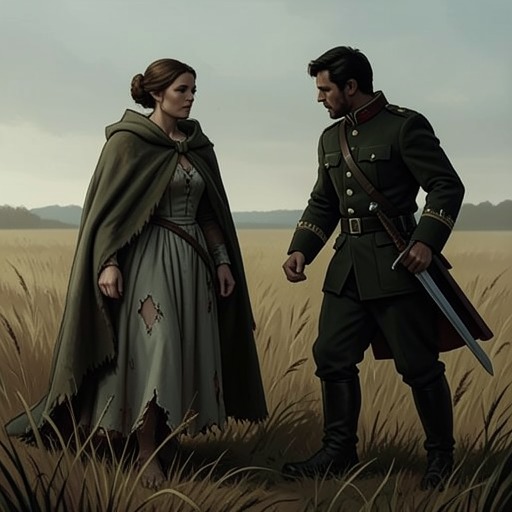
Opal’s poverty is intensified by enslavement, pursuit, and displacement. After escaping, she hides in a tree in rural Arkansas while men search the woods and dogs bay below. She travels north for months, moving only at night and remaining invisible by day. Towns offer supplies but also the risk of capture; open country provides breathing room but little food. She survives by taking an apple from a tree or pulling a carrot from a garden, knowing that a farmer may not miss one vegetable. Her freedom is consequently both real and painfully incomplete: she has escaped ownership, but her life consists of dirt for a bed, stolen clothing, discarded food, and a horse blanket against the cold.
The arrival of William changes the immediate material meaning of Opal’s life. He finds her near his property, feeds her, and gives her a bed after she has spent the previous night starving beneath bushes. The next morning she wakes to coffee, fried eggs, and fried bread, initially unsure whether the scene is a dream or reality. The contrast does not erase the unequal power surrounding her shelter, but it shows how quickly food and housing can transform a person’s physical security. William’s household becomes, at least initially, a place where survival is no longer organized around concealment and theft.
Penelope’s experience offers a related but different contrast between wealth and security. After leaving a much larger house, she discovers that Dave’s smaller home feels lived-in, soft, and safe. The bed, hooks for her winter clothes, coffee, bread, cheese, and butter matter because they promise that she will not be punished for sleeping. The scene defines poverty not only through the absence of luxury but through the absence of dependable refuge: comfort becomes meaningful when it is linked to safety rather than size.
Poverty, Labor, and Mobility
Avril’s economic vulnerability is hidden beneath professional success. She runs a celebrated restaurant, creates new dishes constantly, and receives praise from newspapers and critics, yet the work conceals an expired visa. She expects to be sent back to Nigeria the following week, a country she does not want to return to. Her solution is to become an e-mail order bride, and the man she contacts turns out to be a regular at her restaurant. Marriage here is not presented as a purely romantic choice; it is a strategy for remaining in the country and preserving the career she has built through exceptional labor.
The novel repeatedly makes marriage legible as an economic instrument. Abigail tells Sally that she has effectively sold herself to a rich American: she will marry him so that he can inherit his family fortune, then divorce him and use the money he gives her to start a business in London. Her plan follows the logic of an investment, but her grief complicates any suggestion that the arrangement is simple. Two years earlier, her family’s yacht capsized in a storm; she alone survived, while her mother and older brother were found dead and her father and younger sister were taken by the sea. Economic escape is therefore entangled with survivor’s guilt, bereavement, and the wish for a clean break from London.
William approaches the same institution from the opposite side of the class divide. Facing an inheritance stipulation, he proposes to his lawyer that a spouse be treated as a business partner who receives transportation and citizenship, remains married to him for at least ten years, bears a child, and cannot claim part of the estate. He considers a mail-order bride suitable because the arrangement can be formalized as a contract. The proposal exposes how wealth can turn marriage into a mechanism for preserving property, while poverty and immigration insecurity make the promised benefits of marriage—transportation, citizenship, housing, and support—difficult to refuse.
Care, Dependency, and Negotiated Survival
Poverty also organizes care. In Amy and Sloan’s household, Stella’s impending birth requires attention, patience, and emotional labor. Stella is frightened and distressed in the barn, growling when they approach and panting heavily. Amy asks Sloan to remain outside the stall, then gains the dog’s trust by moving slowly, allowing her to sniff a hand, stroking her ears, and reassuring her until Stella rests her head against Amy’s leg. The scene presents care as skilled work rather than sentimental decoration: safety is produced through observation, restraint, and sustained physical attention.
Kember’s encounter with Dennis makes reproductive labor an explicit economic negotiation. He offers one hundred thousand dollars for surrogacy, covers all medical expenses, and still offers her a personal-assistant position paying fifty thousand dollars a year with medical benefits. He also proposes an open-adoption arrangement in which she could receive photographs or visit the child. Kember questions whether a child should grow up without a mother and worries about surrendering a baby she carried herself. The offer therefore places money, employment, medical security, motherhood, and emotional attachment inside a single decision rather than treating surrogacy as a simple transaction.
Even relationships represented as loving retain the memory of dependence. After Jake’s death, Erica describes her relationship with Tate as one of the best periods she has experienced since becoming a widow. Their routine is modest: Tate visits while she finishes work, cooks dinner, and shares wine and conversation with her. His training for counseling continues, and she is proud of him. The arrangement feels safe partly because neither has yet made a large, life-changing commitment; emotional recovery is supported by ordinary domestic acts rather than by sudden wealth. When Erica discovers that she is pregnant, the positive test changes that fragile simplicity into a new family obligation, but the pregnancy is received with elation rather than treated as a financial burden.
Wealth, Contracts, and the Meaning of Choice
The contrast between poverty and wealth is especially clear in Greyson’s introduction. He is forty, unmarried, and the owner of an empire, yet he feels more comfortable in denim and on his favorite horse than in tailored slacks and boardrooms. His ranch, housekeeper, and fawn-colored pit bull, Daisy, protect him from material want, but not from loneliness. Two women have withdrawn from marriage at the last moment, leaving him wary of commitment. The novel thus distinguishes economic security from emotional fulfillment: Greyson can afford comfort, but he cannot purchase the certainty of being loved for himself.
Tomas’s wealth creates a similar problem. In his rustic, comfortable home, Lydia observes that the surroundings seem suited to raising children despite his billions. Tomas tells her that he wants a wife, but that his money makes it difficult to know whether a woman wants him or his fortune. He asks Lydia, a paralegal rather than a dating professional, to find one for him. His wealth gives him access to nearly every material resource while undermining trust in romantic choice; abundance produces a different form of insecurity.
Taken together, these episodes show poverty as a condition that extends beyond empty cupboards or inadequate shelter. It governs bargaining power and determines which risks appear acceptable. Lilly seeks a marriage that could finance escape; Avril uses marriage to defend her career and legal presence; Abigail turns an inherited fortune into the capital for a new life; William designs a contract to protect an estate; and Kember weighs reproductive labor against financial stability. The novel repeatedly asks what counts as choice when survival, citizenship, inheritance, housing, or family support is attached to intimacy. Its answer is not that love cancels poverty, but that material conditions shape the terms under which love can be imagined, offered, and accepted.