Sven
SCOTTISH ROMANCE: My Sinful Surrender to a Highlander Werewolf (Scottish Werewolf Pregnancy Romance) (Historical Medieval Shape Shifter Paranormal Science Fiction Short Stories)Sven is the conquering king whose territorial ambition drives the opening conflict and whose devotion to his daughter becomes the decisive weakness in his strategy. He seeks to absorb the surrounding lands, destroy the Highlanders who obstruct that goal, and preserve an image of uncompromising authority; yet when Zuzulla disappears, the conqueror abandons his wider campaign for a desperate search that gives his enemies precisely the opening they intended.
Identity and Political Position
Sven is presented as the ruler who took control of the Kingdom of Berigord and continued pressing into the Kingdom of Kigom. His objective is not limited to holding his existing territory: he wants to become king across all the surrounding lands. That ambition places him in direct conflict with the Kigom leadership, whose army cannot defeat his forces but whose rulers understand that Sven’s power can be disrupted through strategy rather than matched in open battle.
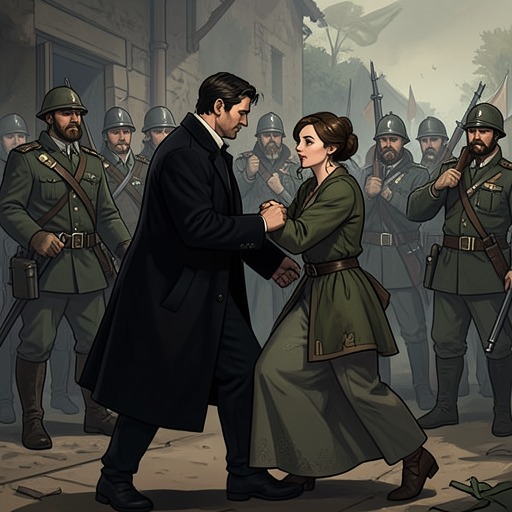
His campaign depends on force, intimidation, and the deliberate destruction of communities. Sven’s army attacks a small village, burns its shacks, and takes whatever remains. The village is not merely a military target. Because the Highlanders frequent it and rely on it to sell the fur and meat from their kills, its destruction is meant to damage the clan’s practical resources as well as its morale. Sven wants the Highlanders to understand that he knows where they are and that he is coming for them.
War Against the Highlanders
Sven regards the Highlanders as the chief obstacle to complete conquest. He believes they could provoke a revolt among the people and lead an army strong enough to defeat his own forces if the population joined them. His fear is therefore political as much as military: the Highlanders represent an independent power capable of converting local resentment into organized resistance.
His hostility is also rooted in prejudice. The Highlanders are described as a werewolf clan, and Sven considers them filthy animals rather than a people entitled to coexist within his kingdom. He wants to eradicate them, does not want them breeding with his kind, and refuses to admit them into his cities. The conflict consequently combines territorial expansion with an attempt to impose a hierarchy between human society and the Highlanders. Sven’s campaign is not simply a war for land; it is a project of exclusion and elimination.
The Highlanders’ employment as mercenaries gives the Kigom king a way to turn Sven’s hatred against him. The Kigom ruler commissions Carden and his clan to take Zuzulla, knowing that Sven values his daughter and that her disappearance will redirect his attention from conquest to recovery. The plan succeeds because Sven has concentrated his power around the assumption that the Highlanders must be destroyed, while leaving his paternal attachment less guarded.
Zuzulla’s Disappearance and the Reversal of Power
Sven’s relationship with Zuzulla reveals a private tenderness absent from his public rule. He worries about the attention she receives from soldiers, wishes he had given her a brother who could watch over her, and anticipates the relief her marriage might bring him even as he recognizes that she is growing up. This gentler side is kept hidden because Sven cannot allow enemies to interpret affection as weakness. Zuzulla is the one person who sees the caring and gentle man behind the conqueror’s mask.
That concealed attachment becomes the central pressure point of the political struggle. After Zuzulla fails to return for dinner, Sven is prepared to remove her privilege of taking walks in the forest. His anger changes instantly when a guard brings him her torn dress. The guards cannot explain what happened; they have searched the woods and found only the shredded garment, with no blood. Their fear reflects the danger of returning without the king’s daughter, while Sven’s reaction transforms a disciplinary concern into a national emergency.
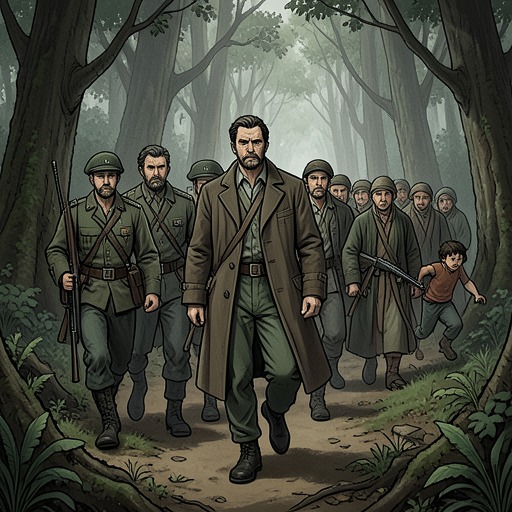
Sven orders the army to abandon every other priority and search for Zuzulla. He commands the soldiers to return and comb the woods until she is found, unaware that this is exactly what the Kigom king intended. The withdrawal of Sven’s forces gives his enemies time to strengthen their armies and prepare an attack. The strategy that had made Sven formidable—his ability to concentrate overwhelming force—turns against him when his emotional allegiance redirects that force away from the battlefield.
Characterization and Narrative Significance
Sven’s importance lies in the contrast between conquest and attachment. He is powerful enough to threaten kingdoms, villages, and an entire supernatural clan, but he cannot treat Zuzulla as expendable. His affection does not soften his politics; instead, it gives the opposing side a means of penetrating them. The same fatherly care that makes him human also makes his imperial project vulnerable.
The narrative also presents Sven through a structure of dramatic irony. He believes the search for Zuzulla is the only action that matters, while the reader is told that his enemies have successfully drawn him into the trap. His order is therefore both an expression of love and a strategic defeat. He has not merely lost control of one operation; he has allowed the kidnapping to redefine the war’s center of gravity.
Sven’s campaign further connects the book’s supernatural politics to broader questions of domination and belonging. His attempt to conquer the countryside, suppress local resistance, and eradicate the Highlanders is mirrored by other hierarchies in the wider narrative, including pure-blood werewolf discrimination, alien control over human subjects, and the treatment of vulnerable people as resources. Against that recurring pattern, Sven functions as a concentrated image of power that calls its violence necessary while defending privilege and territory as if they were natural rights.
Change and Lasting Role
The available account ends with Sven mobilizing the army rather than recovering Zuzulla. He does not know that Carden has returned with rabbits and berries, made a small fire, and remained with her in the woods, nor does he understand that he will never find her. His final position is thus one of immense authority coupled with decisive ignorance: he can command an entire army, but he cannot see how completely his enemies have mastered the terms of the crisis.
Sven remains significant not because the evidence shows a completed moral transformation, but because the kidnapping exposes the contradiction at the heart of his rule. He wants to appear invulnerable, yet his love for Zuzulla proves that conquest has not erased personal loyalty. The result is an inverted heroic pattern: instead of leaving the ordinary world to gain power and return strengthened, Sven’s pursuit of power creates the conditions for separation, and his attempt to restore what he has lost weakens the empire he hoped to enlarge.