
Loïc as Historian and Writer
SatanThis flow traces Loïc’s changing relationship to memory, from childhood observation through archival research to the decision to write his family’s story.
increasing Bearing strength in each event
 decreasing
Bearing strength in each eventdecreasingThe Child Who Watches
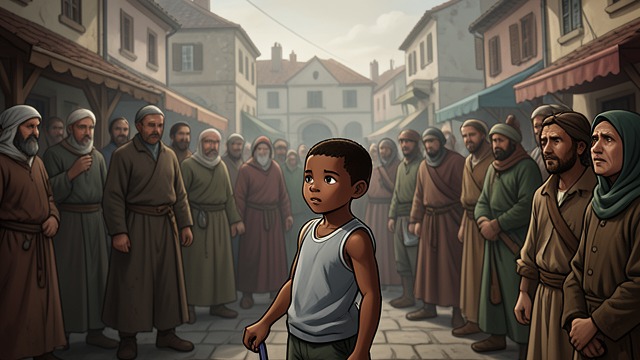
The Child Who Watches
A village enters memory
Loïc absorbs the faces, conflicts, landscapes, and stories around him with unusual intensity. The family home and the village become a private archive of voices and images.
Imagination gives form
His early attraction to stories and visual patterns, including the kaleidoscope from Grébiche, prepares him to treat memory as something assembled from fragments rather than received as a complete record.
A Career of Ghostwriting
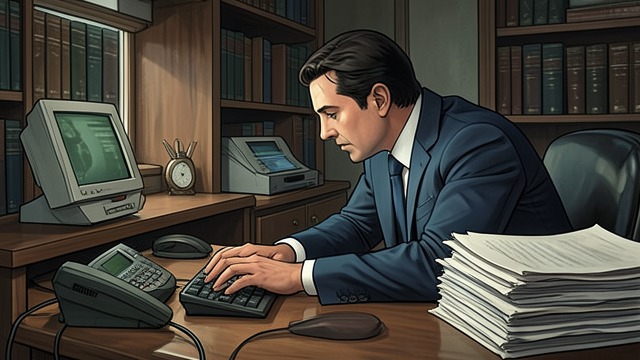
A Career of Ghostwriting
Words for public power
Loïc writes speeches in Ottawa while remaining unseen behind public figures. The work sharpens his historical attention but also makes him feel that his own political and literary voice is concealed.
A divided vocation
His government service clashes with his Quebec commitments. The experience teaches him that writing can serve power while also preserving a record of what power leaves unsaid.
The Archive Arrives
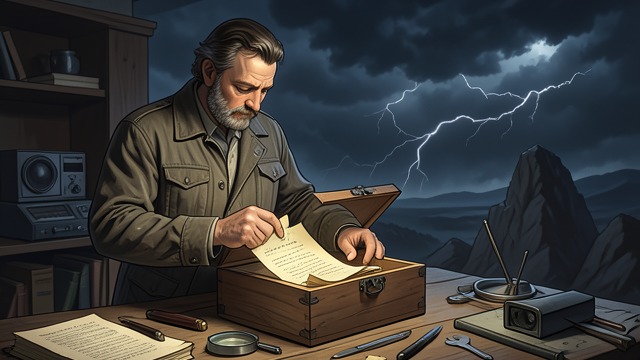
The Archive Arrives
Papers from a lost mentor
Régis D’Anjou’s manuscripts reach Loïc shortly before the September attacks. Loïc initially postpones a full examination because he is occupied with a translation.
Chance becomes responsibility
After the attacks and Roger’s disappearance, Loïc begins reading the archive intensively. The papers turn private inheritance into an obligation to investigate, interpret, and eventually preserve the family’s contested history.
The Investigator Takes Over
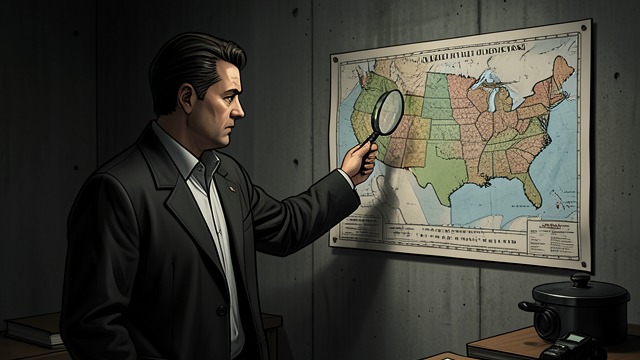
The Investigator Takes Over
A research method forms
Loïc combines family documents, historical records, online archives, and his own recollections. He follows the cameo from Touladi through the United States and into the French aristocratic record.
Evidence and intuition coexist
His investigation yields meaningful clues but also speculative leaps. He becomes both a careful reader of documents and a narrator drawn toward invisible patterns that may exceed what the evidence can establish.
Writing Against Oblivion
Writing Against Oblivion
Family memory narrows
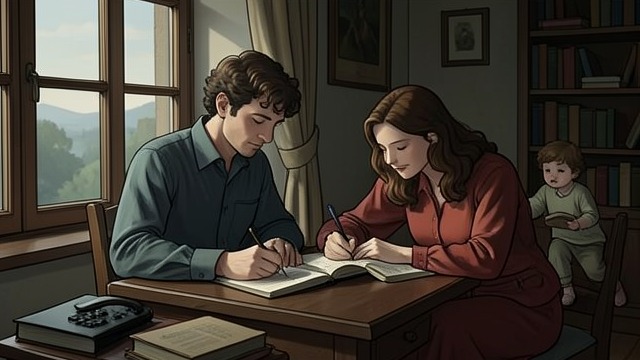
After the deaths of Georges D’Anjou and other relatives, Loïc recognizes that he may be the last person able to recount the family’s history in detail. The old village and its household are physically disappearing.
Writing becomes an act of being
He works on a hybrid memoir and novel, with Laurence as his closest reader. He writes less to secure fame than to keep experience from vanishing and to make a life coherent without claiming to solve every mystery.
Touladi in the early 1950s
1975 to 1977
Summer 2001
Autumn 2001 to 2003
2011 onward
