
The Arrival of Television
SatanThis flow follows television’s arrival in Touladi and the transformation of communal rhythms, religious authority, and the village’s sense of the outside world.
increasing Bearing strength in each event
 decreasing
Bearing strength in each eventdecreasingA Set for the Founder’s House
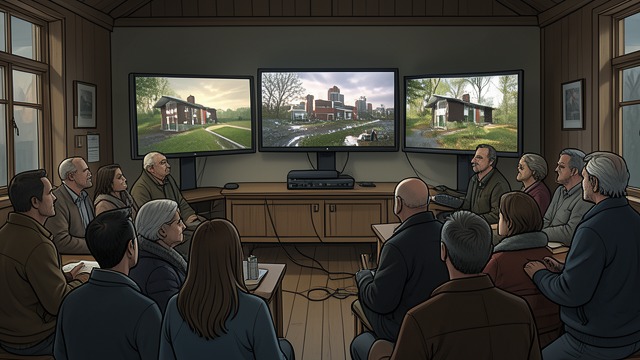
A Set for the Founder’s House
A first broadcast
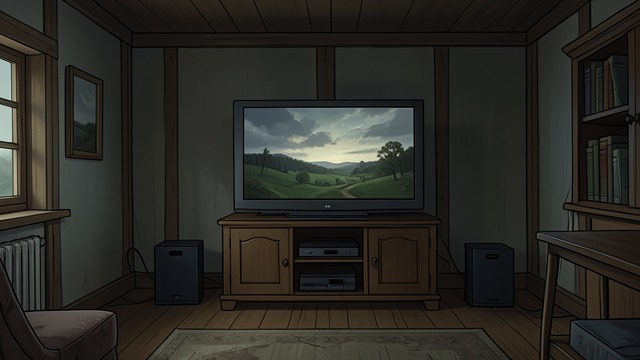
Guillaume D’Anjou makes the Founder’s House the first in Touladi to receive television. Villagers crowd inside and outside to watch images arrive from Montreal and beyond.
Wonder and unease
The screen feels almost magical, bringing distant faces into the room. Its power resembles the invisible forces already feared in the village, but it offers an entirely new and apparently ordinary kind of apparition.
A Global Village Forms
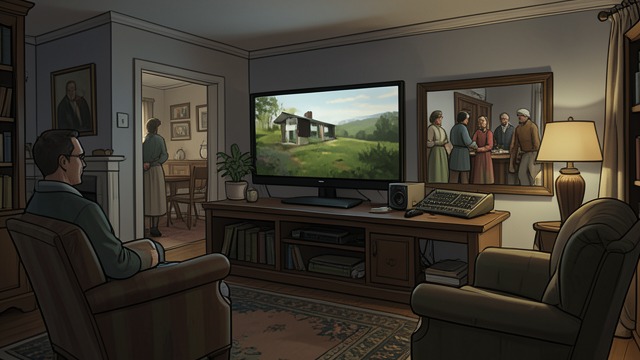
A Global Village Forms
Distance collapses
Television allows residents of Touladi to see events and people hundreds of kilometers away. What had once arrived as distant voices on the radio now appears as moving images in the family home.
A new scale of attention
The village becomes part of a wider media world. Children in particular are drawn toward experiences beyond the local landscape and its inherited stories.
Evenings Move Indoors
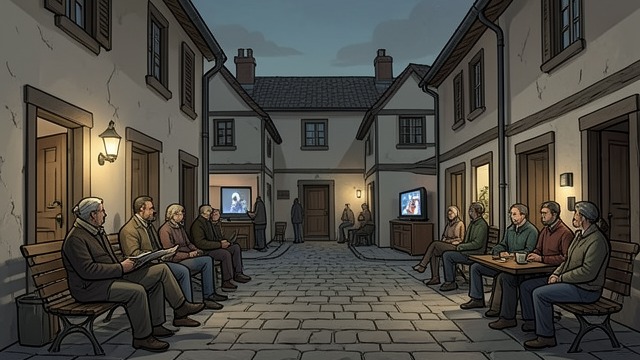
Evenings Move Indoors
Communal habits decline
Popular programs empty the streets and interrupt the old gatherings for cards, conversation, and games. Neighbors initially watch together, but separate household sets make the experience increasingly private.
Shared life changes form
The device does not simply add entertainment; it redirects attention away from face-to-face village life. A common public rhythm becomes a schedule organized around broadcasts.
The Screen Challenges the Pulpit
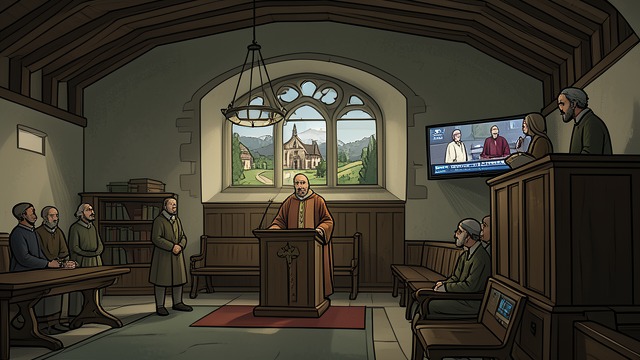
The Screen Challenges the Pulpit
Authority shifts
The local priest’s sermons compete with the daily images and stories on television. Residents become more informed about the outside world and less willing to accept the church’s former monopoly over interpretation.
Modernity replaces one sacred center
The novel compares the screen’s constant presence with the religious images that once dominated the home. Television becomes a secular altar, changing not only leisure but the village’s sense of what deserves attention.
A Symbol of Displacement
A Symbol of Displacement
The old world recedes
Loïc remembers the television as a turning point after which village customs and inherited authority steadily weaken. The shift parallels the decline of the D’Anjous and the emptying of their ancestral house.
Change is neither wholly good nor evil
Television connects people to a wider world while loosening local bonds. Loïc’s retrospective account expresses both wonder at technological change and grief for forms of communal life that cannot be restored.
November 21, 1954
Late 1954
The late 1950s
Late 1950s to 1960s
Loïc’s later recollections
