
Power and Political Identity
Say NothingThis flow traces the tension between claiming political legitimacy and denying responsibility for armed action, a contradiction embodied in Gerry Adams’s public career.
increasing Bearing strength in each event
 decreasing
Bearing strength in each eventdecreasingA Movement Claims Legitimacy
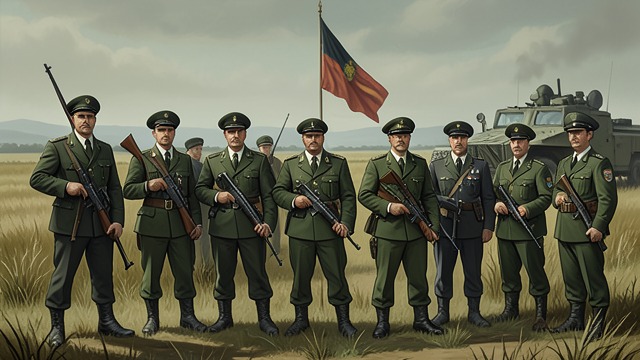
The IRA as an Army
A political self-image
Republican volunteers describe themselves as soldiers in a war rather than criminals in a state security campaign. Uniforms, funerals, and command structures reinforce that identity.
An unresolved contradiction
Bombings and killings affect civilians, while the movement insists that its targets are political. The distinction between military action and civilian harm becomes increasingly difficult to sustain.
From Prisoner to Politician

A New Public Role
Political theory develops
In Long Kesh, Gerry Adams urges volunteers to prepare for a long struggle and eventual political settlement. Bobby Sands’s election demonstrates the possible reach of electoral politics.
Participation without renunciation
Sinn Féin enters elections while the IRA continues its armed campaign. The movement gains political influence but retains a difficult relationship to its own violence.
Denial and Political Survival

A Public Figure in Two Registers
Membership denied
Adams presents himself as a political leader rather than a member of the IRA, despite contemporaries and authorities describing him as a senior commander. The denial helps create space for political engagement.
A usable ambiguity
Supporters may regard the claim as an expedient protection; critics see it as a refusal of moral responsibility. That ambiguity becomes one of his most enduring political resources.
The Peace Agreement

Compromise as Strategy
Consent replaces immediate withdrawal
The Good Friday Agreement keeps Northern Ireland in the United Kingdom unless a majority chooses otherwise, while establishing shared institutions. Sinn Féin accepts participation in the new assembly.
A contested interpretation
Adams calls the agreement the beginning of another phase of struggle. Some former combatants see strategic achievement; others see the abandonment of the absolute objective for which they fought.
A Leader at Peace
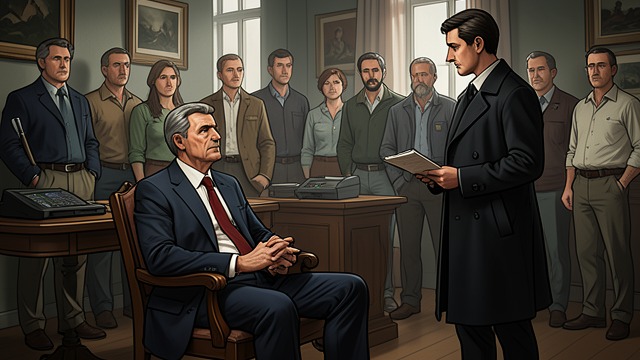
Accountability Remains Unequal
Arrest without charge
Adams is arrested in the McConville investigation but released, and prosecutors later decline to charge him. His denials continue to coexist with testimony from former subordinates.
Public peace, private history
His political success contrasts with the unresolved lives of people like Hughes and Price. The book leaves open whether a durable peace can justify the methods and omissions that helped produce it.
Early 1970s
1970s–1983
1980s–1990s
1998
2014–2018
