1973 London bombings
Say NothingThe 1973 London bombings were a Provisional IRA attack intended to bring the conflict to the British mainland through coordinated car bombs at four London sites. On 8 March 1973, two devices exploded and injured nearly 250 people, while the other two were defused. Dolours Price was a leading member of the bombing team; the operation ended with arrests and imprisonment, and later testimony placed its authorization within the senior leadership of the Belfast Brigade.
Origins and planning
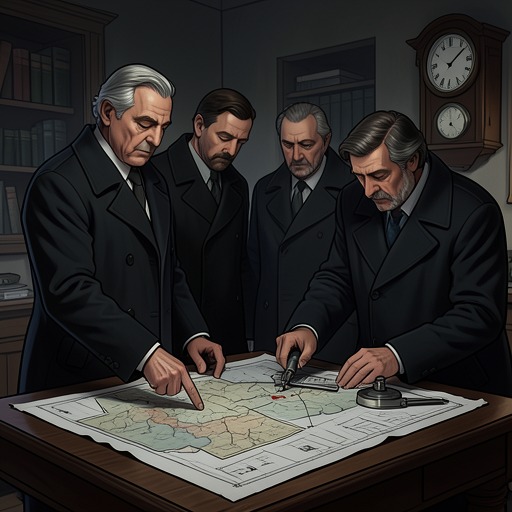
The bombing plan emerged from discussions among senior members of the Belfast Brigade. In a later interview, Brendan Hughes described the idea as having been discussed at brigade meetings attended by himself, Gerry Adams, Ivor Bell, Pat McClure and Tom Cahill, whom he identified as the group’s principal figures at the time. Hughes later told his interviewer that Adams had authorized the 1973 London mission. That statement came in a confidential oral-history interview, which Hughes understood would remain sealed until his death; it was a retrospective account, not a public acknowledgment made during the bombing campaign.
The team prepared four cars for the operation. Six vehicles had been hijacked at gunpoint in Belfast in February and driven to the Republic of Ireland. By early March, the cars had reappeared in Dublin, repainted and fitted with false number plates. Four were selected for the London mission: a Ford Corsair, a Hillman Hunter, a Vauxhall Viva and a green Ford Cortina. Each was equipped with a large incendiary device containing more than a hundred pounds of powder explosives and gelignite. The explosives were concealed beneath the rear seat and connected by detonating cord to a timer housed in a box beneath the front passenger seat; the timer had been fashioned from a household alarm clock.
The operation in London
Before dawn on 8 March, the bombers left their hotels, retrieved the prepared cars and drove them into position while parking was still easy. A rail strike had suspended parking restrictions, so vehicles that might ordinarily have been removed were left where they stood. By 7:30 a.m., the four devices were in place: the Hillman Hunter at a British Army recruiting centre in Whitehall, the Ford Corsair outside New Scotland Yard, the Vauxhall Viva by the British Forces Broadcasting Service on Dean Stanley Street, and the Cortina at the Old Bailey. Their timers were set for 2:50 p.m. Most of the crew then travelled by bus from Cromwell Road to Heathrow Airport, intending to fly to Dublin on an 11:20 a.m. plane; the Price sisters and Hugh Feeney were among those scheduled to leave.
Just after 2 p.m., a man telephoned The Times in London. Elizabeth Curtis, a young member of the paper’s news desk, heard him rapidly list descriptions and locations of cars. She struggled to understand the call, but transcribed what she could before he warned, “The bombs will go off in one hour.” The bombers had intended to give advance notice, mindful of the civilian deaths on Bloody Friday, but the warning system did not ensure that every device was found in time.
Police discovered a bomb at New Scotland Yard and defused it. The long timer led investigators to suspect that the bombers might be trying to leave the country before the explosions, so RUC Special Branch officers at ports and airports received an order to close the exit points and question Irish travellers. At the Old Bailey, however, a control-room error garbled the warning and delayed the response. The Hillman at Whitehall exploded; later, the Cortina outside the Old Bailey also detonated. The two remaining devices were defused. The difference between the devices found and those that went off turned on the police response as well as the bombers’ plan: advance warning existed, but it did not reach every target effectively.
Casualties and accountability
The explosions made the scale of the attack brutally visible. At Whitehall, the Hillman Hunter was ripped apart by a sheet of flame that rose forty feet; the blast shattered windows in nearby offices and shops and hurled people from the pavement. At the Old Bailey, the Cortina detonated amid an attempted evacuation. The force tore away the façade of the George pub, exposed its lounge to the street, and threw a police officer who was escorting jurors twenty feet. A police photographer was flung across the road, and Martin Huckerby, a journalist for The Times, was cut on his face and hands and taken to St Bartholomew’s Hospital.
Between the two blasts, nearly 250 people were injured. Bloodied survivors emerged through smoke and hot dust while ambulances carried casualties to nearby hospitals. Striking non-medical staff at those hospitals abandoned their picket lines to help. Frederick Milton, a fifty-eight-year-old caretaker at Hillgate House beside the Old Bailey, was covered in blood but resisted being taken to hospital, choosing instead to assist other injured people. He collapsed a few hours later and died. An autopsy found that the heart attack had begun before the explosion, so the medical evidence did not support a murder charge arising from his death.
Dolours Price and other members of the bombing team blamed the casualties on the authorities, arguing that police had taken too long after the telephone warnings to find the devices and alert the public. That account served as a convenient moral deflection: the bombers had planted the devices, and their warning arrangements had not prevented people from being hurt. Yet the police acknowledged that human error in the control room had garbled the warning about the Old Bailey bomb and significantly delayed the response. The failure did not absolve the bombers; it made the consequences of the operation more complicated than either a claim of adequate warning or a simple account of police negligence could suggest.
Arrest, imprisonment, and the afterlife of the operation
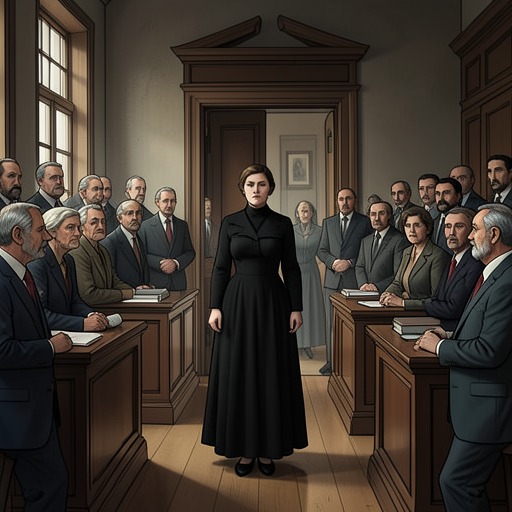
The escape plan failed at its final stage. Dolours Price and Marian Price were arrested at Heathrow Airport, taken into custody, and later tried at Winchester Castle. Their imprisonment at Brixton Prison and subsequent hunger strike extended the consequences of the bombing campaign beyond London: an operation intended to carry the conflict onto the British mainland became the beginning of a prolonged struggle over the sisters’ imprisonment and political status.
The episode also marked a sharp contrast with the political path that followed. Dolours Price later canvassed for a Sinn Féin candidate for Belfast City Council and moved away from violence as a means of pursuing Irish unity. In 1983, Gerry Adams, who had been her officer commanding, sought a seat at Westminster representing West Belfast. Their transition from clandestine armed action toward electoral politics did not erase the earlier campaign; it made the question of how that campaign should be remembered more consequential.
That question remained unsettled in the book’s later account of the conflict. Brendan Hughes discussed the London mission in a confidential oral-history interview, believing that his words would remain sealed until his death. His account placed the planning within the Belfast Brigade’s senior circle, while public denials and party discipline shaped what could be said about republican armed struggle. The bombings thus recur not only as a violent operation but as a test of who could acknowledge responsibility and whose version of the past would prevail. The later political order depended, in part, on disciplined organizations capable of restraining their members; to former participants and critics, that same discipline could look like an effort to suppress dissent and monopolize memory.